
 Search
 en
en English
 日本語
日本語 русский
 Español
 Deutsch
 中文简体
中文简体Content
In any laser-based system, the optical laser lens is far more than a passive piece of glass — it is the decisive factor that determines whether a beam delivers precision or waste. From industrial cutting machines to fiber-optic communication networks, the quality of the lens directly governs the quality of every output. This guide examines the mechanisms by which optical laser lenses elevate beam quality and drive measurable improvements in system performance.
What Is Beam Quality and Why Does It Matter
Beam quality is the quantitative measure of how closely a real laser beam approximates an ideal Gaussian beam. The most widely used metric is the M² (M-squared) value. A perfect Gaussian beam has M² = 1; any real beam has M² > 1, where higher values indicate greater divergence and reduced focusability.
Three parameters define practical beam quality:
- Divergence angle — how rapidly the beam spreads over distance. Lower divergence means the beam can travel farther while maintaining a usable diameter.
- Wavefront distortion — deviations from a perfect planar or spherical wavefront, which degrade the ability to focus to a diffraction-limited spot.
- Spatial coherence — the degree to which all parts of the beam oscillate in phase, directly affecting brightness and focusability.
Why does this matter in practice? In laser cutting, a beam with M² = 1.2 can be focused to a spot roughly 20% larger than ideal — translating directly into wider kerf widths, rougher edges, and increased heat-affected zones. In fiber-optic coupling, even a small increase in beam divergence can drop coupling efficiency from above 90% to below 70%. Beam quality is not a theoretical concern; it has quantifiable consequences for throughput, yield, and operating cost.
Key Types of Optical Laser Lenses and Their Roles
Different beam manipulation tasks demand different lens geometries. The four principal types each address a specific aspect of beam quality.
Spherical Lenses
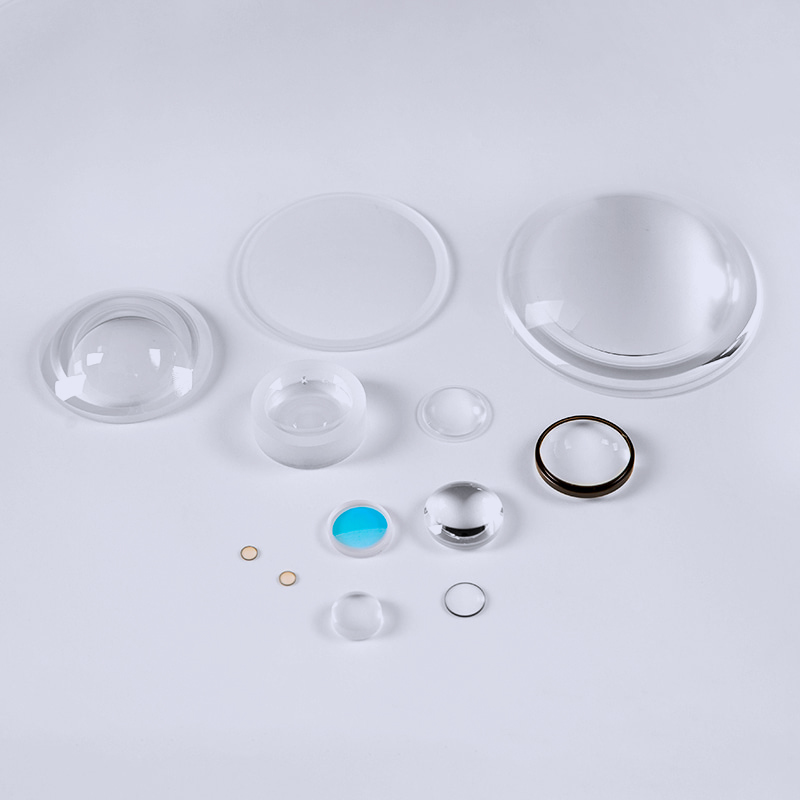
Plano-convex and bi-convex spherical lenses are the workhorses of basic focusing applications. A plano-convex lens converges a collimated beam to a single focal point. While straightforward in design, spherical lenses introduce spherical aberration at high numerical apertures (NA), which broadens the focal spot and reduces energy density. They remain appropriate for lower-precision tasks such as basic laser marking or simple collimation of low-power sources.
Aspheric Lenses
Aspheric lenses feature a continuously varying surface curvature that eliminates spherical aberration, allowing a single element to deliver near-diffraction-limited performance. This is particularly critical when coupling a laser diode — which emits a highly divergent, elliptical beam — into a single-mode optical fiber. With a correctly designed aspheric lens, coupling efficiency exceeding 85% is routinely achieved, versus 50–65% with a simple spherical element. Aspherics are the standard choice for fiber-optic transmitters, high-resolution laser scanning, and precision medical devices.
Cylindrical Lenses
Cylindrical lenses focus or expand a beam in one axis only, leaving the orthogonal axis unchanged. This makes them indispensable for correcting the fast-axis divergence of laser diode bars, transforming an elliptical beam into a circular profile suitable for downstream processing. They are also used to create line-shaped beams for laser scribing, barcode scanning, and structured-light 3D measurement systems.
Collimating Lenses
A collimating lens converts a divergent beam from a point source into a parallel bundle of rays. Collimation quality is typically specified in terms of residual divergence angle (often < 0.1 mrad for precision systems). High-quality collimation is the foundation of every subsequent optical operation — a poorly collimated beam cannot be focused well, shaped efficiently, or transmitted over distance without significant loss.
| Lens Type | Primary Function | Key Advantage | Typical Application |
|---|---|---|---|
| Spherical (plano-convex) | Basic focusing | Low cost, simple alignment | Laser marking, basic collimation |
| Aspheric | High-precision focusing | Eliminates spherical aberration | Fiber coupling, medical lasers |
| Cylindrical | 1-axis beam shaping | Corrects elliptical diode beams | Diode bars, line generators |
| Collimating | Beam parallelization | Enables long-distance propagation | LiDAR, telecom, laser scanners |
How Optical Laser Lenses Reduce Aberrations
Aberrations are systematic errors that prevent all rays from converging to the same focal point, degrading both spot size and beam profile. Optical laser lenses address three primary aberration types:
Spherical Aberration
Rays passing through the outer zones of a spherical lens focus at a different axial position than rays passing through the center. The result is a blurred focal spot with significant energy in the halo rather than the core. Aspheric surfaces — by definition — eliminate this effect. For systems where an aspheric is not viable, a doublet lens (two elements with opposing curvatures) can balance spherical aberration to below λ/4, the threshold for diffraction-limited performance.
Astigmatism and Coma
Astigmatism occurs when a beam has different focal lengths in two perpendicular planes, producing an elliptical or cross-shaped focal spot. Cylindrical lens pairs are the direct corrective tool. Coma, which manifests as a comet-shaped tail on the focal spot for off-axis beams, is minimized by correct lens orientation (a plano-convex lens should face its flat side toward the longer conjugate distance) and by using multi-element designs for wide-angle scan systems.
Thermal Lensing
High-power lasers generate heat within the lens material. This raises the refractive index locally, creating an unintended positive lens effect known as thermal lensing — the focal point shifts during operation, and beam quality degrades as power increases. Mitigating thermal lensing requires choosing materials with low absorption coefficients at the operating wavelength, high thermal conductivity, and low thermo-optic coefficients (dn/dT). Fused silica's dn/dT of approximately +1.1 × 10⁻⁵ K⁻¹ makes it a preferred choice for UV and near-IR high-power systems. An optical prism or beam-splitting component can also redistribute thermal load across multiple elements to reduce the effect on any single surface.
The Role of Lens Materials and Coatings
Lens geometry defines what a beam can theoretically achieve; material and coating determine what is actually delivered under real operating conditions.
Substrate Materials
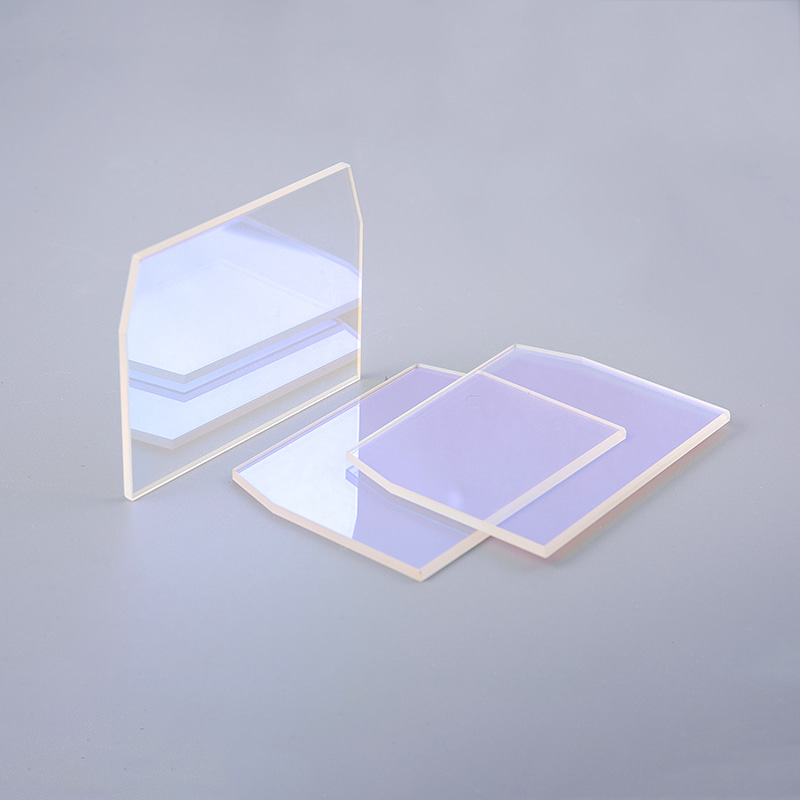
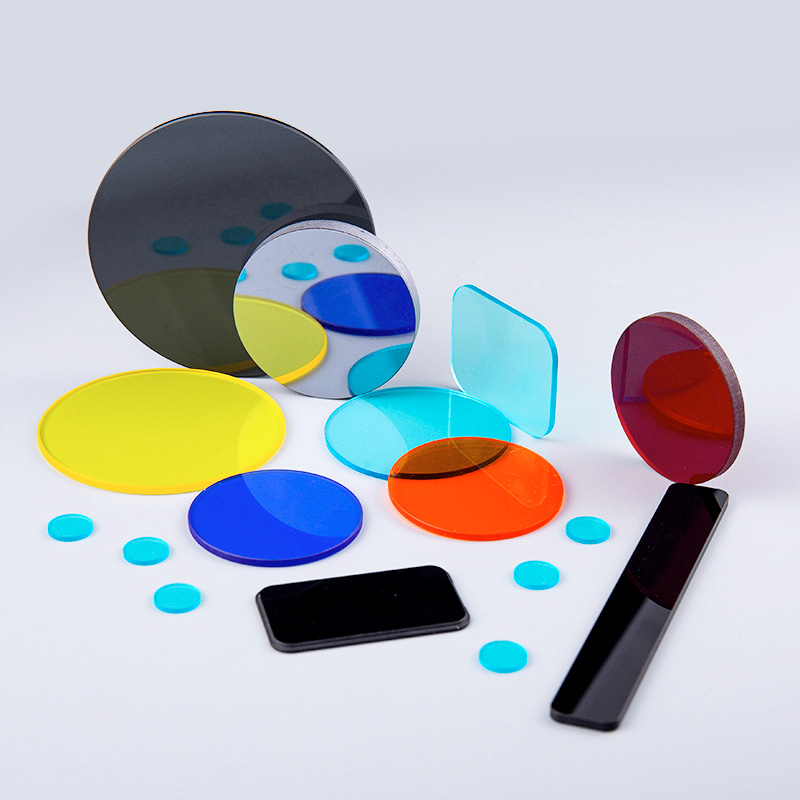
Fused silica (SiO₂) offers excellent transmission from 185 nm to 2.1 μm, very low absorption, high laser damage threshold (often > 5 J/cm² at 1064 nm for nanosecond pulses), and good thermal stability. It is the standard for UV excimer lasers and high-power Nd:YAG systems.
Zinc selenide (ZnSe) transmits from 0.6 μm to 21 μm, covering the full CO₂ laser wavelength at 10.6 μm. Its relatively low hardness requires careful handling, but its broad transmission window makes it irreplaceable for infrared processing applications including metal cutting and welding.
Sapphire (Al₂O₃) combines wide transmission (0.15–5.5 μm), exceptional hardness, and high thermal conductivity, making it suitable for high-power diode pump systems and harsh-environment deployments.
Anti-Reflection and Damage-Resistant Coatings
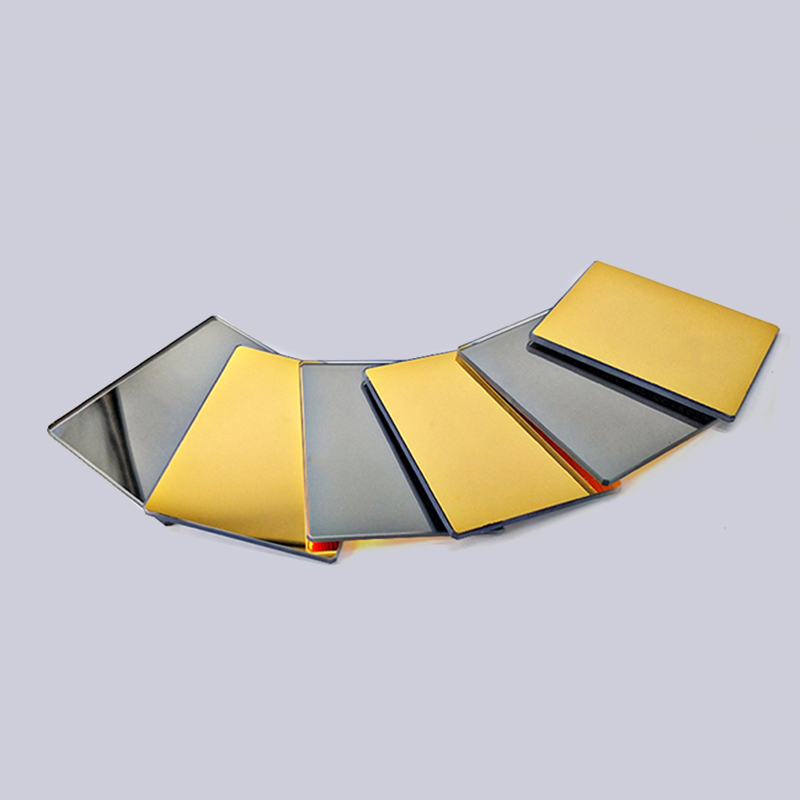
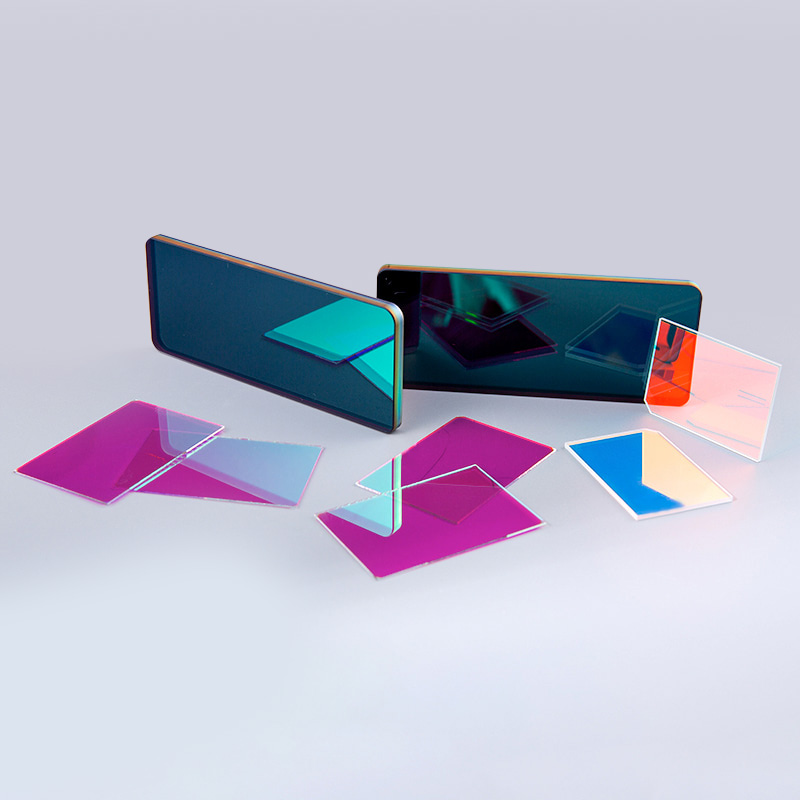
At every uncoated air-glass interface, approximately 4% of incident energy is reflected (for a refractive index of ~1.5). For a four-element lens assembly, this loss accumulates to over 15%. Anti-reflection (AR) coatings reduce per-surface reflectance to below 0.2%, dramatically improving energy throughput. Beyond efficiency, coatings must match the laser's peak irradiance. High-damage-threshold coatings using ion-beam sputtered (IBS) films can sustain > 10 J/cm² at 1064 nm — three to five times higher than conventional evaporated coatings — enabling the lens to survive the full operating lifetime of a high-power system without degradation.
Impact on System-Level Performance
The improvements enabled by precision optical laser lenses translate into measurable gains across every major application domain.
Industrial Laser Cutting and Welding
A tightly focused spot with M² close to 1 concentrates energy into a smaller area, yielding higher peak irradiance for a given average power. In stainless steel cutting at 3 kW, improving the focused spot diameter from 120 μm to 80 μm (a 33% reduction achievable by upgrading from a standard spherical to an aspheric focusing lens) can increase cutting speed by 40–60% at equivalent cut quality. Heat-affected zones shrink, reducing post-processing requirements and improving part yield.
Fiber-Optic Coupling and Telecommunications
Single-mode fiber has a core diameter of 8–10 μm. Coupling a 1550 nm telecom laser into such a core demands both a small, aberration-free focal spot and extremely precise alignment. High-quality aspheric collimating and focusing lenses routinely deliver insertion losses below 0.5 dB, versus 1.5–3 dB for lower-grade optics. Over a dense wavelength-division multiplexed (DWDM) network with dozens of amplifiers and repeaters, this gain in coupling efficiency compounds into significantly lower total system noise and extended reach.
Medical and Surgical Lasers
In ophthalmic surgery, the ablation spot must be controlled to within a few micrometers. Aspheric lenses ensure that the energy distribution across the ablation zone is uniform, preventing the "hot spots" that could damage surrounding tissue. In optical coherence tomography (OCT), diffraction-limited focusing translates directly into axial and lateral resolution — the ability to distinguish tissue layers separated by as little as 5–10 μm depends entirely on lens quality.
LiDAR and Sensing
Autonomous vehicle LiDAR systems emit pulsed laser beams and detect the returning signal from objects at 50–200 m range. Collimating lenses that produce beams with divergence below 0.1 mrad maintain a small beam cross-section at long range, improving angular resolution and reducing crosstalk between adjacent channels. The signal-to-noise ratio of the entire LiDAR point cloud is therefore a direct function of collimating lens quality.
How to Select the Right Optical Laser Lens
Selecting a lens is a systems engineering decision, not a catalog lookup. Five parameters drive every selection:
- Wavelength compatibility — the substrate material must transmit efficiently at the operating wavelength, and the AR coating must be optimized for the same wavelength. Using a lens designed for 1064 nm on a 532 nm frequency-doubled system will result in high reflective losses and potential coating damage.
- Focal length and working distance — shorter focal lengths produce smaller focused spots but require the workpiece to be closer to the lens (and thus more exposed to spatter or debris). Longer focal lengths give more working distance at the cost of a larger minimum spot size.
- Numerical aperture (NA) — for fiber coupling applications, the lens NA must exceed the fiber NA (typically 0.12–0.14 for single-mode fiber) to capture the full diverging cone of the source.
- Surface quality specification — expressed as scratch-dig (e.g., 10-5) and surface flatness (e.g., λ/10 at 633 nm). Higher specifications reduce scatter and wavefront error but come at higher cost. For high-power systems above 1 kW, a scratch-dig of 10-5 is generally considered the minimum acceptable standard.
- Laser damage threshold (LDT) — always verify that the LDT of both substrate and coating exceeds the peak fluence at the lens surface by a safety margin of at least 3×, accounting for potential hot spots and degradation over the component lifetime.
Conclusion
Optical laser lenses are the optical keystone of any laser system. By reducing aberrations, enabling precise collimation, matching material properties to operating wavelengths, and maintaining high transmission through advanced coatings, they transform a raw laser source into a precision instrument capable of meeting the tightest industrial and scientific standards. Whether the goal is a cleaner cut, a faster weld, a lower-noise telecom link, or a more accurate surgical ablation, the lens is where system performance is ultimately defined.
For engineered solutions tailored to your specific wavelength, power level, and application, explore the full range of optical laser lenses from HLL — precision optics manufactured to ISO 9001:2015 and IATF16949 standards, with in-house coating capabilities and custom design support.

 苏公网安备32041102000130号