
 Search
 en
 English
 日本語
 русский
 Español
 Deutsch
 中文简体
Content
That gap between what a drawing measures and what a system needs is where most optical component problems begin. A part is usually specified on five or six axes at once, and the axis missing from the print is the one that comes back as a rejected lot.
The notes below come from the production side of that equation, at a plant in Changzhou that has been grinding, polishing, and coating glass, quartz, and sapphire since 1998. They cover what the term means, how the main families differ, which specifications drive cost, and what to lock down before a purchase order is released.
What Counts as an Optical Component
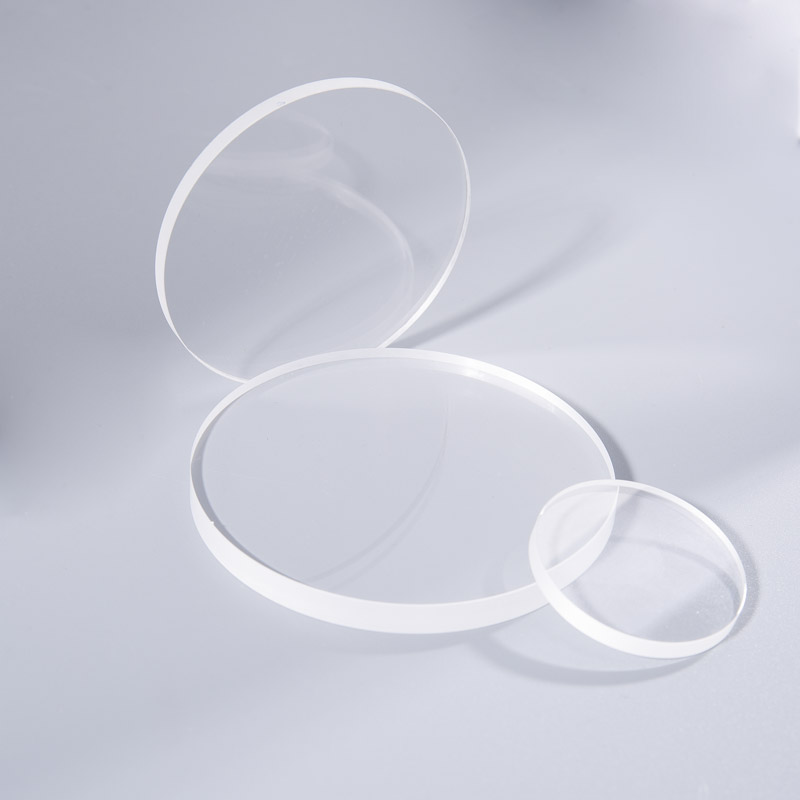
An optical component is a manufactured part whose surfaces are controlled to a fraction of a wavelength, so light passing through it, reflecting off it, or bending inside it behaves predictably.
The material is not the definition. A polished disc of borosilicate glass is a window when both faces are flat and parallel, and it becomes a lens the moment one face is figured to a 100 mm radius. What separates optical grade from ordinary glass is the level of control over geometry and surface, not the substrate itself.
That is why a purchase conversation built only on "40 mm diameter, 5 mm thick, BK7" tends to go wrong. It describes a blank, not a component. The sections below work through the attributes in roughly the order they appear on a real drawing.
Six Families and What Each One Is For
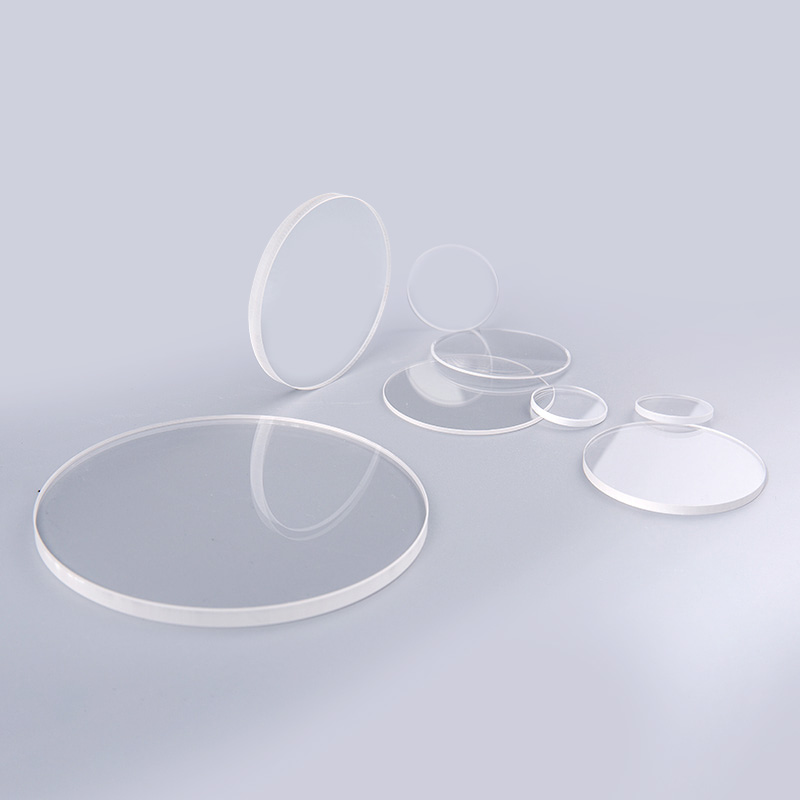
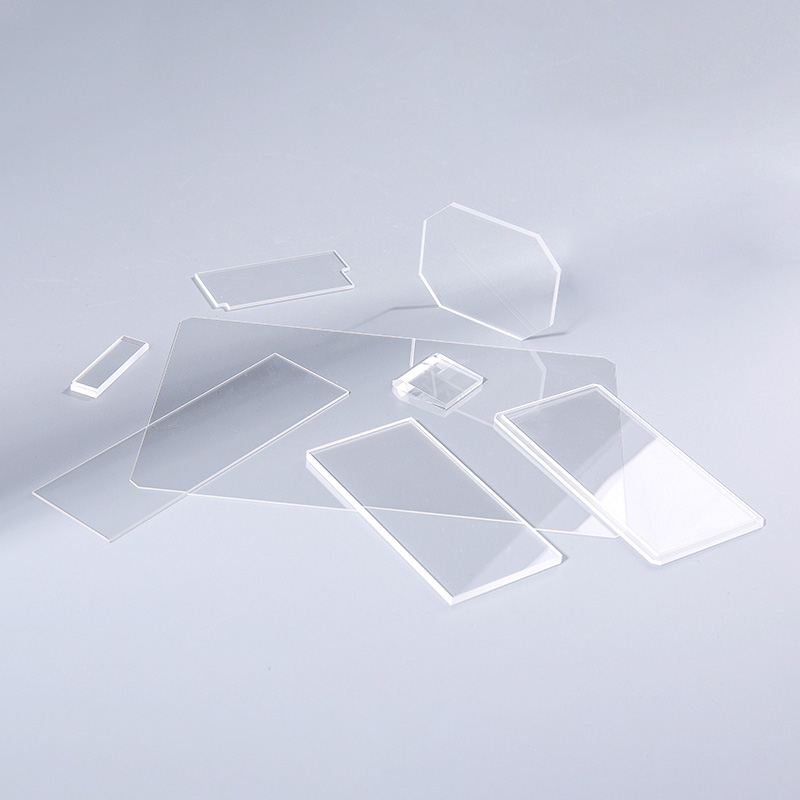
Nearly every optical drawing falls into one of six families: windows and flats, mirrors, lenses, prisms, filters, and wafers or substrates.
Family matters because it dictates the process route. A window is mainly a parallelism and flatness job. A prism is mainly an angle and centering job. A coating house will treat a filter very differently from a first-surface mirror, and the inspection equipment changes with each case.
| Family | What it does | Typical substrate | Spec that drives rework |
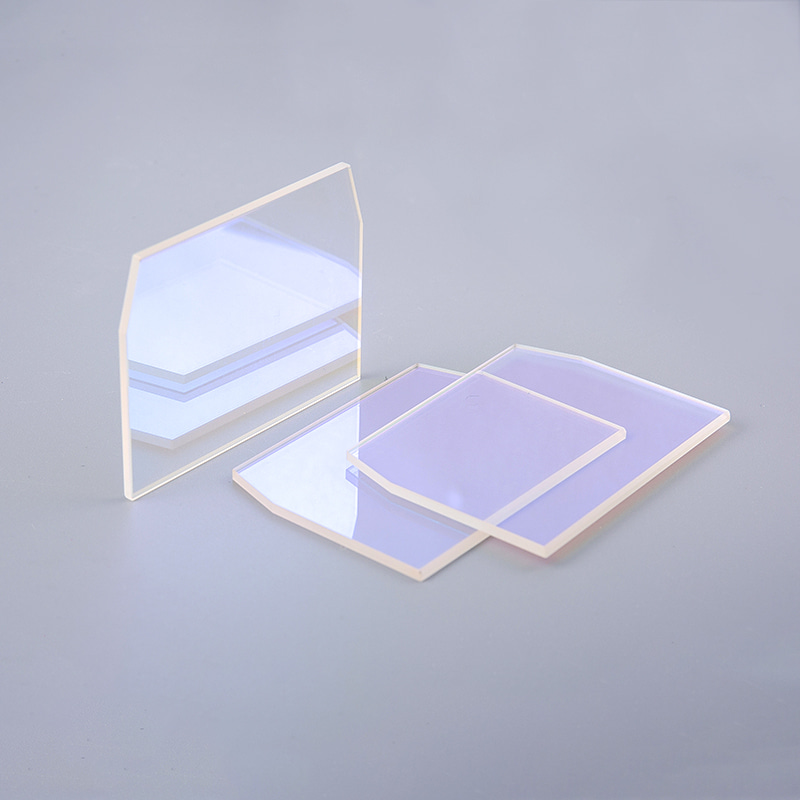
| Window or flat | Transmits light with minimal deviation | BK7, fused silica, sapphire | Parallelism and transmitted wavefront |
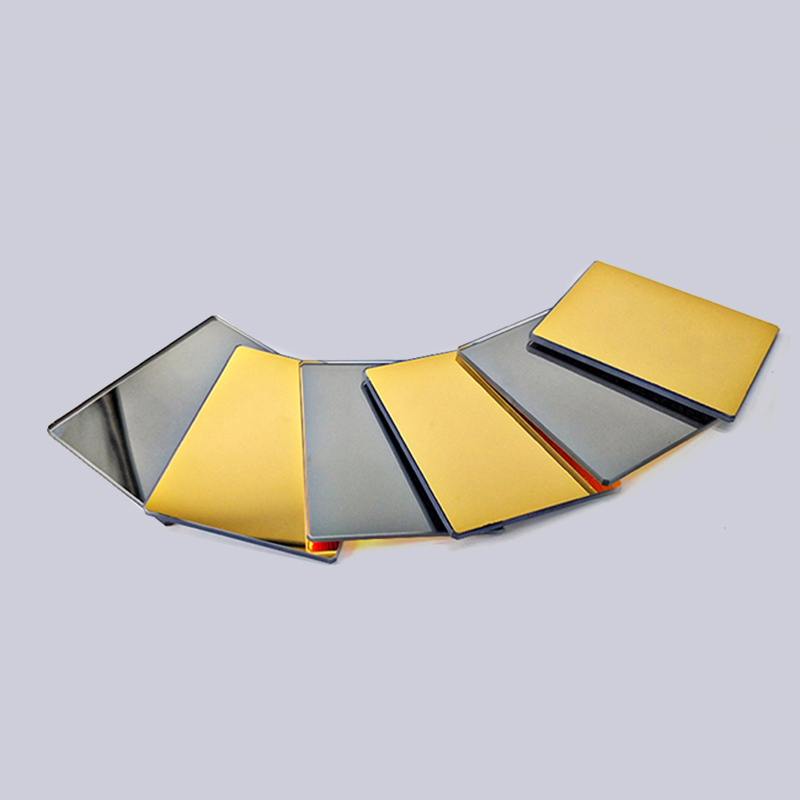
| Mirror or reflector | Redirects and folds a beam | Polished glass with Al or Ag coating | Reflectance at the working wavelength |
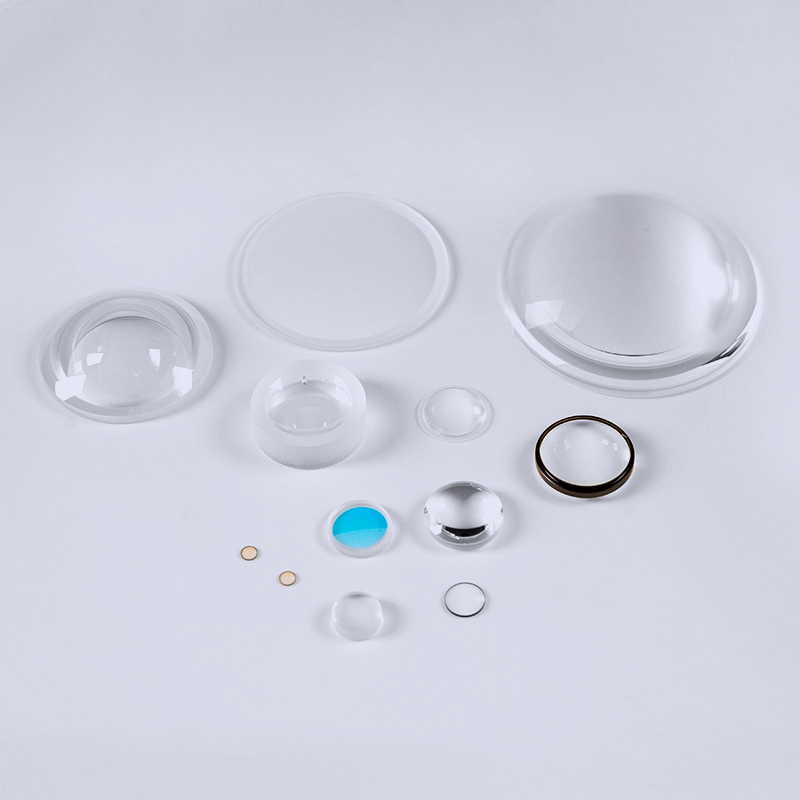
| Lens | Focuses, collimates, or expands | BK7, fused silica, CaF2 | Focal length tolerance and centering |
| Prism | Deviates, folds, or disperses light | BK7, fused silica | Angle tolerance quoted in arcseconds |
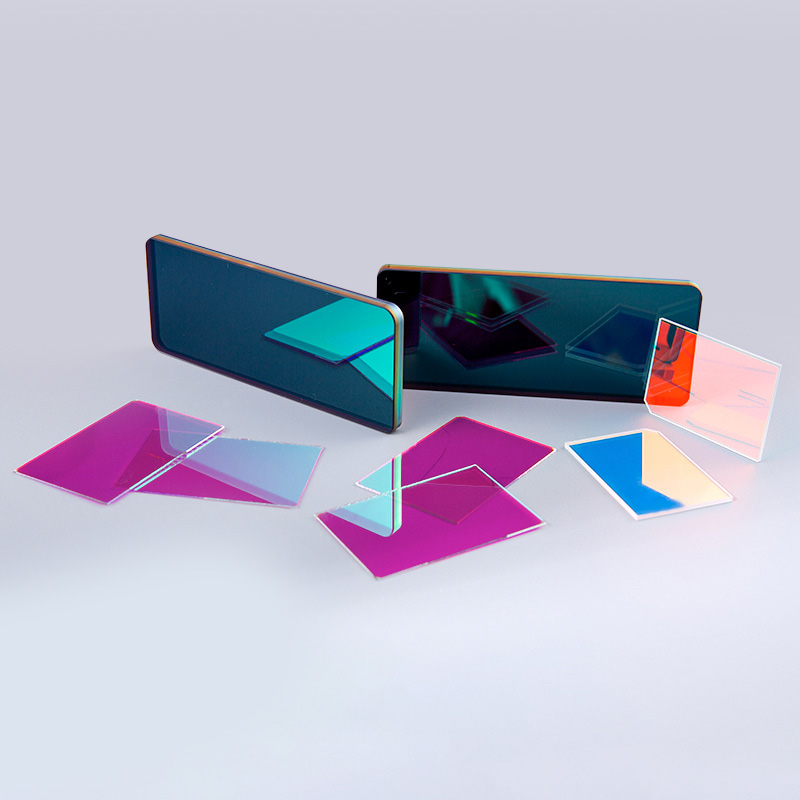
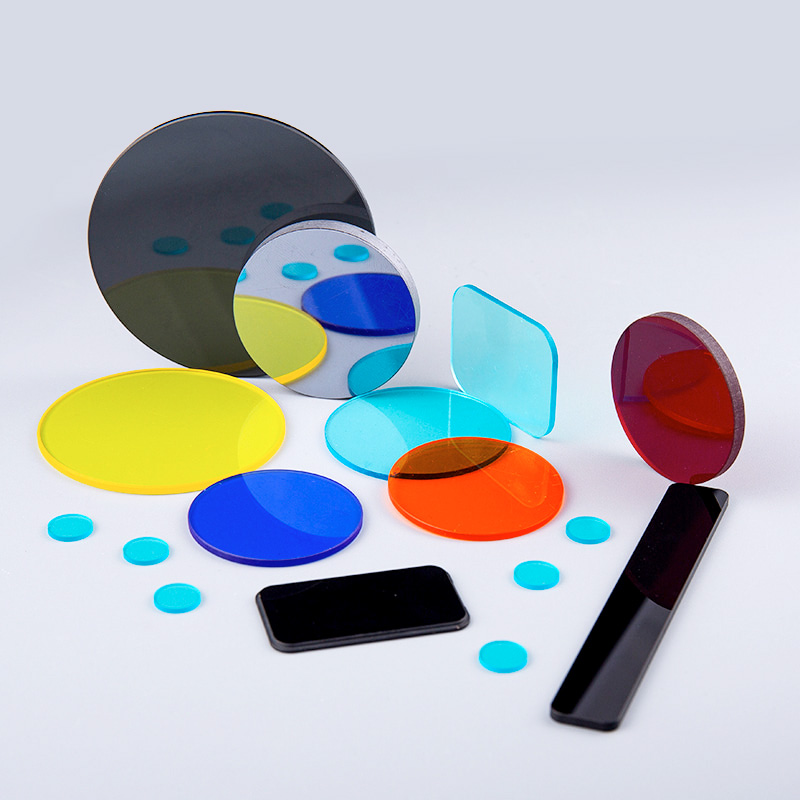
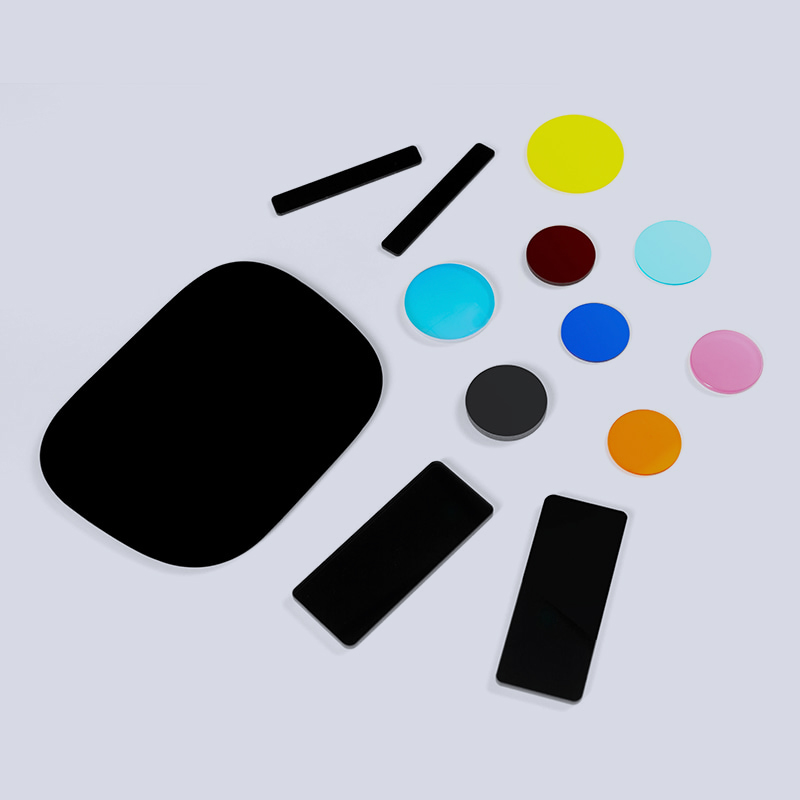
| Filter | Selects or blocks wavelength bands | Colored glass, dielectric stacks | Cut-on slope and blocking depth |
| Wafer or substrate | Flat optical base for further processing | Glass, quartz, sapphire | Flatness and thickness variation |
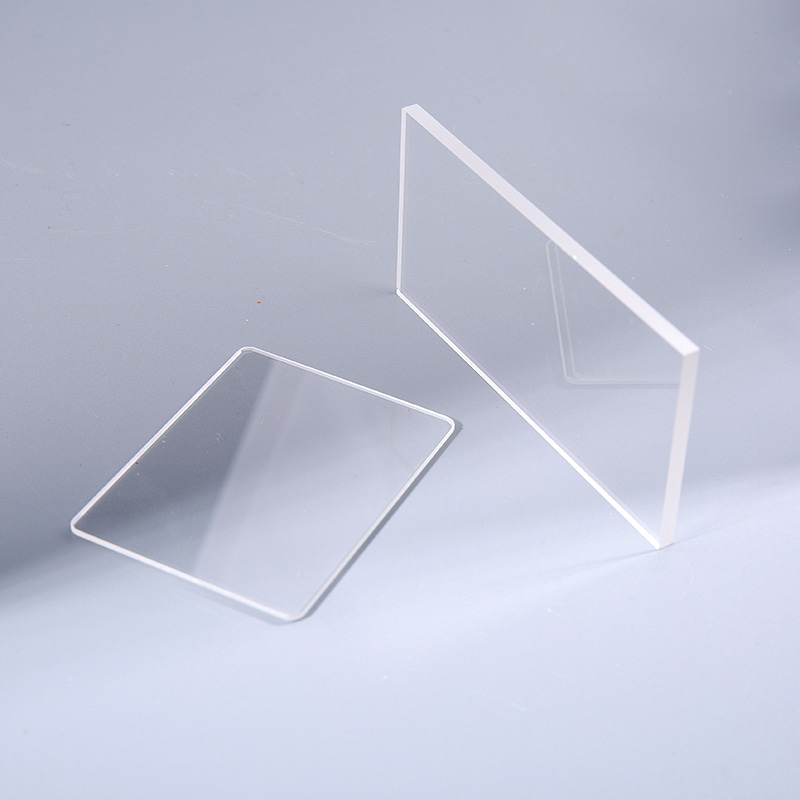
Windows and mirrors are usually the first parts a new assembly needs, and they are also where buyers most often over-specify. A protective window does not need tenth-wave flatness unless something downstream is imaging through it.
Specifications That Decide Whether a Part Works
Four numbers on an optical print drive most of the cost and nearly all of the field failures: surface form, surface quality, coating performance, and dimensional or angular tolerance.
- Surface form. Quoted in fringes or fractions of a wave at 633 nm. A quarter wave is a working default for beam delivery; a tenth wave belongs on imaging paths where wavefront error stacks up across several elements.
- Surface quality. The scratch-dig pair, written 60-40, 40-20 or 20-10. Tightening a 100 mm part from 40-20 to 20-10 adds polishing and inspection time, so ask whether the defect would land inside the beam at all.
- Coating. "AR coated" is not a specification. Ask for the reflectance curve across the band, the angle of incidence it was designed for, and the damage threshold when the part sees pulsed power.
- Geometry and angle. Diameter and thickness tolerances of a few hundredths of a millimetre are routine; prism angles are quoted in arcminutes and are the number most often left off a prism drawing.
- Substrate and grade. Homogeneity, bubble and inclusion class, and internal transmission come from the melt, not from polishing, so they cannot be corrected once the part is on the machine.
For a wider treatment of how these families are selected in practice, the site's guide to optical component applications and selection covers the same ground from a buyer's angle.
Matching the Part to the Application
The same optical function can demand completely different substrates once wavelength, power, and environment are fixed.
Fused silica wins from the deep UV into the near IR because of its transmission and low thermal expansion. Sapphire wins where abrasion resistance or mid-IR transmission matters more than unit cost. BK7 stays the default for visible and near-IR work on a real budget.
Precision-critical systems
- Laser delivery and focusing optics
- Semiconductor inspection sub-systems
- Metrology and interferometry
- Medical imaging and endoscopy
Volume and durability systems
- Automotive cameras and LiDAR windows
- Interior glass structural parts
- Consumer camera modules and light guides
- Security domes and lighting reflectors
The split shows up early in drawing review. Automotive programs arrive with a quality management requirement attached and care about coating durability, temperature cycling, and packaging. Laser programs arrive with a wavelength, a power density, and a wavefront budget instead.
Wafers make the point clearly. The difference between glass, quartz, and sapphire substrates shows up in flatness, thermal behaviour, and cost long before it shows up in an optical measurement.
What to Confirm Before the Order Goes Out
A custom optics order should lock five things before release: a fully toleranced drawing, the substrate grade, the coating curve, the inspection report, and the packaging standard.
- Send a drawing, not a description. Include diameter, thickness, radius or flatness, surface quality, coating band, and the aperture that actually matters.
- Confirm the substrate grade early. Homogeneity and inclusion class come from the melt, and no amount of polishing compensates for the wrong grade.
- Agree the coating curve and the run size. Coating chambers work in batches, so a prototype lot and a production lot rarely share the same price per part.
- Fix the inspection method. Name the instrument, the aperture, and what the report must contain, then attach it to the purchase order.
- Specify cleaning and packaging. A clean part in a dusty box is a defect on arrival, and that argument is expensive to win after the fact.
Drawings can be sent through the contact page, and the first reply normally covers feasibility on substrate, tolerance, and coating before any pricing is discussed.
Frequently Asked Questions
What separates an optical component from ordinary glass?
Control, not material. An optical component carries a specified surface form, surface quality, and often a coating, all measured and reported against a drawing. Ordinary glass is sold on dimensions and appearance, with no wavefront or scratch-dig requirement attached.
Which tolerance should go on the drawing first?
Surface form and coating band, because both change the process route and the price. Size tolerances of a few hundredths of a millimetre are common and rarely the limiting factor in a quote.
How do I choose between BK7, fused silica, and sapphire?
Start with wavelength and environment. BK7 suits visible and near-IR work at moderate power, fused silica covers UV transmission and thermal stability, and sapphire handles hardness, scratch resistance, and mid-IR transmission.
Can small prototype quantities be produced?
Yes, though the economics differ from production. Prototype lots are priced around setup and coating runs rather than unit volume, so it is worth asking how many parts a single coating batch holds before the order is sized.

 苏公网安备32041102000130号