
 Search
 en
en English
 日本語
日本語 русский
 Español
 Deutsch
 中文简体
中文简体Content
Introduction to Optical Components
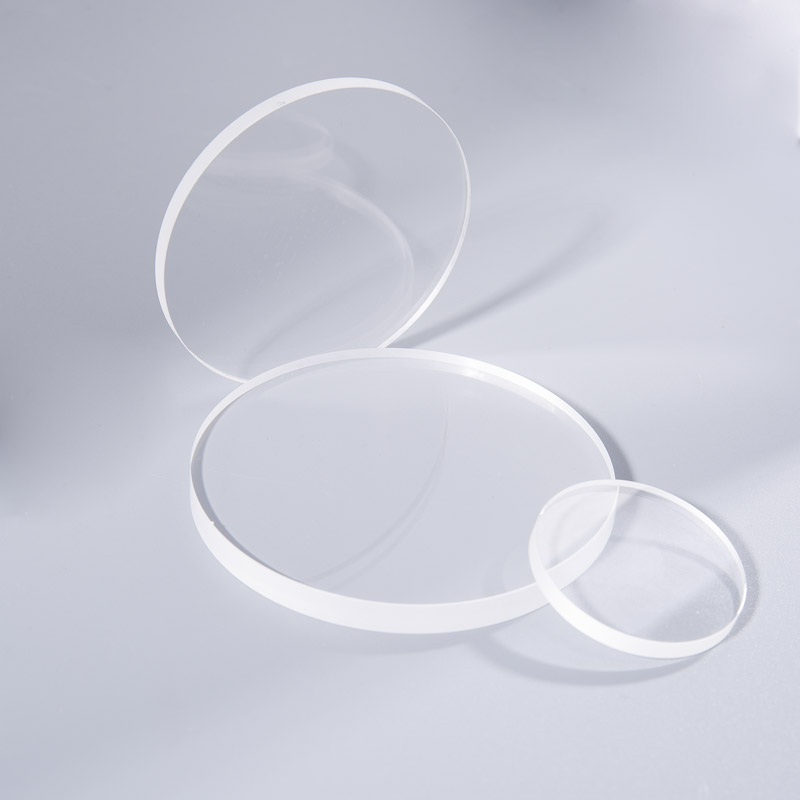
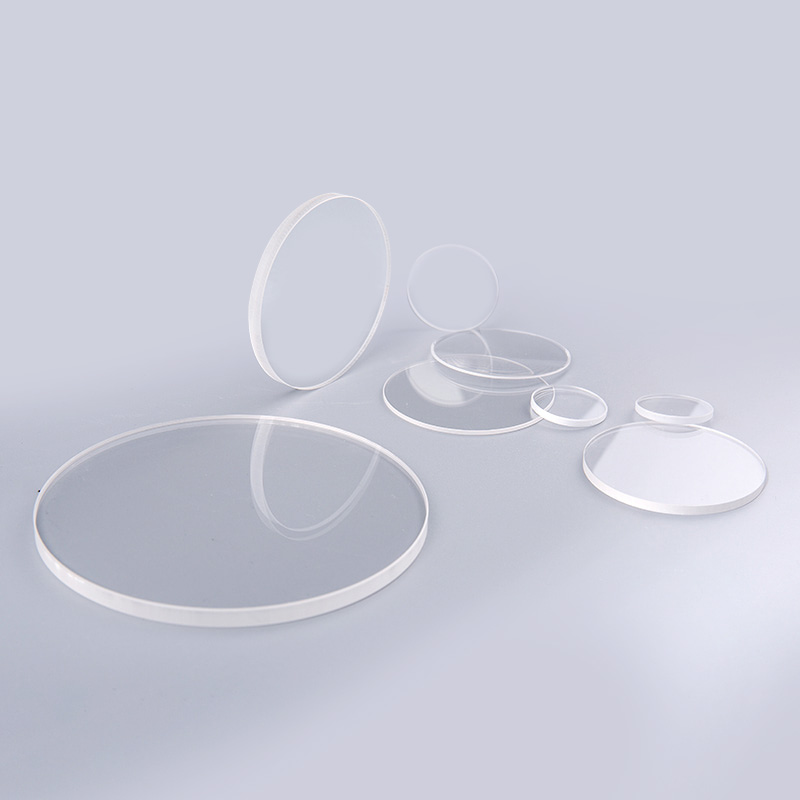
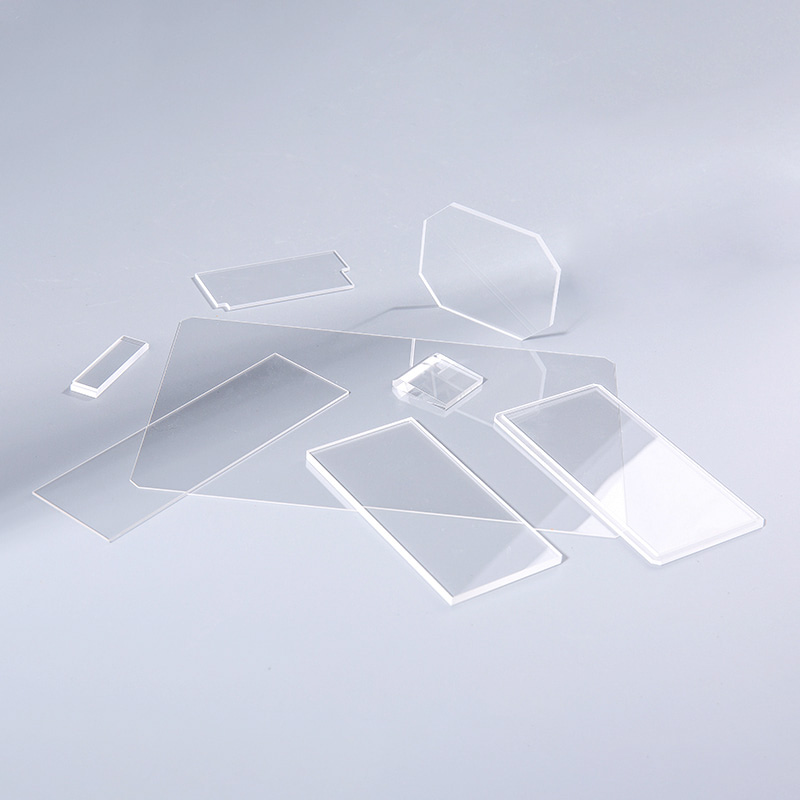
Optical components are fundamental building blocks in modern photonics and optical systems. They include lenses, mirrors, prisms, beam splitters, filters, and other precision elements designed to manipulate light. These components are widely used in fields such as telecommunications, medical imaging, laser systems, and scientific research. Selecting the right optical component requires understanding its function, material properties, and performance specifications.
Types of Optical Components
Lenses
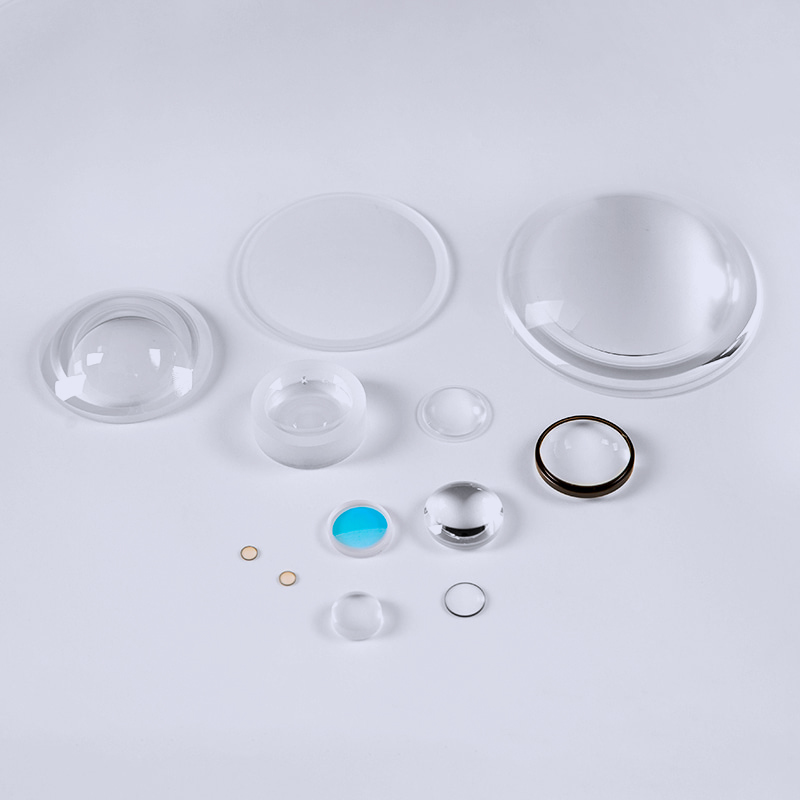
Lenses are transparent components that focus or diverge light beams. They are commonly made from optical glass, fused silica, or specialized polymers. Key types include:
- Convex Lenses: Converge light to a focal point, used in imaging systems and magnifiers.
- Concave Lenses: Diverge light, applied in beam expansion and correction optics.
- Aspheric Lenses: Reduce spherical aberration and improve optical performance in cameras and laser systems.
Mirrors
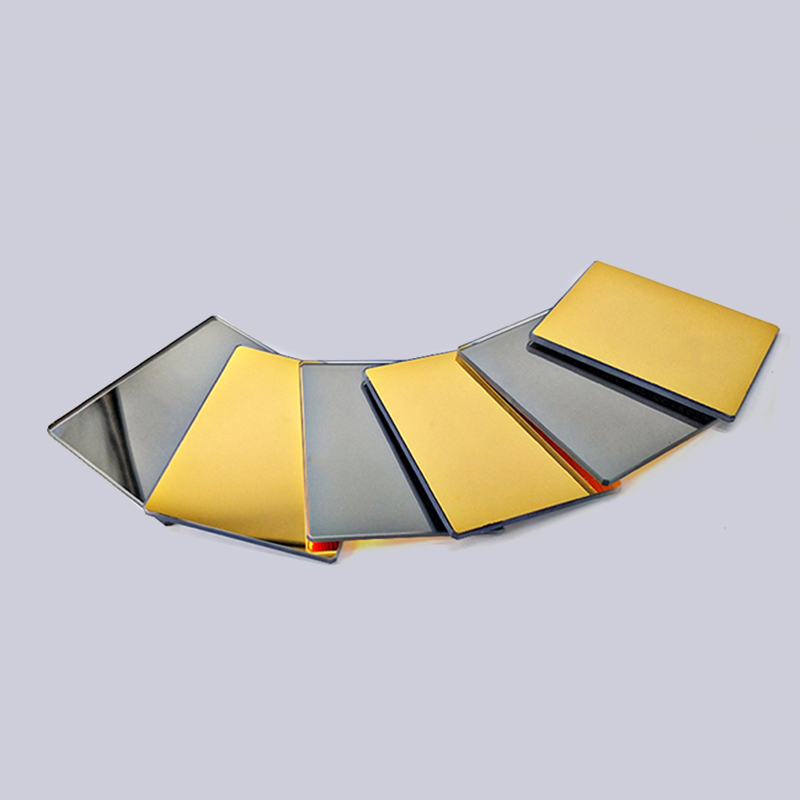
Mirrors are reflective surfaces used to redirect, focus, or shape light. They can be metallic or dielectric-coated, depending on the wavelength and application requirements. Common mirror types include:
- Flat Mirrors: Redirect light without altering its shape, essential in optical alignment setups.
- Concave Mirrors: Focus light beams, often used in telescopes and laser cavities.
- Convex Mirrors: Spread light beams for wide-angle applications.
Beam Splitters
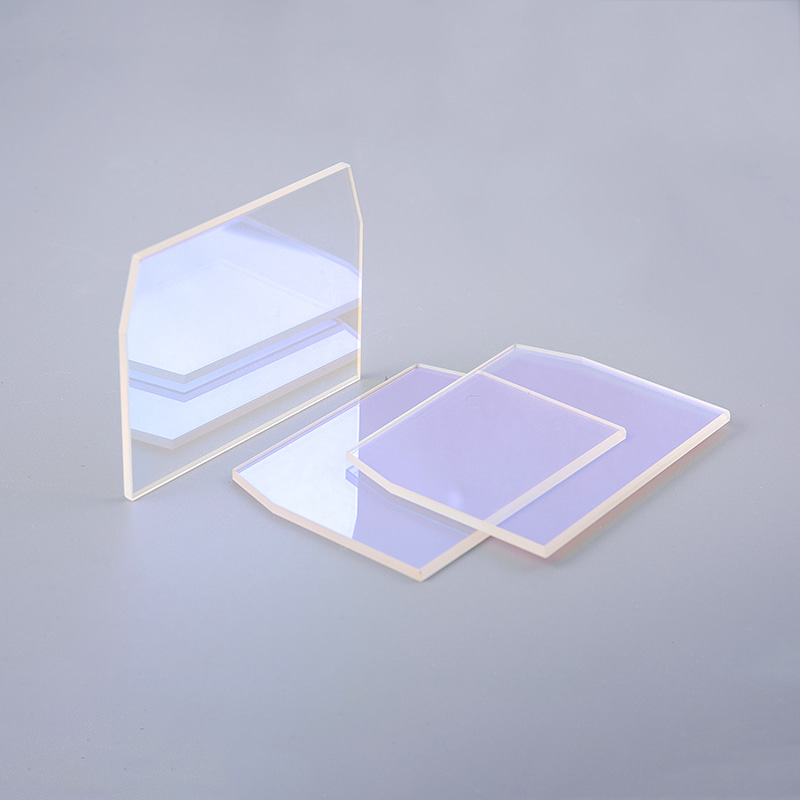
Beam splitters divide or combine light beams for optical instrumentation and imaging applications. They are made of glass or fused silica with dielectric coatings. Key variants include:
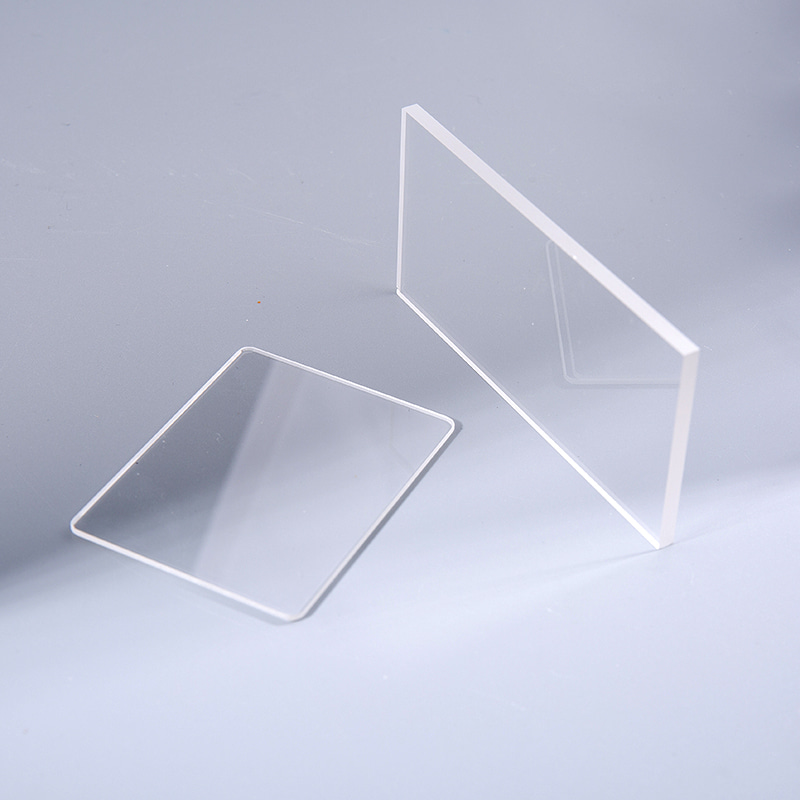
- Plate Beam Splitters: Simple design, reflect a fixed percentage of light and transmit the rest.
- Cube Beam Splitters: Provide precise splitting ratios and minimal beam deviation, ideal for laboratory optics.
Prisms
Prisms are optical components used to refract, disperse, or invert light. They are vital in spectroscopic systems, laser alignment, and optical communication networks. Common types include:
- Dispersive Prisms: Separate light into its spectral components for analysis.
- Right-Angle Prisms: Redirect beams at 90° or 180° for compact optical systems.
- Polarizing Prisms: Split light by polarization, used in laser and imaging systems.
Optical Filters
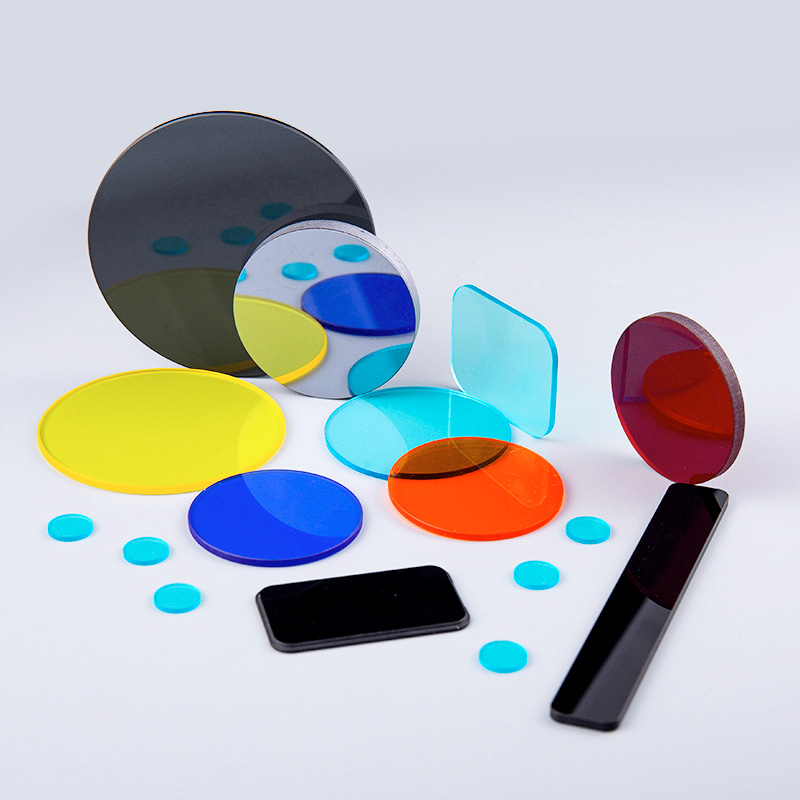
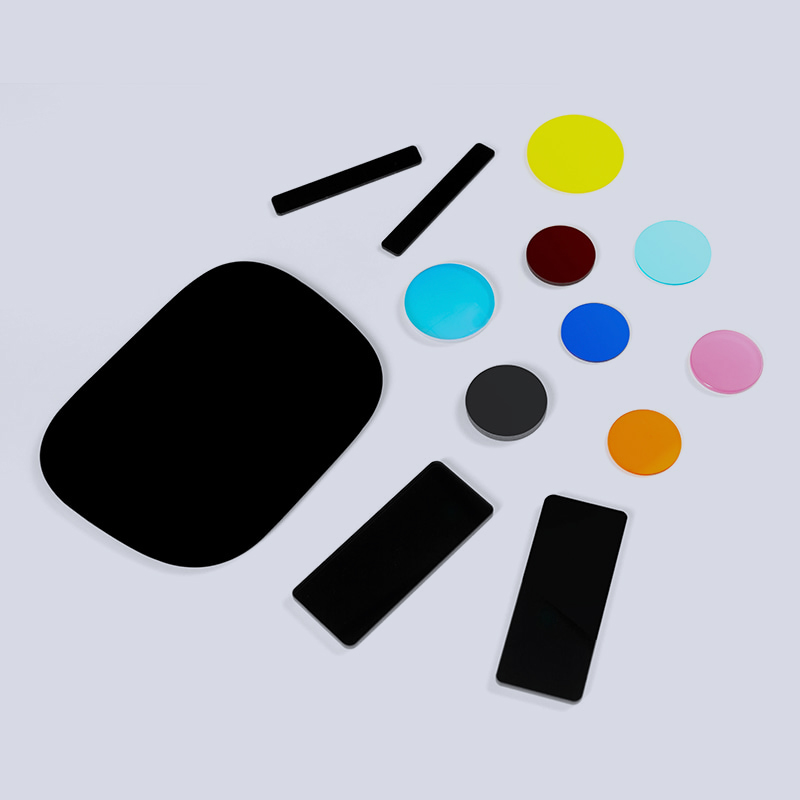
Filters selectively transmit or block specific wavelengths of light. They enhance imaging contrast, reduce noise, and protect sensors. Common filters include:
- Bandpass Filters: Transmit a narrow wavelength range for spectroscopy or fluorescence applications.
- Neutral Density Filters: Reduce light intensity without altering its spectrum, critical for laser safety.
- Polarization Filters: Control the polarization state of light for microscopy and photography.
Materials and Coatings in Optical Components
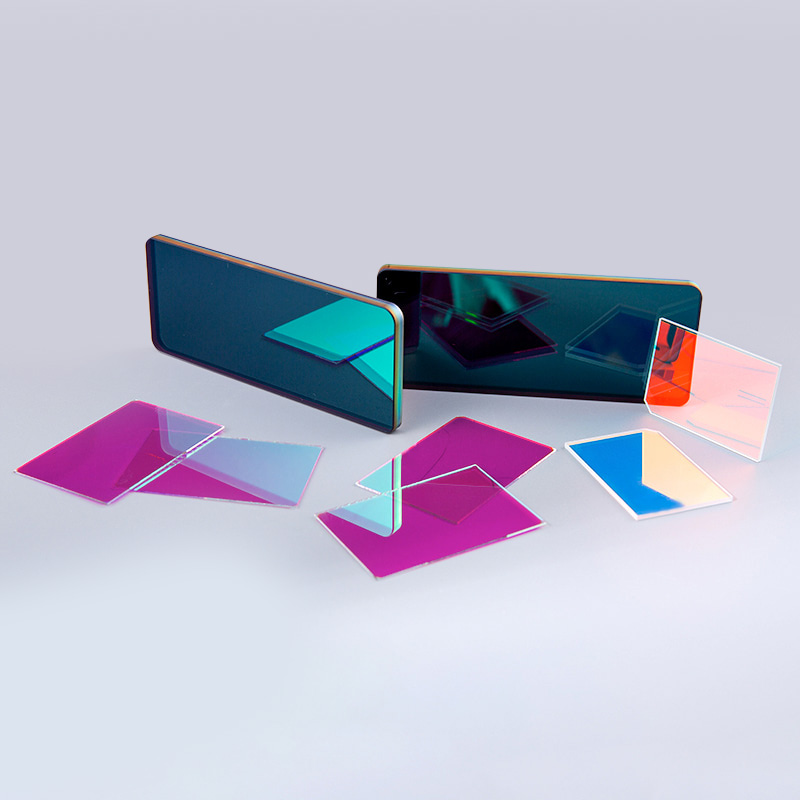
The performance of optical components heavily depends on the material and coating used. Common materials include optical glass, fused silica, calcium fluoride, and sapphire. Coatings are applied to enhance reflection, transmission, or durability. Examples include:
- Anti-Reflective (AR) Coatings: Reduce surface reflections, improving light throughput.
- Dielectric Mirrors: Provide high reflectivity for specific wavelength ranges.
- Protective Coatings: Increase durability and resistance to scratches, moisture, and chemicals.
Applications of Optical Components
Telecommunications
Optical components are vital in fiber-optic communication systems. Lenses and prisms focus and direct light through fiber networks, while filters manage signal wavelengths. Beam splitters allow multiplexing and demultiplexing of data channels.
Medical Imaging and Diagnostics
In medical imaging, optical components enhance the precision of endoscopes, microscopes, and laser treatment devices. High-quality lenses and filters improve resolution, contrast, and wavelength-specific imaging for diagnostics and therapy.
Laser and Photonics Systems
Optical components control the propagation, focusing, and shaping of laser beams. Mirrors, lenses, and beam splitters are essential in laser cavities, material processing, and research laboratories to maintain beam quality and alignment.
Scientific Research
Precision optical components support spectroscopy, interferometry, and imaging experiments. High-accuracy prisms and mirrors enable precise measurements of light properties, while filters allow researchers to isolate specific wavelengths for detailed analysis.
Selection Criteria for Optical Components
Choosing the right optical component requires careful consideration of specifications and application requirements. Important factors include:
- Wavelength Range: Ensure the material and coatings are suitable for the operational spectrum.
- Surface Quality: Minimize imperfections that could scatter or distort light.
- Damage Threshold: Consider laser power levels to avoid surface or coating damage.
- Size and Mounting: Ensure compatibility with existing optical systems or experimental setups.
Conclusion
Optical components are integral to modern technology, enabling advancements in communications, healthcare, research, and industrial applications. Understanding their types, materials, coatings, and selection criteria ensures optimal performance in any optical system. Careful consideration of specifications and application requirements allows engineers, researchers, and designers to build efficient and precise optical setups.

 苏公网安备32041102000130号