
 Search
 en
en English
 日本語
日本語 русский
 Español
 Deutsch
 中文简体
中文简体Content
Pick the wrong mirror geometry and your entire optical system pays — degraded focus, stray light, or measurement errors that trace back to one overlooked component. Optical spherical mirrors are among the most versatile reflective elements in precision optics, but using them effectively requires understanding both their strengths and their known limitations.
What Is an Optical Spherical Mirror?
A spherical mirror has a reflective surface that forms part of a sphere. Depending on which side reflects, it is classified as either a concave mirror (inner surface) or a convex mirror (outer surface). These two types behave fundamentally differently with light and suit different applications.
The key optical parameter is the radius of curvature (R). The focal length (f) relates to it simply: f = R/2. A mirror with a 200 mm radius of curvature has a 100 mm focal length. This relationship governs how the mirror forms images and how it handles beam focusing or divergence.
Concave vs. Convex: Choosing the Right Type
Concave mirrors converge light. Parallel rays hitting the surface all reflect through the focal point — which makes concave mirrors the right choice for beam focusing, solar collection, and telescope primary mirrors. They can also produce magnified real images, which is why they appear in makeup mirrors, dental mirrors, and scientific imaging instruments.
Convex mirrors diverge light and always produce upright, reduced virtual images regardless of object position. Their wide field of view makes them the standard for vehicle side mirrors, store security mirrors, and road intersection safety mirrors. You sacrifice depth accuracy for panoramic coverage.
| Property | Concave Mirror | Convex Mirror |
|---|---|---|
| Light behavior | Converging | Diverging |
| Image type | Real or virtual (object-position dependent) | Always virtual, upright, reduced |
| Field of view | Narrow | Wide |
| Typical applications | Telescopes, laser systems, solar collectors | Vehicle mirrors, surveillance, safety |
Key Specifications to Evaluate
When sourcing an optical spherical mirror for a precision system, four specifications determine whether it will perform:
- Surface figure accuracy — measured in fractions of a wavelength (λ). Research-grade mirrors typically require λ/8 or better. For less demanding applications, λ/4 is acceptable. Tighter tolerances mean more expensive grinding and polishing.
- Surface roughness (RMS) — affects scatter. High-power laser applications often require roughness below 1 nm RMS to avoid scattering losses that degrade beam quality.
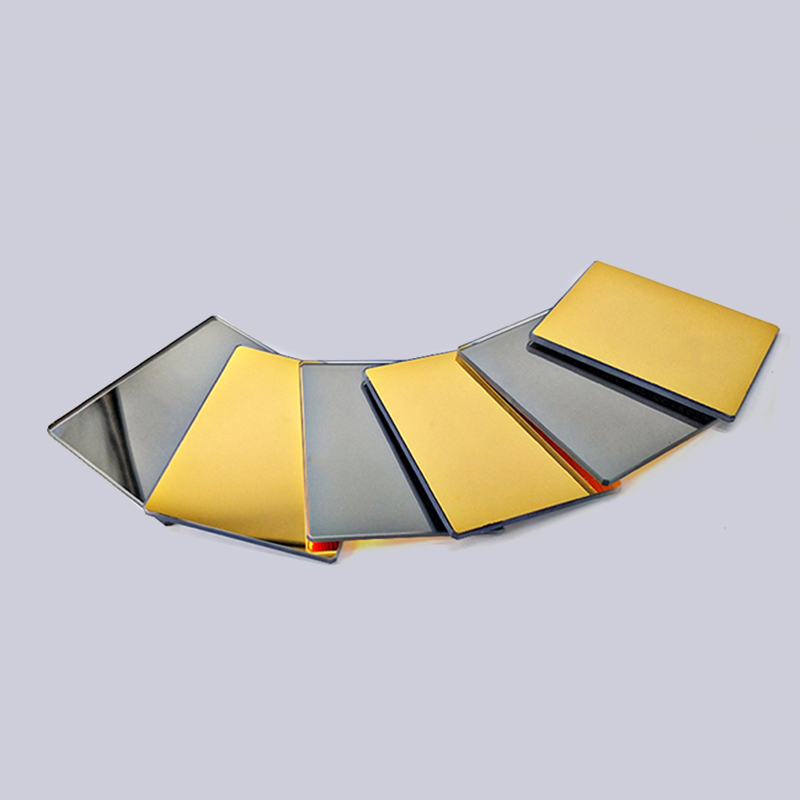
- Reflective coating — the coating determines the usable wavelength range and peak reflectivity. Protected aluminum covers UV to near-IR (~250–700 nm) at around 85–90% reflectivity. Protected gold suits mid-IR applications (>700 nm) at >97% reflectivity. Enhanced silver coatings push reflectivity above 98% in the visible range but require careful handling.
- Substrate material — Borosilicate glass is the standard, combining low cost with good thermal stability. Fused silica is preferred for UV applications or environments with thermal cycling.
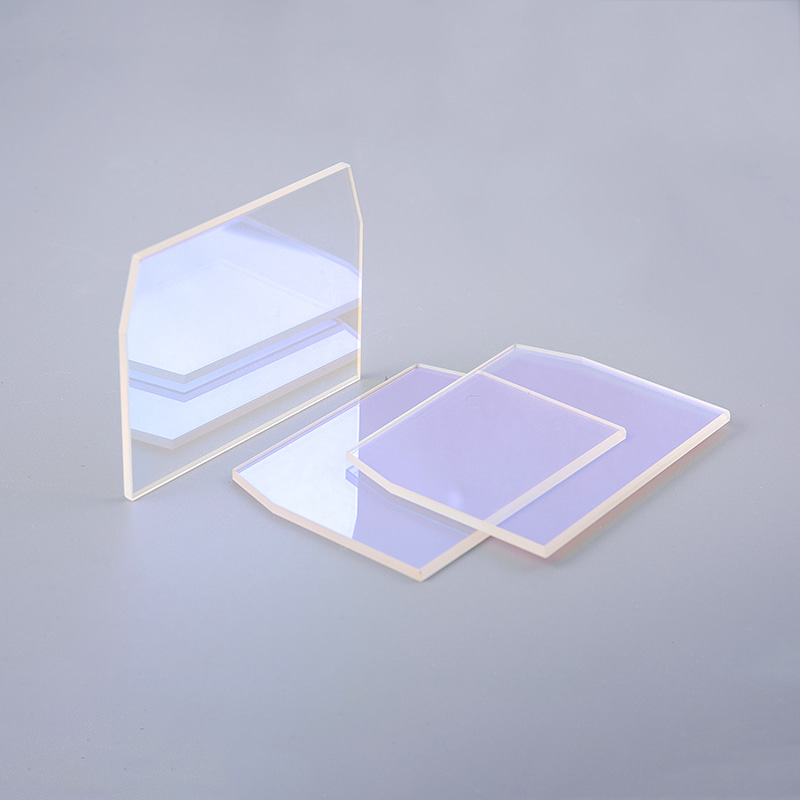
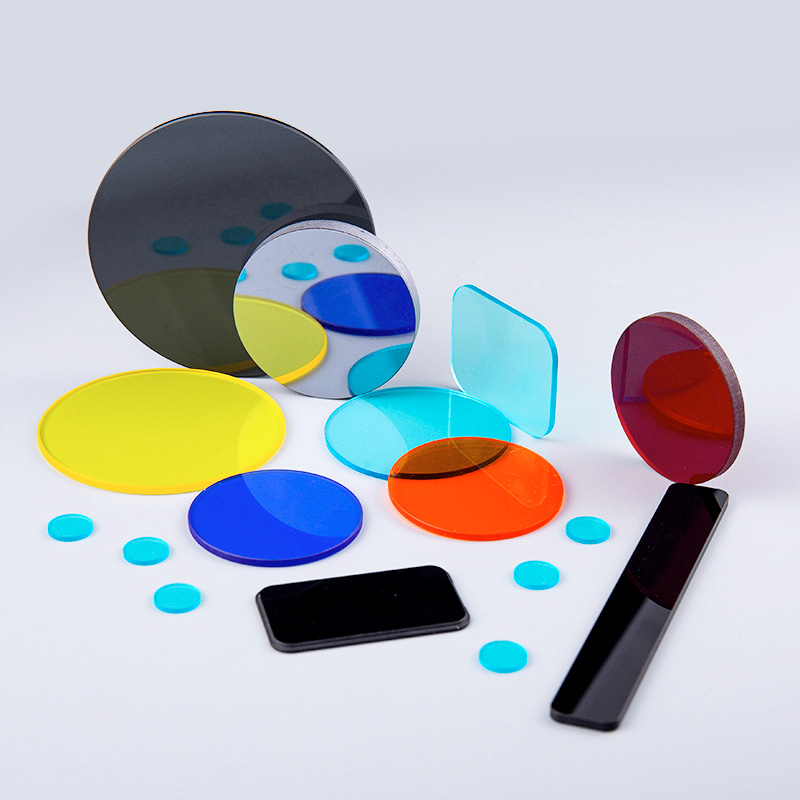
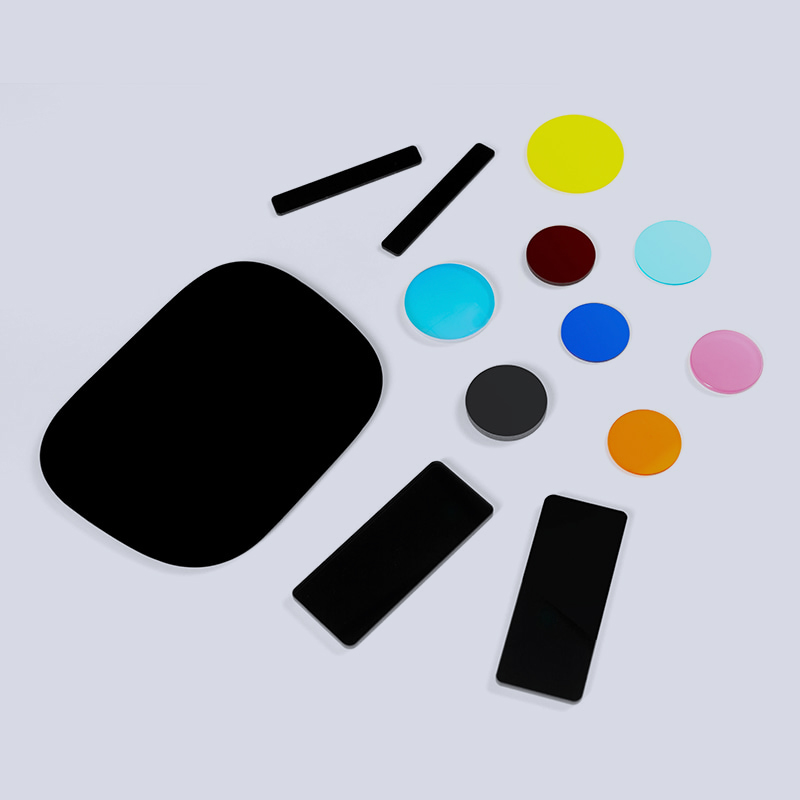
For systems that also require beam steering and filtering, pairing a spherical mirror with flat optical reflectors for precise beam redirection or optical glass filters for wavelength-selective control is common in laser and imaging system design.
Spherical Aberration: The Main Limitation
Spherical mirrors are not perfect focusing elements. Rays striking the mirror far from the optical axis (marginal rays) focus at a slightly different point than rays near the center (paraxial rays). This is spherical aberration — and it is inherent to the spherical geometry. For small-aperture, low-NA systems, it is negligible. For large-aperture or wide-angle applications, it degrades image quality noticeably.
The practical ways to manage spherical aberration are: (1) use a small aperture relative to the focal length (high f-number), (2) combine with a corrective lens group, or (3) switch to a parabolic mirror where tight collimation is non-negotiable. Many telescope designs use a parabolic primary precisely because spherical aberration becomes unacceptable at large apertures. However, parabolic mirrors cost significantly more to manufacture and test than spherical equivalents — which is why spherical mirrors remain the default for moderate-aperture scientific and industrial optics.
Applications Across Industries
Spherical mirrors are found across a wider range of systems than most engineers initially realize:
- Laser optics — used as beam-expanding or folding elements inside laser cavities, and for focusing laser output in cutting, engraving, and materials processing systems.
- Astronomy and telescopes — Newtonian reflectors use a concave spherical or parabolic primary mirror; spherical designs work well at focal ratios above f/8.
- Microscopy and imaging — concave mirrors serve as condenser elements in certain UV and IR microscopes where refractive lenses introduce chromatic aberration.
- Automotive and consumer optics — convex mirrors provide wide-angle views in driver-assistance systems. Custom-curve mirrors also appear in head-up displays (HUD) to project instrument data onto windshields.
- Security and surveillance — large convex spherical mirrors in retail and traffic environments cover blind spots that flat mirrors cannot address.
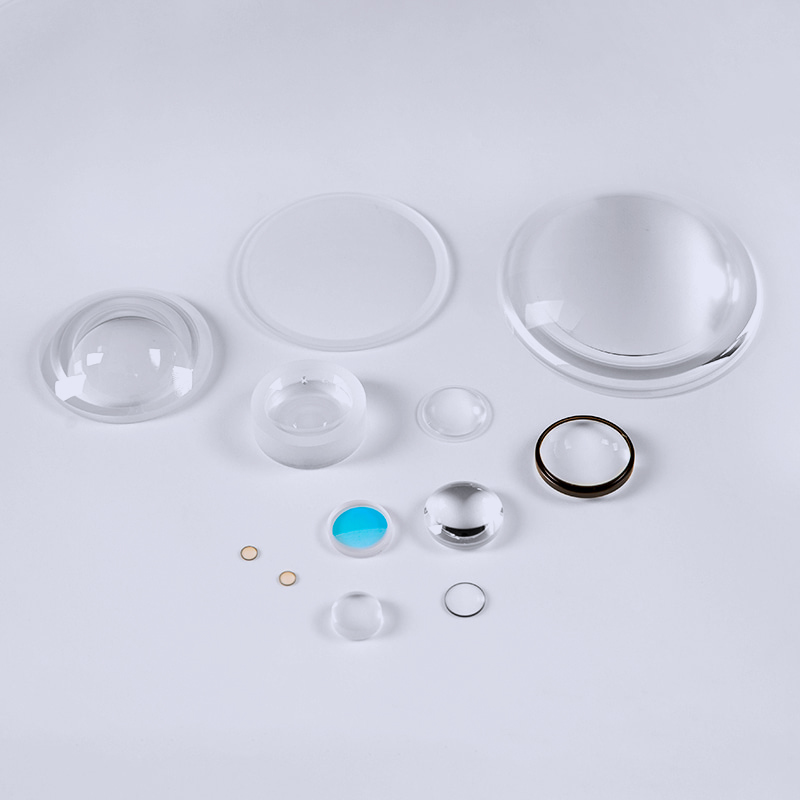
System designers working with multiple optical element types often use spherical mirrors alongside precision optical lenses for focusing and collimation and optical prisms for beam deviation and image rotation.
Handling and Maintenance
Reflective coatings — especially silver and aluminum — are soft and scratch easily. Use only dry nitrogen or clean, oil-free air to remove loose particles. If wet cleaning is unavoidable, use optical-grade methanol or isopropanol on a lint-free swab with a single stroke. Never drag a dry swab across the surface. Store mirrors in sealed, padded containers away from humidity and corrosive gases, which degrade unprotected aluminum coatings rapidly. Protected coatings add a hard dielectric overcoat that significantly improves chemical and mechanical resistance without meaningfully reducing reflectivity.
Sourcing Considerations
Custom spherical mirrors — non-standard diameters, unusual radius of curvature, or specific coating requirements — are manufactured to order by precision optics suppliers. Lead times typically range from two to six weeks depending on complexity. When specifying a custom part, provide: diameter, radius of curvature (or focal length), surface figure tolerance, coating type and wavelength range, and substrate material. Clear specifications prevent the most common sourcing delays. For volume production runs, confirm that the manufacturer can hold consistent tolerances across batches and provide interferometric test reports with each shipment.
For a full overview of compatible precision optical components — from spherical mirrors to wafers and prisms — see the complete precision optical components product range.

 苏公网安备32041102000130号