
 Search
 en
en English
 日本語
日本語 русский
 Español
 Deutsch
 中文简体
中文简体Content
Wrong prism geometry. Mismatched refractive index. A coating that degrades at your operating wavelength. Any one of these mistakes can compromise an entire optical system — and with custom optical prisms, the margin for error is essentially zero. Here is a practical framework for making the right call before you place an order.
Start with Your Optical Function, Not the Shape
The most common mistake engineers make is leading with prism geometry. The right starting point is the optical task: are you redirecting a beam, inverting an image, splitting light by wavelength, or collimating output from a light guide? Each function maps to a specific prism family.
- Beam deflection (90°): Right-angle prisms use total internal reflection to redirect light without a mirror coating — ideal for laser alignment and compact instrument designs.
- Image inversion without lateral shift: Dove prisms rotate an image at twice the prism's own rotation angle, widely used in rotating optical assemblies and endoscopic systems.
- Erect image in binoculars and rangefinders: Porro and roof prisms (e.g., Amici) fold the optical path and correct image orientation simultaneously, enabling compact, long-focal-length instruments.
- Spectral dispersion: Equilateral and Pellin-Broca prisms separate wavelengths with angular precision, essential for spectrometers and wavelength selectors.
- Light homogenization and guiding: Light guide blocks distribute and mix illumination evenly — a critical component in projectors, HUDs, and machine vision illuminators.
Once you have locked in the optical function, geometry follows naturally. Attempting to reverse-engineer the function from a catalog shape leads to compromises that haunt the entire system.
Material Selection: The Decision That Cannot Be Undone
Material determines refractive index, transmission range, thermal behavior, and mechanical durability — all at once. The three most common substrates for custom optical prisms each have a distinct application envelope:
| Material | Refractive Index (nd) | Transmission Range | Best For |
|---|---|---|---|
| BK7 Crown Glass | ~1.517 | 380–2000 nm | General visible optics, cameras, instruments |
| Fused Silica (UV Grade) | ~1.458 | 185–2500 nm | UV lasers, high-power systems, thermal stability |
| Sapphire | ~1.770 | 150–5500 nm | Harsh environments, IR systems, scratch-critical surfaces |
BK7 is the default for cost-sensitive visible-light applications. Fused silica becomes necessary when your system operates in the UV band or when thermal gradients would shift focus in a BK7 element. Sapphire carries a premium but delivers hardness (Mohs 9) and a transmission window that reaches deep into the mid-infrared — making it the right choice for defense sensors, industrial laser windows, and any surface subject to abrasion. For applications paired with precision optical windows in the same optical path, matching substrate families across components avoids thermal expansion mismatches at the system level.
Tolerances: Specify What You Actually Need
Over-specifying tolerances is expensive. Under-specifying them is catastrophic. The key parameters to nail down for any custom optical prism order are:
- Angular tolerance: Standard shop work holds ±3 arcminutes. Precision work reaches ±30 arcseconds. High-end laser and metrology prisms may require ±1 arcsecond — which means longer lead times and higher cost. Specify only what your system error budget actually requires.
- Surface flatness: Expressed as a fraction of the test wavelength (λ). λ/4 covers most imaging applications; λ/10 or λ/20 is needed for interferometric or wavefront-sensitive systems.
- Surface quality (scratch-dig): 60-40 is acceptable for most instruments. Laser damage threshold applications and anti-reflection coated surfaces often need 20-10 or better.
- Transmitted wavefront error (TWE): For prisms inside coherent beam paths, TWE (typically specified in λ RMS) is the governing metric — more directly tied to system performance than surface figure alone.
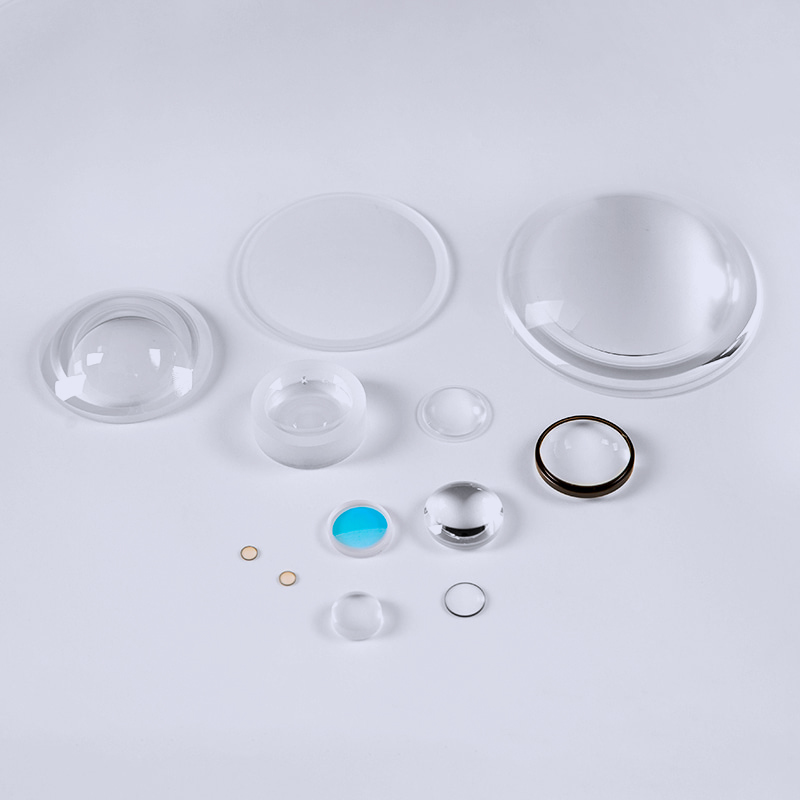
A supplier with in-house interferometric testing can verify TWE before shipment; always ask for a test report, particularly for prisms going into systems combining prisms with precision optical lenses.
Coatings: The Last 5% That Changes Everything
An uncoated BK7 surface reflects about 4% of incident light per interface. A right-angle prism with two refractive surfaces can lose nearly 8% throughput before a single reflection occurs. Anti-reflection (AR) coatings reduce this to under 0.5% per surface across the specified band — a meaningful gain in any transmission-critical system.
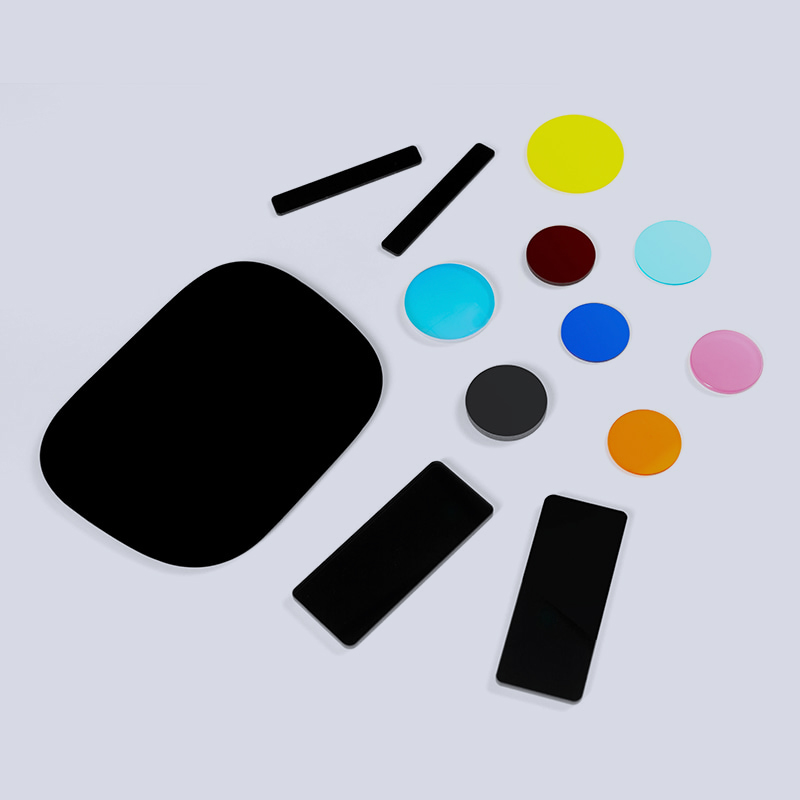
Beyond AR coatings, reflective surfaces inside the prism may need enhanced aluminum or gold coatings when total internal reflection cannot be relied upon (e.g., when the beam angle falls outside the TIR cone). Laser damage threshold (LDT) coatings are mandatory for high-power pulsed systems. Specify your wavelength, polarization state, angle of incidence, and peak fluence to your supplier — these parameters together define the coating design, not just the wavelength alone. Optical glass filters integrated alongside prisms in the same assembly often share coating runs, which can reduce cost when ordered together.
Environmental and Mounting Conditions
A prism that performs perfectly on the optical bench can fail in the field if environmental factors were not factored into the design. Key questions to answer before finalizing the specification:
- Operating temperature range and rate of change (thermal shock risk)
- Humidity and chemical exposure (coating adhesion and glass durability)
- Vibration and shock loads (mounting interface design — bonded, clamped, or kinematic)
- Vacuum compatibility (outgassing from cements used in cemented prism assemblies)
For defense, aerospace, or outdoor industrial systems, fused silica and sapphire substrates with hard durable coatings outperform standard glass across all four criteria. If your project involves custom optical prisms for laser, semiconductor, or automotive optics applications, documenting the full environmental envelope upfront avoids costly redesigns after qualification testing.
Working with a Custom Supplier
The quality of a custom optical prism is only as good as the information you provide. A complete specification package should include: a dimensioned drawing with GD&T callouts, substrate designation, surface quality requirements, coating specification (wavelength, AOI, polarization), and environmental conditions. Suppliers who ask clarifying questions — rather than simply accepting an incomplete drawing — are generally the ones whose parts perform as expected.
Lead time for custom prisms varies from two to eight weeks depending on substrate availability, tolerance demands, and coating complexity. If your project timeline is fixed, discuss material stock and coating capacity before committing to a specification that requires long procurement cycles.
Getting the prism right the first time is not about over-engineering — it is about matching every parameter to the actual demands of the system, no more and no less.

 苏公网安备32041102000130号