
 Search
 en
en English
 日本語
日本語 русский
 Español
 Deutsch
 中文简体
中文简体Content
- 1 Material Fundamentals: What Makes Glass and Plastic Optically Different
- 2 Head-to-Head Comparison: 7 Key Performance Parameters
- 3 Optical Performance: Where Glass Maintains a Clear Advantage
- 4 Weight and Design Flexibility: Where Plastic Has Real Advantages
- 5 Durability and Environmental Resistance
- 6 Application-Based Selection Guide
- 7 The Hybrid Approach: Glass-Plastic Combination Lens Systems
- 8 Manufacturing Considerations for Procurement Teams
- 9 Making the Right Decision for Your Application
Choosing between plastic and glass lenses is one of the most consequential decisions in optical component sourcing. Whether you are designing a camera module, a laser instrument, an automotive sensor, or a consumer wearable, the lens material you specify will directly affect image quality, system weight, long-term reliability, and unit cost. Having manufactured precision optical components since 1998, we work with both material families every day — and the right answer is rarely the same twice.
This article provides a practical, side-by-side analysis of plastic and glass lenses across the parameters that matter most to engineers and procurement teams. Our goal is to give you the information you need to make the right call for your specific application.
Material Fundamentals: What Makes Glass and Plastic Optically Different
At the most basic level, glass and plastic lenses differ in how they are structured at the molecular level, and this drives almost every downstream performance difference.
Glass Lenses
Optical glass is an amorphous inorganic material with a highly ordered, stable molecular structure. Common optical glass types — such as N-BK7, fused silica, and borosilicate — offer refractive indices typically ranging from 1.45 to 1.90, with Abbe numbers (a measure of chromatic dispersion) up to 81. This gives designers fine-grained control over how light bends through a system. Glass is also chemically inert, dimensionally stable across a wide temperature range, and highly resistant to scratching (Mohs hardness of approximately 5–7).
Plastic Lenses
Plastic (polymer) lenses are most commonly made from PMMA (acrylic), polycarbonate (PC), or optical-grade cyclic olefin copolymer (COC). Their refractive indices are generally lower, typically falling between 1.49 and 1.59, and their Abbe numbers tend to be lower than glass equivalents, which means more chromatic aberration in high-precision systems. However, advanced plastic formulations have narrowed this gap significantly for consumer-grade applications.
Head-to-Head Comparison: 7 Key Performance Parameters
The table below summarizes how glass and plastic lenses compare across the criteria most relevant to industrial and precision optical applications.
| Parameter | Glass Lens | Plastic Lens |
|---|---|---|
| Optical Clarity | Excellent; high transmission across UV–IR spectrum | Good; may absorb UV; limited IR transmission |
| Refractive Index Range | 1.45 – 1.90+ | 1.49 – 1.59 (most types) |
| Chromatic Aberration | Low (high Abbe number options) | Moderate to high |
| Scratch Resistance | High (Mohs ~5–7) | Low without coating (Mohs ~2–3) |
| Weight | Heavy (density ~2.5 g/cm³) | Light (density ~1.1–1.2 g/cm³) |
| Thermal Stability | Excellent; stable from –40°C to 300°C+ | Limited; deformation above ~80–120°C |
| Unit Cost (at volume) | Higher | Lower (injection molding scales well) |
Optical Performance: Where Glass Maintains a Clear Advantage
For applications where image fidelity is critical — such as machine vision, metrology, medical imaging, and laser collimation — glass lenses remain the benchmark. Several concrete factors explain why.
Transmission Spectrum
Most optical glass types transmit efficiently across wavelengths from approximately 350 nm (near UV) to 2,500 nm (mid-IR). Fused silica extends this to below 200 nm. Common plastics like PMMA block UV below 370 nm and become increasingly absorptive above 1,400 nm — making them unsuitable for UV curing systems, fluorescence microscopy, or near-infrared sensing without specialized formulations.
Surface Form Accuracy
Precision-ground and polished glass lenses regularly achieve surface form errors of λ/10 or better (where λ = 632.8 nm). Injection-molded plastic lenses typically achieve λ/4 to λ/2, which is acceptable for many consumer applications but insufficient for interferometry, high-power laser systems, or diffraction-limited imaging.
Refractive Index Stability
Glass has a temperature coefficient of refractive index (dn/dT) typically in the range of –1 to +10 × 10⁻⁶/°C, and this value is highly predictable and well-characterized. Polymers have dn/dT values an order of magnitude higher (around –100 to –140 × 10⁻⁶/°C), meaning the focal length of a plastic lens shifts noticeably with temperature — a serious problem in outdoor automotive sensors or industrial equipment operating across wide temperature ranges.
Weight and Design Flexibility: Where Plastic Has Real Advantages
Plastic lenses are not simply a compromise — for the right applications, they are the superior engineering choice.
Weight Reduction
A polycarbonate lens is roughly 50% lighter than an equivalent glass lens. In wearable devices, AR/VR headsets, and drone-mounted cameras — where every gram of optical payload affects battery life and user comfort — this is a decisive factor. Polycarbonate also offers inherent impact resistance approximately 250 times greater than standard glass, making it the material of choice for protective eyewear and ruggedized consumer devices.
Aspheric and Complex Surface Fabrication
Injection molding allows plastic lenses to incorporate complex aspheric profiles, diffractive structures, and integrated mounting features in a single production step. The tooling cost for a precision plastic mold is typically $5,000–$30,000, but once amortized over large volumes (often 100,000+ units), per-unit costs drop dramatically. Grinding aspheric surfaces in glass is possible but remains significantly more expensive per piece and slower to scale.
Cost at Scale
For smartphone camera modules and similar high-volume consumer electronics applications, plastic lens arrays are the dominant solution precisely because of cost. A typical five- or six-element plastic camera lens stack for a flagship smartphone is manufactured at a cost measured in dollars, whereas an equivalent glass assembly would be impractical at consumer price points.
Durability and Environmental Resistance
Durability is not a single property — it encompasses scratch resistance, chemical resistance, thermal performance, and long-term stability. Glass and plastic perform very differently across these dimensions.
- Scratch resistance: Uncoated plastic scratches easily under normal handling. Anti-reflection (AR) and hard coatings can improve surface hardness to approximately 3H–5H pencil hardness, but coated plastic still falls short of bare glass in abrasion resistance. In field-deployed equipment like outdoor surveillance cameras or automotive ADAS systems, this translates to a real maintenance difference over the product lifecycle.
- Chemical resistance: Optical glass is resistant to most acids, solvents, and cleaning agents. Many polymers are attacked by common organic solvents such as acetone, toluene, and MEK — a practical concern during manufacturing and field cleaning.
- Thermal performance: Glass retains its shape and optical properties at temperatures where polymers begin to creep or deform. For automotive under-hood optical sensors, high-power LED illumination modules, or laser-coupled systems, glass is the only viable choice in many thermal environments above 120°C.
- UV aging: Most polymers yellow or haze under prolonged UV exposure, degrading transmission by several percent over months to years. UV-stabilized plastics extend this lifespan but do not eliminate the issue. Glass is essentially immune to UV-induced degradation.
Application-Based Selection Guide
Rather than making an abstract case for one material over the other, it is more useful to map the choice to specific application categories. The following breakdown reflects how we and our customers approach the decision in practice.
Applications Where Glass Lenses Are Preferred
- Laser optics: beam expanders, collimators, focusing optics for CO₂, Nd:YAG, and diode lasers
- Scientific and metrology instruments: microscopes, spectrometers, interferometers
- Medical imaging: endoscope objectives, surgical visualization systems
- Automotive ADAS and LiDAR: front-facing camera lenses, radar cover optics requiring thermal stability
- Industrial machine vision: high-resolution line-scan and area-scan camera objectives
- UV and IR sensing: systems operating outside the visible band
Applications Where Plastic Lenses Are Preferred
- Smartphone and tablet cameras: high-volume, cost-sensitive, compact modules
- AR/VR headset optics: weight and form factor are primary constraints
- Consumer safety eyewear and sports goggles: impact resistance is essential
- Low-cost barcode scanners and entry-level imaging systems
- Disposable or short-lifecycle devices where long-term durability is not required
The Hybrid Approach: Glass-Plastic Combination Lens Systems
A growing number of precision optical systems use hybrid glass-plastic lens assemblies to get the best of both materials. A typical configuration places one or two glass elements at the front of a lens stack — where scratch resistance, thermal stability, and chromatic correction matter most — while using molded aspheric plastic elements in the rear of the system to reduce weight and cost.
This approach is increasingly common in automotive camera lenses, high-end action camera optics, and compact industrial machine vision lenses. The trade-off is greater assembly complexity, tighter tolerances at the glass-plastic interface, and the need for careful thermal compensation in the system design.
Manufacturing Considerations for Procurement Teams
Beyond performance, procurement teams should factor in the following practical differences when choosing between glass and plastic lens suppliers.
Lead Times and Minimum Order Quantities
Custom precision glass lenses typically require 4–10 weeks for prototyping, including grinding, polishing, and coating. Plastic injection-molded lenses require an upfront tooling phase (4–8 weeks) but can then be produced in days at high volumes. For low-volume or prototype runs, glass is often faster and more economical because it does not require dedicated tooling.
Coating Requirements
Both glass and plastic lenses are routinely coated with anti-reflection (AR), hard coat, or bandpass coatings. However, plastic lenses require lower-temperature coating processes (typically below 70–80°C) to avoid thermal deformation, which limits some coating options. Glass accepts a much broader range of coating processes, including ion-beam sputtering and electron-beam evaporation at elevated temperatures, enabling more durable and precise coatings.
Quality Inspection Standards
When specifying glass lenses, buyers should reference ISO 10110 (the international standard for optical drawings) to clearly communicate surface quality, form tolerances, and material requirements. For plastic optics, ASTM and ISO standards for molded optics provide the equivalent framework. Ensuring your supplier references and works to these standards is one of the most effective ways to avoid costly rework.
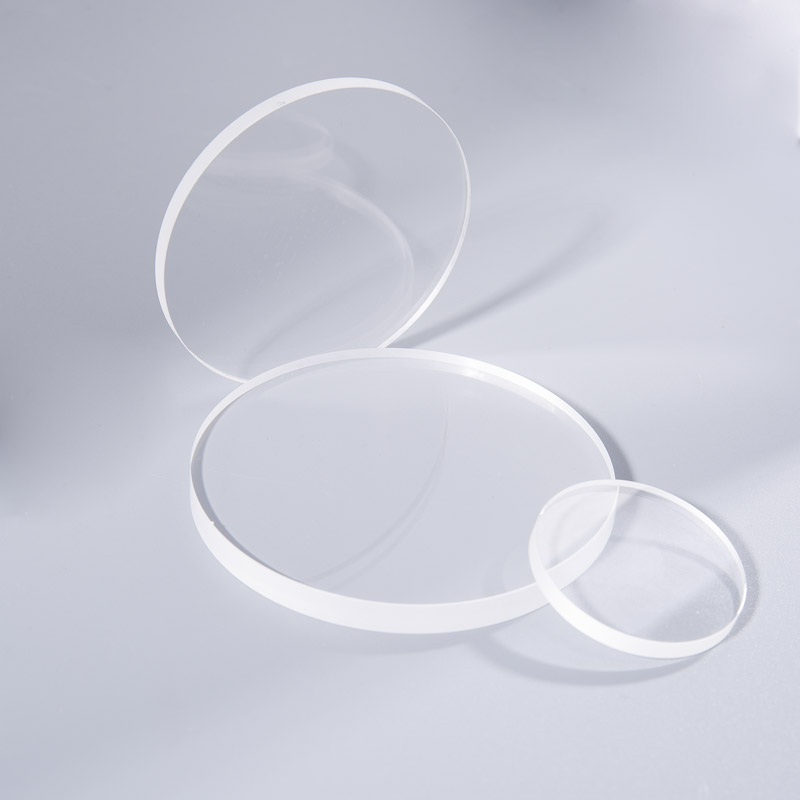
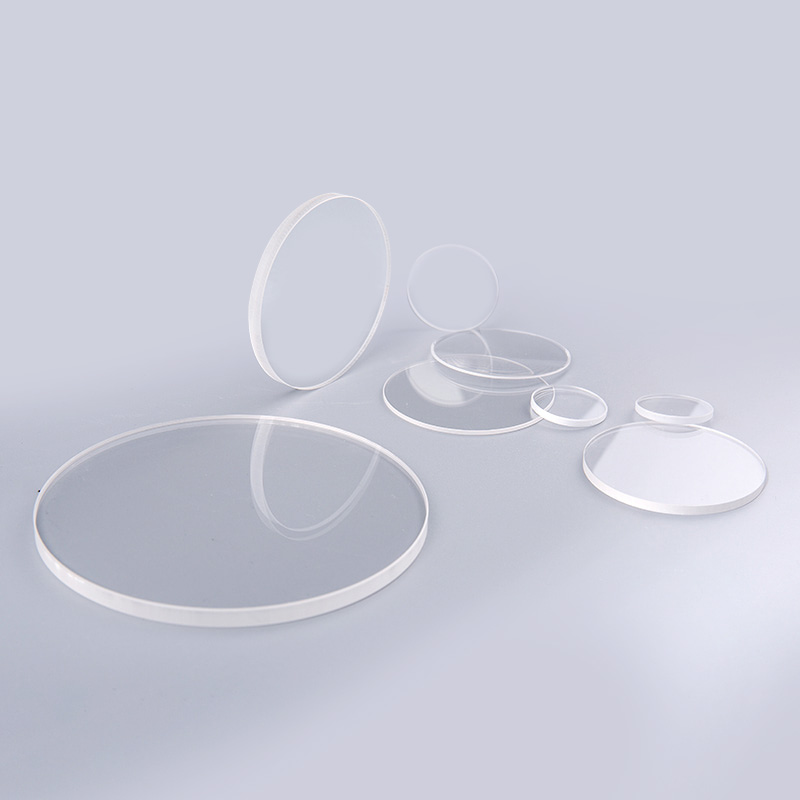
If you are evaluating precision glass optical components for your next project, our optical lens product page provides an overview of the glass lens solutions we manufacture for industrial, automotive, and laser applications.
Making the Right Decision for Your Application
There is no universally superior lens material. Glass lenses deliver better optical performance, greater thermal stability, and longer service life — and remain the standard in precision, scientific, and harsh-environment applications. Plastic lenses offer compelling advantages in weight, cost at scale, and design flexibility — and are the right choice for many consumer electronics, wearable, and high-vol

 苏公网安备32041102000130号