
 Search
 en
en English
 日本語
日本語 русский
 Español
 Deutsch
 中文简体
中文简体Content
- 1 Why Quartz Wafers Are Indispensable in Semiconductor Fabrication
- 2 Purity Requirements: The Foundation of Process Integrity
- 3 Thermal and Physical Properties That Drive Process Performance
- 4 Dimensional and Surface Specifications for Semiconductor-Grade Quartz Wafers
- 5 Key Application Areas in the Semiconductor Process Flow
- 6 Selecting the Right Quartz Wafer: A Practical Framework
- 7 Quality Assurance and Traceability Standards
Why Quartz Wafers Are Indispensable in Semiconductor Fabrication
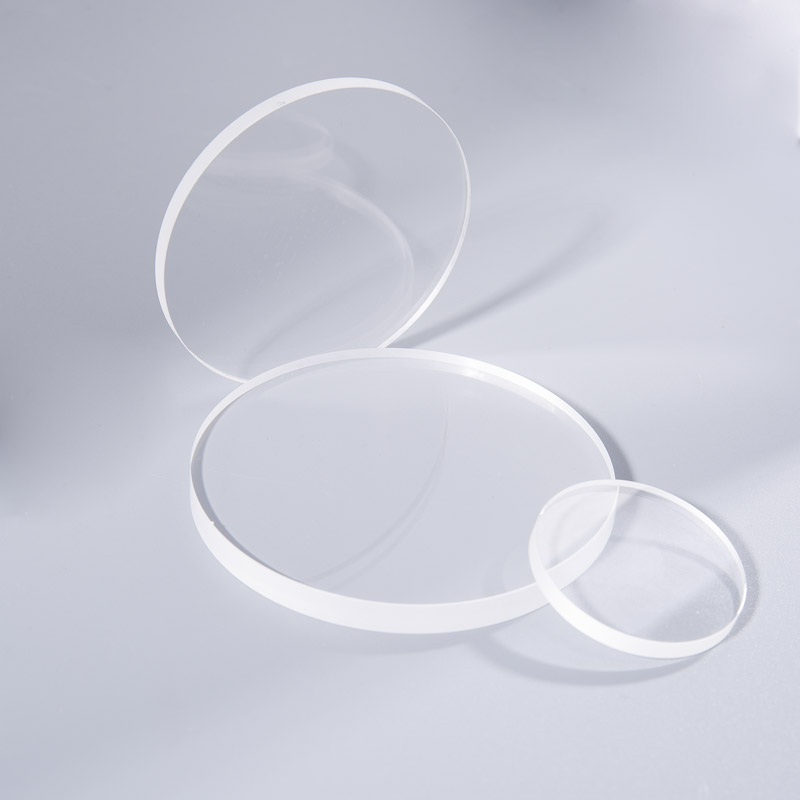
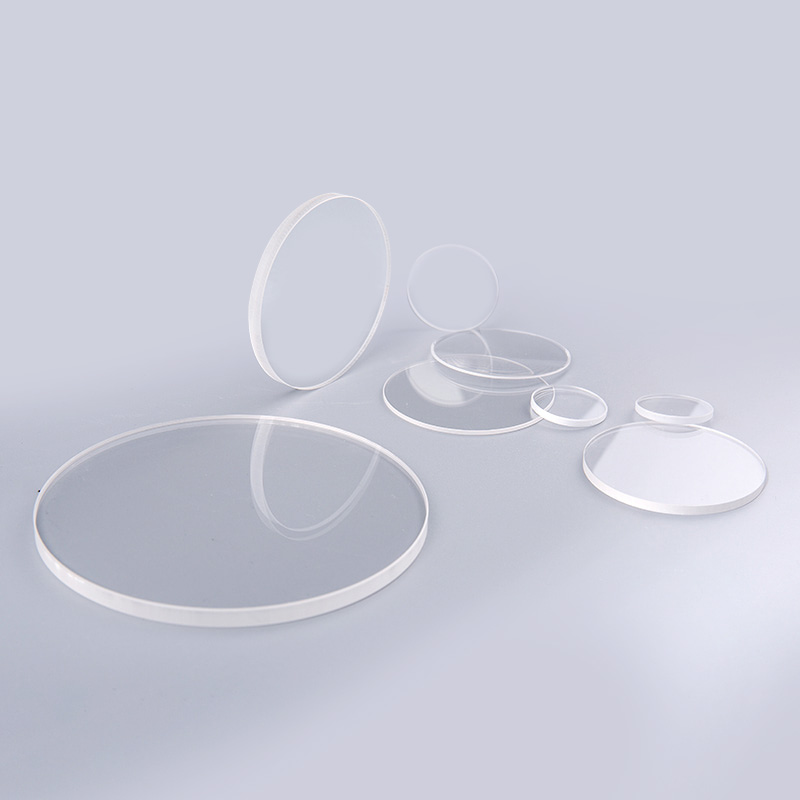
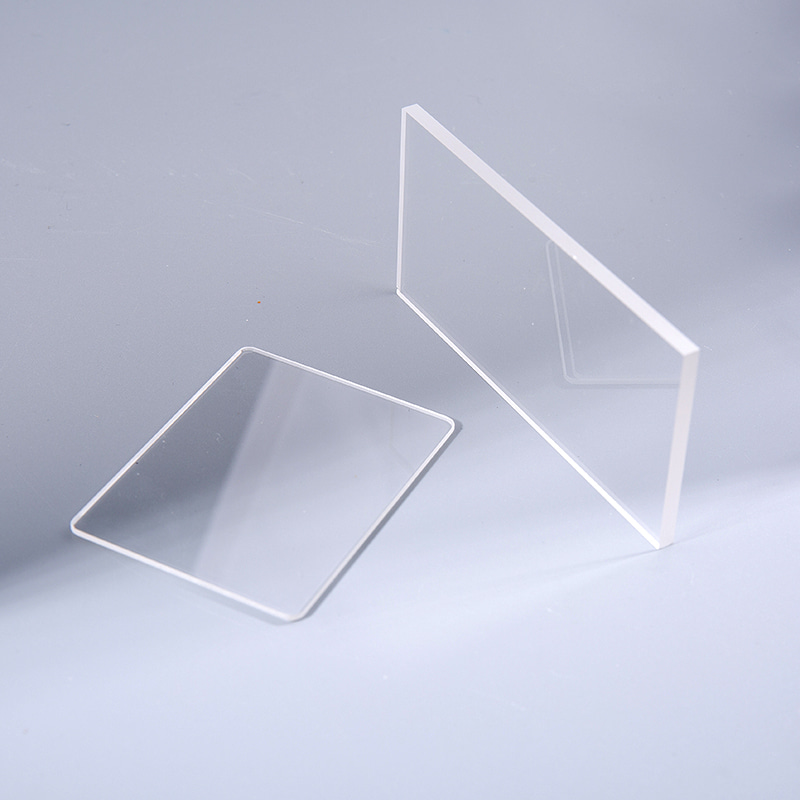
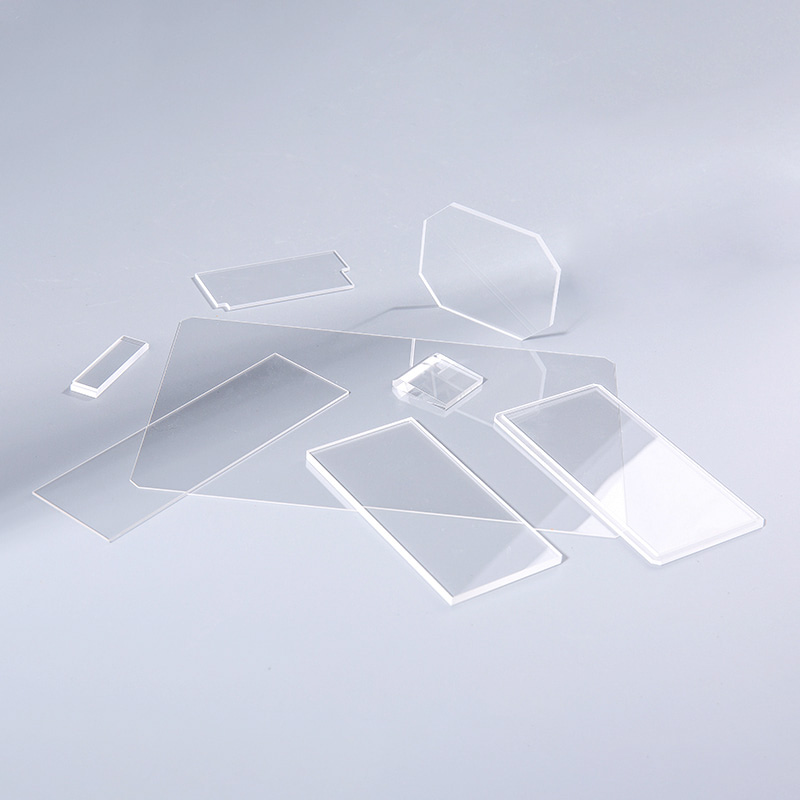
Quartz wafers sit at the foundation of modern semiconductor manufacturing. Their combination of ultra-high chemical purity, outstanding thermal stability, and superior optical transparency makes them the material of choice for applications that silicon or glass simply cannot satisfy. From photolithography stages to diffusion furnaces and ion implantation equipment, quartz wafers serve as critical carriers, windows, and structural components throughout a fab's process flow.
The global semiconductor equipment market exceeded USD 100 billion in 2023, and quartz components—wafers included—account for a significant share of consumable spend. As node geometries shrink below 3 nm, the tolerance requirements placed on every material in the process chain tighten correspondingly, making the technical specifications of quartz wafers more important than ever.
Purity Requirements: The Foundation of Process Integrity
In semiconductor applications, contamination at the parts-per-billion (ppb) level can render entire wafer lots unusable. This is why synthetic fused quartz—manufactured via flame hydrolysis or plasma fusion of ultra-pure silicon tetrachloride (SiCl₄)—is preferred over natural quartz for the most demanding process steps.
Key purity benchmarks for semiconductor-grade quartz wafers include:
- Total metallic impurities < 20 ppb (Al, Fe, Ca, Na, K, Ti combined)
- Hydroxyl (OH⁻) content controlled to < 1 ppm for high-temperature diffusion furnace applications
- SiO₂ content ≥ 99.9999% for front-end-of-line (FEOL) carrier wafers
- Bubble and inclusion class: Type 0 per SEMI standards (no inclusions > 0.1 mm)
Hydroxyl content deserves special attention. High-OH quartz transmits well in the UV range but exhibits viscosity reduction at elevated temperatures, which can cause dimensional instability in furnace tube applications. Low-OH synthetic quartz (< 5 ppm OH) is therefore specified wherever prolonged exposure above 1000 °C is expected.
Thermal and Physical Properties That Drive Process Performance
Quartz's most celebrated property in semiconductor applications is its exceptionally low coefficient of thermal expansion (CTE)—approximately 0.54 × 10⁻⁶/°C, roughly 10× lower than borosilicate glass and 100× lower than most metals. This allows quartz wafers to survive repeated thermal cycling between room temperature and 1200 °C without warping or cracking, preserving the dimensional stability that photolithography registration demands.
| Property | Fused Quartz (Synthetic) | Borosilicate Glass | Alumina (Al₂O₃) |
|---|---|---|---|
| CTE (×10⁻⁶/°C) | 0.54 | 3.3 | 7.2 |
| Max Service Temp (°C) | 1100–1200 | 500 | 1600 |
| UV Transmission (200 nm) | > 90% | ~60% | Opaque |
| Chemical Resistance | Excellent | Good | Very Good |
Beyond CTE, quartz's high chemical inertness to HF, HCl, H₂SO₄, and most oxidizing acids means it survives wet cleaning chemistries that would dissolve or contaminate alternative materials. Its dielectric constant (~3.8) also makes it suitable as a reference substrate in high-frequency test environments.
Dimensional and Surface Specifications for Semiconductor-Grade Quartz Wafers
Dimensional precision is non-negotiable in semiconductor tooling. Standard quartz wafers used as process carriers or optical windows are specified to tolerances that rival those of the silicon wafers they support:
- Diameter: 100 mm, 150 mm, 200 mm, 300 mm (±0.2 mm)
- Thickness: Typically 0.5 mm–5 mm depending on application (±25 µm or tighter)
- Total Thickness Variation (TTV): < 10 µm for photolithography stages; < 5 µm for advanced EUV applications
- Surface roughness (Ra): < 0.5 nm on polished faces (CMP-finished surfaces achieve < 0.2 nm)
- Bow and warp: < 50 µm for 200 mm wafers; advanced nodes require < 20 µm
- Edge profile: Beveled or rounded per SEMI M1 specification to prevent particle generation
Surface cleanliness is equally critical. Semiconductor-grade quartz wafers typically ship with < 10 particles/wafer at > 0.2 µm, verified by laser particle scanners, and are packaged in class 10 or better cleanrooms under N₂ or argon purge.
Key Application Areas in the Semiconductor Process Flow
Diffusion and Oxidation Furnaces
Horizontal and vertical diffusion furnaces are among the highest-volume consumers of quartz components. Quartz wafers function as dummy wafers, boat paddles, and process carriers within these furnaces at temperatures up to 1150 °C. The combination of high purity and thermal stability prevents unwanted dopant diffusion or metal contamination into the product wafers.
Photolithography and Optical Systems
In photolithography, quartz wafers serve as reticle substrates and optical windows. The high UV and deep-UV (DUV) transmission of synthetic fused quartz—exceeding 90% at 193 nm (ArF excimer laser wavelength)—is indispensable for 248 nm KrF and 193 nm ArF lithography systems. Strict birefringence control (< 2 nm/cm) is specified to avoid phase distortion in the optical path.
Ion Implantation and Plasma Processes
Ion implantation chambers require materials that resist sputtering and minimize outgassing. Quartz wafers used as end-station windows and clamp rings must maintain structural integrity under ion bombardment and vacuum baking cycles. Their low outgassing rate (typically < 10⁻⁸ Torr·L/s·cm²) meets even the strictest UHV process requirements.
Chemical Vapor Deposition (CVD) Systems
In LPCVD and PECVD reactors, quartz wafers act as susceptor liners and process tubes that withstand reactive gases such as SiH₄, NH₃, and WF₆. Their resistance to chemical attack, combined with excellent thermal shock tolerance, extends component lifetime and reduces fab downtime versus alternative materials.
Selecting the Right Quartz Wafer: A Practical Framework
Choosing between natural quartz, standard fused silica, and high-purity synthetic quartz requires balancing technical requirements against lifecycle cost. The following decision points guide specification:
- Process temperature: Above 1000 °C sustained use mandates low-OH synthetic fused quartz.
- UV/DUV wavelength: Applications at 248 nm or below require synthetic quartz with confirmed UV transmission curves and birefringence data.
- Metallic contamination budget: FEOL steps demand total metals < 20 ppb; BEOL or packaging steps may tolerate 50–100 ppb grades.
- Dimensional tolerance: Match TTV and bow/warp requirements to the tool's chucking and alignment capabilities.
- Surface finish: CMP polish (< 0.3 nm Ra) is essential for contact or proximity lithography; etched surfaces may suffice for furnace carriers.
- Reclaim cycle compatibility: Some fabs reclaim quartz wafers through HF or HCl cleaning; confirm the wafer's etch rate consistency batch-to-batch.
As fabs transition to 300 mm and beyond—including 450 mm research lines—quartz wafer suppliers are under pressure to scale ingot growth, slicing, and polishing processes while maintaining the same sub-ppb purity levels. Emerging requirements for EUV pellicle substrates push quartz wafer specs even further, demanding thickness uniformity below 100 nm across the full aperture.
Quality Assurance and Traceability Standards
Leading semiconductor fabs require quartz wafer suppliers to comply with SEMI standards (M1, M6, M59), ISO 9001:2015 quality management systems, and often IATF 16949 for automotive-grade chip production lines. Full material traceability—from raw SiCl₄ batch through synthesis, slicing, and polishing—is increasingly mandated to support root-cause analysis when process excursions occur.
Incoming quality control (IQC) protocols at the fab level typically include:
- ICP-MS (Inductively Coupled Plasma Mass Spectrometry) for trace metal verification
- FTIR (Fourier Transform Infrared Spectroscopy) for OH content measurement
- Laser particle scanning for surface cleanliness
- Optical profilometry for TTV, bow, and warp
- UV-Vis spectrophotometry for transmission verification
Suppliers that can deliver wafer-level certificates of conformance with lot-specific ICP-MS and FTIR data hold a significant competitive advantage as fabs tighten their supply chain qualification requirements.

 苏公网安备32041102000130号