
 Search
 en
en English
 日本語
日本語 русский
 Español
 Deutsch
 中文简体
中文简体Content
What Is a Quartz Wafer?
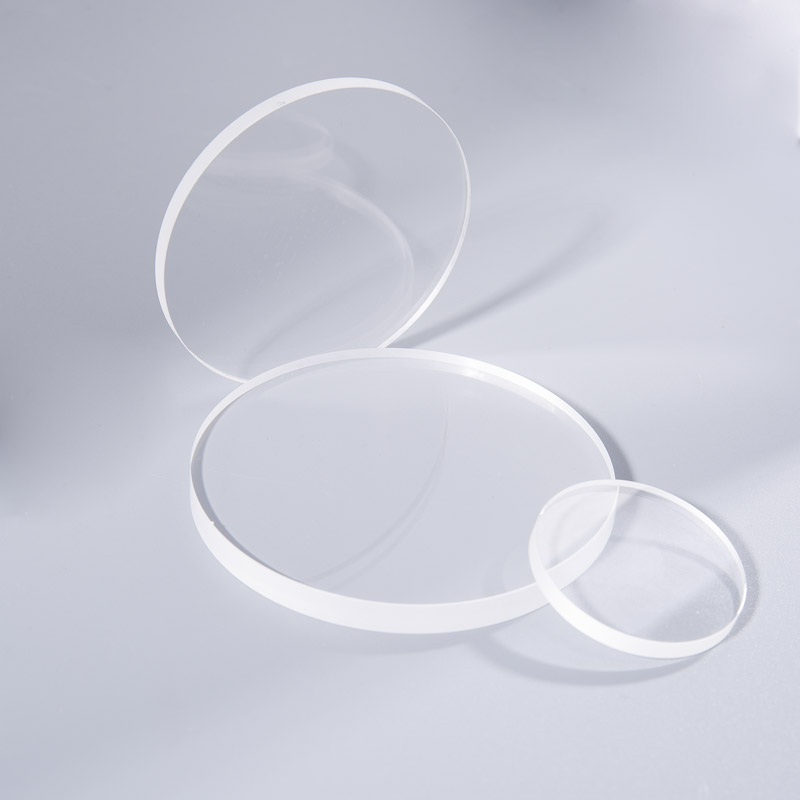
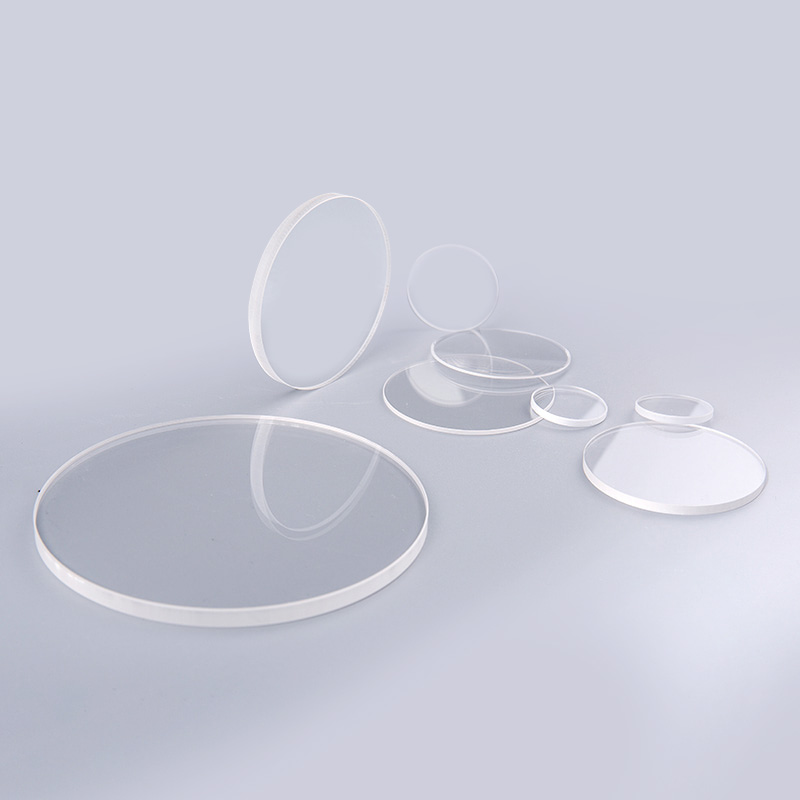
A quartz wafer is a thin, flat disc or plate sliced from a single-crystal or fused silica quartz ingot, precision-ground and polished to exact thickness and surface tolerances. It serves as a foundational substrate or functional component in semiconductor fabrication, optical systems, MEMS devices, and frequency control applications. Unlike silicon wafers, quartz wafers are prized for their thermal stability, UV transparency, and piezoelectric properties — qualities that make them irreplaceable in certain high-performance environments.
Quartz wafers are not a single product but a family of precision components differentiated by crystal cut, purity grade, diameter, and surface finish. Understanding those differences is critical before specifying or purchasing them.
Key Types of Quartz Wafers
The two primary material categories are crystalline quartz (single-crystal) and fused silica (amorphous quartz). Each has distinct strengths:
| Property | Crystalline Quartz | Fused Silica |
|---|---|---|
| Structure | Single-crystal, anisotropic | Amorphous, isotropic |
| Piezoelectric | Yes | No |
| UV Transmission | Good (down to ~150 nm) | Excellent (down to ~160 nm) |
| CTE (ppm/°C) | ~13.7 (anisotropic) | 0.55 (very low) |
| Max Use Temp. | ~573°C (α–β transition) | ~1100°C continuous |
| Typical Use | Resonators, sensors, MEMS | Photolithography, optics, diffusion furnaces |
Crystal Cut Orientations in Single-Crystal Wafers
For single-crystal quartz wafers, the cut angle relative to the crystal's optical axis determines its behavior. The most commercially significant cuts include:
- AT-cut: The dominant cut for oscillators and frequency references. Its frequency-temperature curve has a near-zero slope near 25°C, making it highly stable for room-temperature applications.
- BT-cut: A higher-frequency alternative to AT-cut with slightly different temperature characteristics; used in filter applications.
- Z-cut (C-cut): The optical axis cut; preferred for optical waveplates and piezoelectric transducers requiring predictable electromechanical coupling.
- X-cut and Y-cut: Used in acoustic delay lines and specialized sensors where a particular piezoelectric response direction is needed.
- ST-cut: Optimized for surface acoustic wave (SAW) devices, commonly found in RF filters and wireless communications components.
Standard Specifications and Tolerances
Quartz wafers are manufactured to tight dimensional and surface specifications. The table below summarizes common industry benchmarks:
| Parameter | Typical Range | High-Precision Grade |
|---|---|---|
| Diameter | 25 mm – 200 mm | ±0.1 mm |
| Thickness | 0.1 mm – 5 mm | ±0.005 mm |
| TTV (Total Thickness Variation) | <5 µm | <1 µm |
| Surface Roughness (Ra) | 0.5 – 2 nm | <0.3 nm |
| Bow / Warp | <30 µm | <5 µm |
| Surface Finish | Lapped or polished | DSP (double-side polished) |
For photolithography applications, double-side polished (DSP) fused silica wafers with TTV below 1 µm are often mandatory, as any surface irregularity can distort imaging at nanometer-scale feature sizes.
Primary Applications of Quartz Wafers
Semiconductor and Microelectronics Processing
Fused silica wafers are widely used as carrier wafers and process substrates in semiconductor fabrication because they can withstand the high-temperature diffusion and oxidation steps (900°C–1200°C) that would damage most polymers or glass materials. Quartz boats, tubes, and flat wafers are routine consumables in diffusion furnaces. Additionally, fused silica's near-zero CTE ensures dimensional stability during thermal cycling — a critical factor in overlay accuracy for multi-layer lithography.
Frequency Control and Timing Devices
Single-crystal AT-cut quartz wafers are the core material for quartz crystal resonators (QCRs) and oscillators (QCOs) — the timekeeping and frequency reference components found in virtually every electronic device. The global quartz crystal market exceeds $3 billion annually, driven by demand from telecommunications, automotive, IoT, and consumer electronics. A typical smartphone contains 2–5 quartz-based frequency components.
MEMS and Sensor Fabrication
Quartz's piezoelectric response makes it the material of choice for microelectromechanical systems (MEMS) that convert physical stimuli into electrical signals. Applications include:
- Quartz crystal microbalances (QCM) for mass sensing down to nanogram resolution
- Gyroscopes and accelerometers in aerospace and inertial navigation systems
- Pressure sensors used in industrial and downhole oil and gas monitoring
- SAW-based chemical and biosensors detecting trace gases or biological molecules
Optics and UV Photonics
Both crystalline quartz and fused silica transmit light effectively across UV to near-infrared wavelengths (roughly 160 nm to 3,500 nm). Fused silica wafers are standard substrates for UV laser optics, photomasks, and excimer laser components operating at 193 nm (ArF) or 248 nm (KrF) — wavelengths used in advanced semiconductor lithography. Crystalline quartz's birefringence also makes it valuable for waveplates and polarization optics.
How Quartz Wafers Are Manufactured
The production of a high-quality quartz wafer involves multiple precision steps. Even minor process deviations can render a wafer unusable for sensitive applications.
- Crystal Growth: For single-crystal quartz, hydrothermal synthesis is used — natural quartz lascas are dissolved in alkaline solution at 300°C–400°C and 1,000–2,000 bar pressure, and quartz recrystallizes on seed plates over weeks. Fused silica is produced by flame hydrolysis or plasma fusion of ultra-pure SiCl₄.
- Orientation and Slicing: The crystal boule is X-ray diffraction (XRD) oriented to the desired cut angle, then sliced with a diamond wire saw or inner-diameter (ID) saw. Kerf loss at this stage can be significant — often 150–300 µm per cut.
- Lapping: Both wafer faces are lapped using abrasive slurries (typically Al₂O₃ or SiC) to achieve flatness and remove saw damage. TTV is brought below 5 µm at this stage.
- Chemical Etching: HF-based etching removes subsurface damage from mechanical processing and smooths the surface at the micron level.
- CMP Polishing: Chemical-mechanical planarization (CMP) using colloidal silica slurry achieves sub-nanometer surface roughness. For DSP wafers, both sides are polished simultaneously.
- Cleaning and Inspection: Final wafers are cleaned in megasonic baths or SC-1/SC-2 semiconductor cleaning protocols, then inspected by interferometry (flatness), profilometry (roughness), and optical inspection (defects).
Quartz Wafer vs. Silicon Wafer: When to Choose Which
Silicon wafers dominate active semiconductor device fabrication, but quartz wafers are not a replacement — they serve different engineering needs. The selection depends on the application's functional requirements:
| Requirement | Quartz Wafer | Silicon Wafer |
|---|---|---|
| UV optical transparency | Excellent | Opaque below ~1,100 nm |
| Piezoelectric response | Yes (single-crystal) | No (centrosymmetric) |
| High-temp process stability (>600°C) | Fused silica: up to ~1,100°C | Limited; softens and oxidizes |
| Active transistor/IC fabrication | Not suitable | Industry standard |
| Cost (150 mm wafer) | $50–$500+ depending on grade | $5–$50 (prime grade) |
In short: choose quartz when your application requires optical transmission below 400 nm, piezoelectricity, or thermal robustness beyond silicon's limits. Choose silicon for active electronics and large-volume microchip production.
Sourcing and Quality Considerations
When procuring quartz wafers, several factors beyond basic dimensions determine whether a wafer will perform reliably in your process:
- Purity grade: Electronic-grade fused silica typically has OH content below 1 ppm and metallic impurities in the ppb range. For deep-UV optics, synthetic fused silica (flame hydrolysis) is preferred over natural quartz due to lower OH and fewer inclusions.
- Cut angle accuracy: For AT-cut resonators, the angle must be held to within ±1 arc minute to meet frequency-temperature specifications. Verify supplier XRD measurement reports.
- Edge treatment: Wafers for automated handling require beveled or rounded edges to prevent chipping and particle generation during robotic transfer.
- Flatness certification: Request interferometric flatness maps — not just a single TTV number — to understand the spatial distribution of any bow or thickness variation across the wafer.
- Packaging: Precision quartz wafers should be individually packaged in nitrogen-purged, static-free containers to prevent moisture adsorption and surface contamination before use.
Major quartz wafer suppliers include companies such as Shin-Etsu Chemical, Tosoh Quartz, Crystek, and various specialized precision optics manufacturers in the US, Japan, Germany, and China. Lead times for custom-cut or high-purity grades can run 4–12 weeks, so design-cycle planning should account for this.
Conclusion
Quartz wafers occupy a specialized but indispensable position in advanced manufacturing. Whether the requirement is UV-transparent substrates for photolithography, piezoelectric blanks for oscillators, or thermally stable carriers for semiconductor processing, no single alternative material replicates the full combination of properties quartz provides. Selecting the right type — AT-cut single crystal, Z-cut optical grade, or high-purity DSP fused silica — and verifying supplier specifications rigorously will determine whether a quartz wafer performs as designed or becomes a costly failure point in a precision system.

 苏公网安备32041102000130号