
 Search
 en
en English
 日本語
日本語 русский
 Español
 Deutsch
 中文简体
中文简体Content
Core Applications of Sapphire Wafers
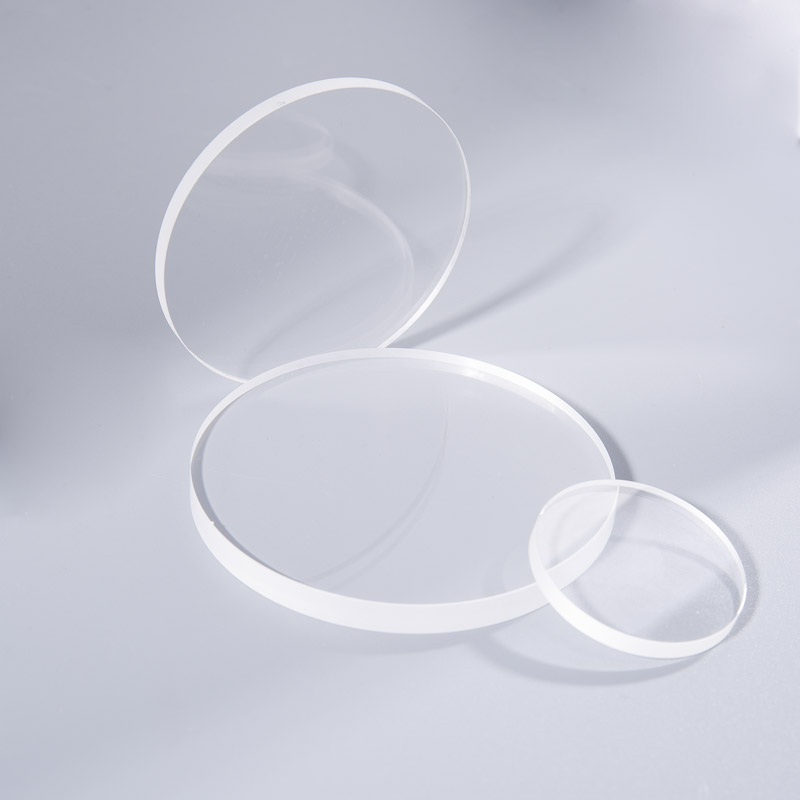
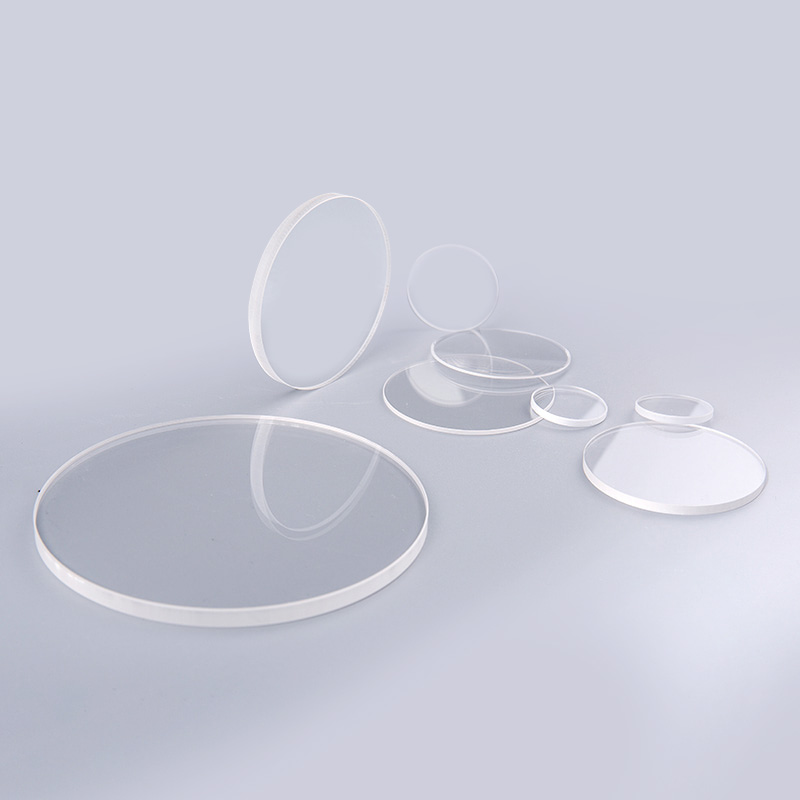
Sapphire wafer serve as critical substrates in LED manufacturing, semiconductor devices, and optical systems, with the global sapphire market reaching approximately $8.2 billion in 2023. Their exceptional hardness (9 on Mohs scale), thermal stability up to 2,040°C, and optical transparency across ultraviolet to infrared wavelengths make them indispensable for applications requiring extreme durability and performance.
The primary commercial use remains LED substrate production, accounting for 60-65% of sapphire wafer consumption. Beyond lighting, these wafers enable advanced technologies in consumer electronics, aerospace, and industrial equipment where conventional materials fail under harsh conditions.
LED and Optoelectronic Manufacturing
Sapphire wafers dominate LED substrate applications due to their lattice structure compatibility with gallium nitride (GaN) epitaxial growth. The c-plane (0001) orientation sapphire provides optimal surface for blue, white, and ultraviolet LED production used in displays, automotive lighting, and general illumination.
Industry Specifications
| Application | Wafer Size | Thickness | Market Share |
|---|---|---|---|
| General LED | 2-6 inches | 430-650 μm | 60% |
| High-Power LED | 4-6 inches | 650-1000 μm | 25% |
| Micro-LED Displays | 6-8 inches | 300-500 μm | 15% |
The shift toward patterned sapphire substrates (PSS) has improved LED light extraction efficiency by 30-40% compared to conventional flat wafers, driving adoption in premium smartphone displays and automotive headlamps where brightness and energy efficiency are critical.
Semiconductor and Power Electronics
Sapphire substrates enable silicon-on-sapphire (SOS) technology for high-frequency RF devices, radiation-hardened circuits, and low-power CMOS applications. The insulating properties eliminate parasitic capacitance, allowing operation frequencies exceeding 10 GHz in mobile communications and satellite systems.
Power Device Integration
Gallium nitride-on-sapphire (GaN-on-Sapphire) power transistors achieve:
- Breakdown voltages above 1,200V for electric vehicle inverters and grid-tied solar systems
- Switching frequencies of 500 kHz-2 MHz reducing passive component size by 70%
- Operating junction temperatures up to 225°C without performance degradation
- Power conversion efficiencies exceeding 98% in server power supplies
Companies like Infineon and Texas Instruments utilize 6-inch sapphire wafers for GaN HEMT production, with the power device segment growing at 18% CAGR through 2028 driven by electrification trends.
Optical and Photonic Systems
The material's transparency from 170 nm (deep UV) to 5,500 nm (mid-infrared) enables diverse optical applications where other materials absorb or degrade. Sapphire windows protect sensors and imaging systems in extreme environments.
Specialized Optical Applications
- Laser Systems: Q-switch components and laser cavity windows for high-power YAG and excimer lasers operating above 100W
- Spectrometry: IR spectroscopy windows for chemical analysis and gas detection in industrial monitoring
- Aerospace Optics: Missile dome windows maintaining optical clarity at Mach 3+ speeds and temperatures exceeding 800°C
- Medical Endoscopy: Biocompatible optical fibers and probe tips for minimally invasive surgical procedures
Defense contractors specify hemispherical sapphire domes measuring 6-12 inches diameter for infrared seeker heads, with the global defense optics market consuming approximately $400 million in sapphire components annually.
Consumer Electronics and Wearables
Synthetic sapphire protects high-value consumer devices through its scratch resistance second only to diamond. Apple's adoption for iPhone camera lenses and Apple Watch covers drove sapphire into mainstream consumer awareness, with annual smartphone applications consuming over 200 million units.
Device Integration Examples
Premium smartwatches utilize 1.2-1.8mm thick sapphire crystals achieving:
- Mohs hardness of 9 preventing scratches from common abrasives (sand, concrete, metal)
- Light transmission above 85% across visible spectrum for display clarity
- Chemical inertness resisting degradation from sweat, cosmetics, and cleaning agents
- Flexural strength of 400-600 MPa providing impact resistance for daily wear
Luxury watch manufacturers like Rolex and Omega have used sapphire crystals since the 1970s, establishing the material's reputation for durability. Modern smartphone camera arrays employ ultra-thin sapphire covers (0.3-0.5mm) that withstand over 100,000 cleaning cycles without visible wear.
Industrial and Scientific Instrumentation
Sapphire's chemical inertness and thermal shock resistance suit demanding industrial environments where conventional glass or quartz fail. High-temperature processes and corrosive chemical exposure require sapphire's stability across pH 0-14 and temperatures to 1,800°C.
Industrial Process Applications
| Industry | Application | Operating Conditions | Key Advantage |
|---|---|---|---|
| Semiconductor Fab | Plasma chamber windows | 300-450°C, reactive gases | Erosion resistance |
| Chemical Processing | Flow meters, sight glasses | Concentrated acids/bases | Chemical inertness |
| Metal Production | Molten metal sensors | 1,200-1,600°C | Thermal stability |
| Pharmaceutical | UV sterilization windows | 254 nm UV exposure | UV transparency |
Research laboratories employ sapphire substrates for thin-film growth studies, high-temperature crystallography, and extreme pressure experiments in diamond anvil cells reaching 300 GPa. The material's well-characterized lattice parameters (a=4.758 Å, c=12.991 Å) provide reliable reference standards for X-ray diffraction and electron microscopy.
Emerging Applications and Market Trends
Next-generation technologies are expanding sapphire wafer applications beyond traditional markets. The development of 12-inch sapphire wafers enables economies of scale previously limited to silicon semiconductor manufacturing, reducing per-device costs by 40-50%.
Advanced Technology Adoption
Emerging applications showing rapid growth include:
- Micro-LED Displays: Direct RGB pixel growth on sapphire for 100+ inch displays with 10-year lifespan projections
- Quantum Computing: Superconducting qubit substrates requiring ultra-low dielectric loss at cryogenic temperatures
- 5G/6G Infrastructure: GaN-on-sapphire RF power amplifiers for base stations operating at 28-100 GHz frequencies
- LiDAR Systems: Laser transmitter substrates for autonomous vehicle sensors requiring nanosecond pulse precision
- Flexible Electronics: Thin-film transfer substrates enabling bendable displays and conformable sensors
Manufacturing Evolution
Advanced crystal growth techniques including heat exchanger method (HEM) and temperature gradient technique (TGT) now produce 600+ kg sapphire boules with dislocation densities below 10³ cm⁻², improving epitaxial layer quality for demanding semiconductor applications. Chinese manufacturers have achieved production costs under $25 per 6-inch wafer, driving adoption in cost-sensitive markets.
The global transition to gallium oxide (Ga₂O₃) power devices on sapphire substrates represents a potential paradigm shift, with theoretical performance exceeding SiC and GaN in ultra-high voltage applications above 3,000V. Research prototypes demonstrate breakdown fields of 8 MV/cm, positioning sapphire-based platforms for next-generation power grid infrastructure.

 苏公网安备32041102000130号