
 Search
 en
en English
 日本語
日本語 русский
 Español
 Deutsch
 中文简体
中文简体Content
- 1 What Optical Lenses Actually Do—and Why Precision Matters
- 2 Optical Automotive Lenses: The Eye Behind ADAS
- 3 Optical Laser Lenses: Where Beam Quality Determines Output Quality
- 4 Selecting the Right Lens: A Practical Decision Framework
- 5 Maintenance and Longevity
- 6 Sourcing Custom Lenses: What to Verify
The global optical lens market is projected to grow from $22.87 billion in 2026 to $44.28 billion by 2034—a CAGR of 6.7% fueled by ADAS rollout, industrial laser adoption, and semiconductor demand. Behind those numbers are real engineering decisions: which lens type, which material, which coating. Get it wrong and an entire system pays for it.
This guide cuts through the noise. Whether you're sourcing lenses for a camera module, a laser cutting system, or automotive perception hardware, here's what you need to know to make the right call.
What Optical Lenses Actually Do—and Why Precision Matters
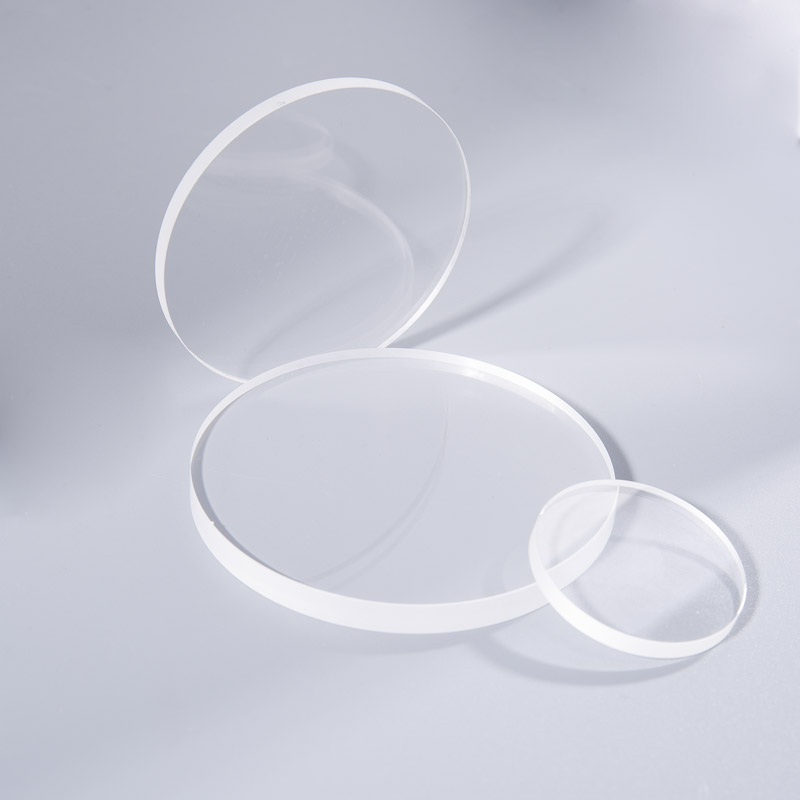
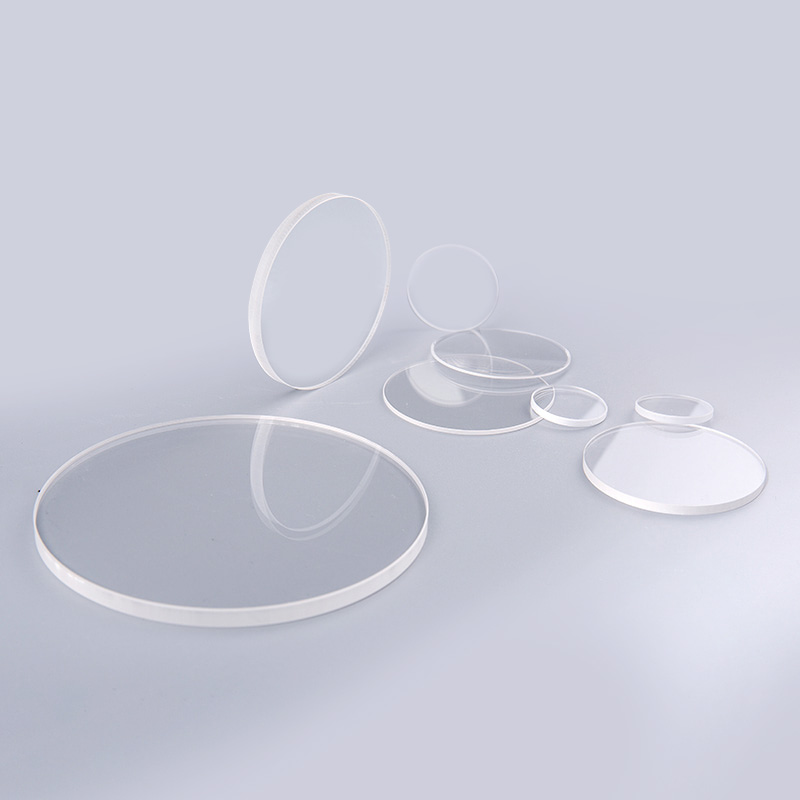
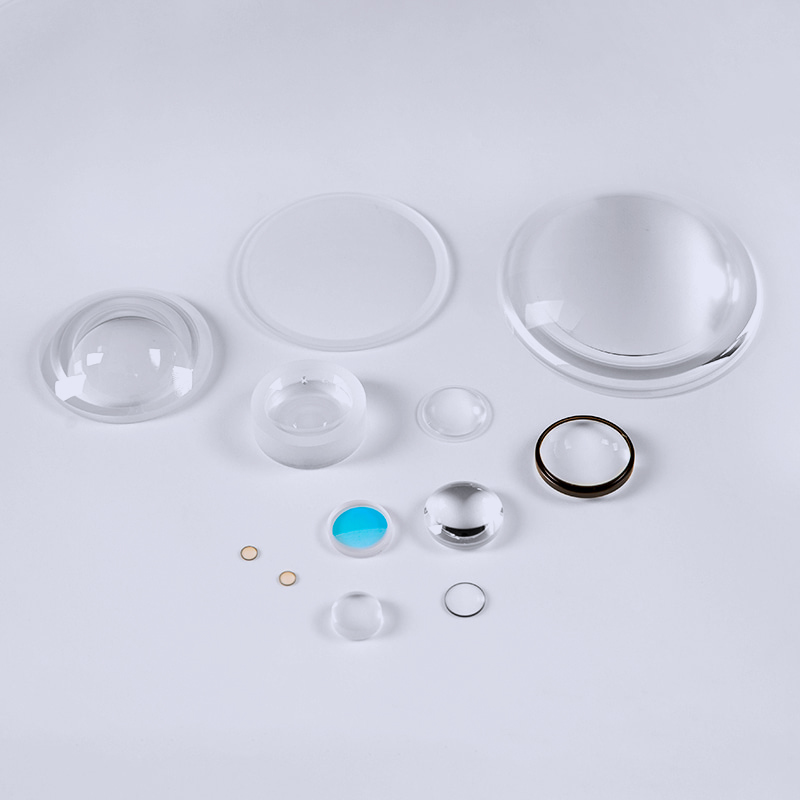
An optical lens is a transparent component shaped to control how light refracts. That sounds simple. In practice, it spans everything from plano-convex elements used in collimating beams to complex aspherical designs that eliminate spherical aberration in high-resolution imaging.
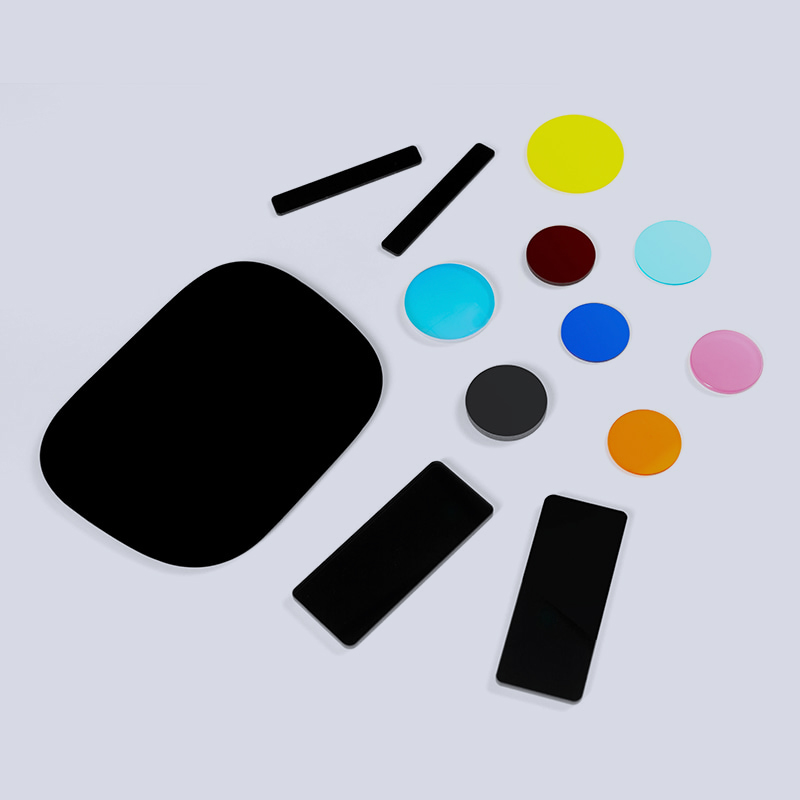
Precision manufacturers like Changzhou Haolilai's custom optical lens line produce lenses across security, measurement, consumer electronics, and laser systems—each with geometry, coating, and substrate tailored to the application. The distinction between a lens that works and one that performs lies in tolerances: surface irregularity, centration error, and coating uniformity.
Optical Automotive Lenses: The Eye Behind ADAS
ADAS camera lenses are among the most demanding optical components in commercial production. They must survive temperature swings from –40 °C to +125 °C (IATF 16949 / AEC-Q100 Grade 1 compliance), maintain focus stability under vibration, and deliver consistent image quality across years of road exposure.
There are three primary application zones, each with distinct optical requirements:
- Front-view (LKA / ACC / AEB) — Narrow FOV of 20°–35° with focal lengths above 25 mm for long-range detection up to 250 m. Resolution is climbing fast: 8 MP is now the benchmark for front cameras in L2+ systems.
- Surround-view (360° AVM) — Ultra-wide fisheye FOV of 185°–202° with distortion controlled below 3.9%, enabling parking assist and blind-spot coverage with fewer cameras per vehicle.
- Driver monitoring (DMS) — Near-infrared compatibility at 940 nm, optimized for low-light cabin imaging without visible illumination.
Material choice is non-negotiable here. All-glass or glass-plastic hybrid (G+P) constructions are required to minimize focus shift in thermal cycling; plastic-only lenses fail automotive durability requirements. Haolilai's automotive interior glass structural components feed directly into this supply chain, providing the structural glass elements that support lens module assembly.
Optical Laser Lenses: Where Beam Quality Determines Output Quality
The laser optics market is on a steeper trajectory than optical lenses in general—projected to reach $19.23 billion by 2030 at an 11.9% CAGR, driven by laser processing in automotive, aerospace, and semiconductor manufacturing.
In laser systems, the lens is not a passive element. It actively shapes the beam. Three parameters define whether a laser lens is fit for purpose:
- Laser Damage Threshold (LDT) — The maximum fluence the lens substrate and coating can withstand before degradation. Fused silica and ZnSe outperform standard optical glass at high power densities.
- Anti-reflective coating efficiency — Each uncoated surface reflects ~4% of incident light. In a multi-element assembly, cumulative loss and back-reflection degrade both power delivery and system stability. High-performance AR coatings bring reflectance below 0.2% per surface.
- Beam quality (M²) — A laser lens with poor surface figure introduces wavefront error that degrades M², widening the focused spot and reducing cutting or welding precision.
Haolilai's technical insights on laser lens beam quality cover these tradeoffs in detail, including how coating design affects back-reflection in fiber-coupled systems.
Selecting the Right Lens: A Practical Decision Framework
Before sending an RFQ, answer four questions:
- What wavelength? Substrate and coating must match the operating band—visible glass works at 400–700 nm, but IR laser applications require ZnSe or CaF₂ for 10.6 µm CO₂ systems.
- What power / irradiance level? This sets the LDT floor. Industrial fiber lasers running at kilowatt levels demand a different spec than a 50 mW alignment laser.
- What environmental exposure? Automotive and outdoor industrial lenses need IP-rated sealing and accelerated weathering certification. Lab lenses used in stable enclosures have simpler requirements.
- What tolerances are actually needed? Tighter tolerances cost more. A DIN 3 surface quality spec is appropriate for high-power laser optics; a DIN 5 surface is often sufficient for illumination lenses. Matching spec to function avoids over-engineering.
| Category | Primary Spec Driver | Typical Substrate | Key Certification |
|---|---|---|---|
| General Optical Lens | Resolution / aberration control | N-BK7, fused silica | ISO 10110 |
| Automotive Lens | Thermal stability / FOV / distortion | All-glass or G+P | IATF 16949, AEC-Q100 |
| Laser Lens | LDT / AR coating / M² | Fused silica, ZnSe, CaF₂ | ISO 11254 (LDT testing) |
Maintenance and Longevity
Optical lenses degrade faster from handling errors than from use. Dust and particulates scatter laser energy and cause local heating that accelerates coating damage. For laser optics, a contaminated front surface can reduce LDT by an order of magnitude before any visible damage is apparent.
Best practices: always use N₂ or filtered air for blow-off before contact cleaning, use lint-free optical wipes with reagent-grade IPA or acetone in a single-pass drag motion, and store lenses in sealed containers away from humidity. For automotive lenses in the field, sealed IP-rated module designs shift the maintenance burden to the assembly level rather than the individual optical surface.
More on cleaning protocols and dust prevention for laser optics is covered in Haolilai's guide on preventing contamination in optical laser lens systems.
Sourcing Custom Lenses: What to Verify
Custom optical lens manufacturing requires more than a price-per-piece comparison. Verify that your supplier holds the certifications relevant to your end market—ISO 9001 and ISO 14001 for general industrial, IATF 16949 for automotive, and evidence of established clean-room and coating capabilities for laser optics.
Changzhou Haolilai Photo-Electricity, founded in 1998 and operating from a 35,000 m² facility in Jiangsu, carries ISO 9001:2015, ISO 14001:2015, and IATF 16949 certification—covering the full span from general precision optical lenses to automotive and laser optics. The company also maintains the Jiangsu Precision Optical Lens Engineering Technology Center, which supports custom development cycles. For procurement teams, that breadth of certification under one roof reduces qualification overhead considerably.

 苏公网安备32041102000130号