
 Search
 en
en English
 日本語
日本語 русский
 Español
 Deutsch
 中文简体
中文简体Content
Two reflector quotations can arrive at nearly the same unit price while differing by eight percentage points in reflectivity. That gap turns into lost beam power, higher energy consumption, and shorter maintenance intervals once the part is installed, and none of it shows up in a side-by-side price comparison. The component itself looks deceptively simple: a shaped piece of glass or metal with one shiny face.
The practical conclusion comes first. When sourcing an optical reflector, pin down reflectivity at your exact operating wavelength, surface accuracy, substrate material, and coating durability before comparing prices. Once those four are fixed, price becomes a meaningful signal; before that, it is mostly noise.
An optical reflector is any engineered surface or device that redirects light by reflection rather than by bending it through a transparent material. The category is broader than most buyers expect: it spans the polished aluminum dish steering light inside an LED luminaire, the first-surface mirror folding a surgical laser beam through its delivery arm, and the corner-cube retroreflector sending a surveying beam straight back to its source.
What Counts as an Optical Reflector
Most reflectors fall into five working categories, and knowing which one a drawing actually requires prevents a surprising number of sourcing errors.
| Type | How it handles light | Typical applications |
|---|---|---|
| Flat specular mirror | Reflects at a predictable angle and preserves image quality | Laser beam folding, interferometry, periscope paths |
| Curved specular mirror | Converges or diverges light without chromatic aberration | Telescope optics, laser resonators, illumination systems |
| Diffuse reflector | Scatters incoming light in many directions | Integrating spheres, lighting enclosures, calibration targets |
| Retroreflector | Returns light toward its source within a tight angle | Surveying, metrology, safety markings, sensor alignment |
| Fiber-optic reflector | Reflects selected wavelengths inside the fiber itself | Telecom networks, fiber-optic sensing |
One distinction matters more than almost any other: front-surface versus second-surface construction. Household mirrors are second-surface, meaning glass sits in front of the coating, so the bare glass face adds a faint ghost reflection and absorbs energy on every pass. Precision reflectors carry the coating on the incident face, which eliminates ghosting and keeps absorption down to fractions of a percent. Ordering "a mirror" without stating this configuration is one of the most common and most expensive specification mistakes in the industry.
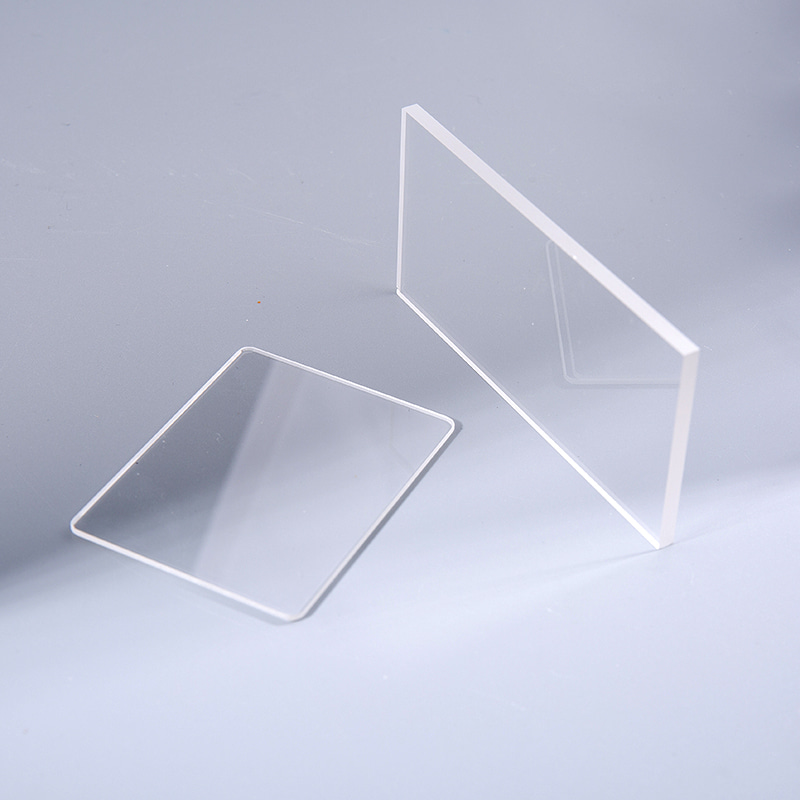
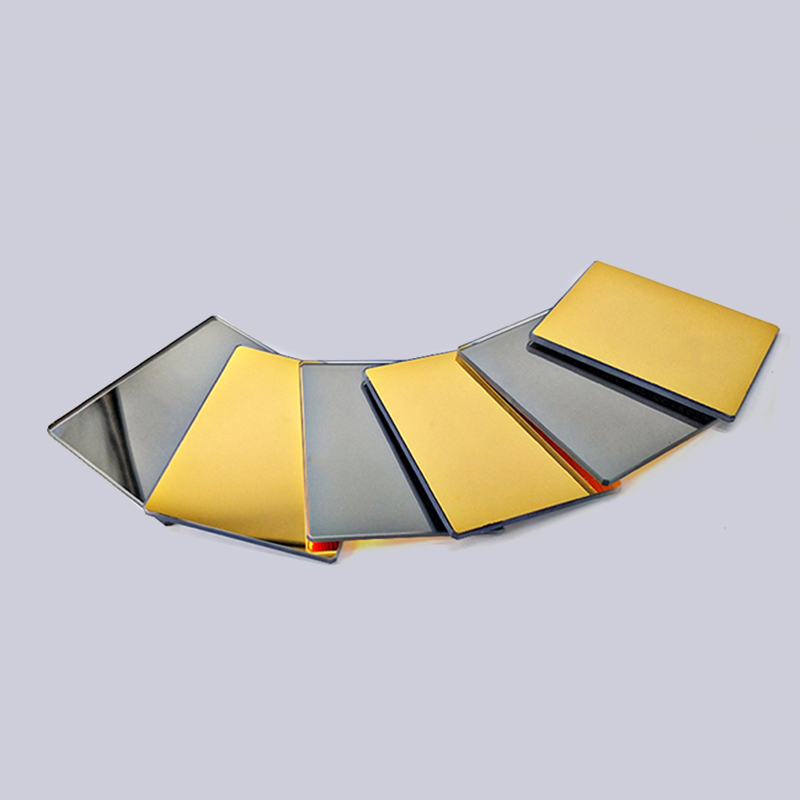
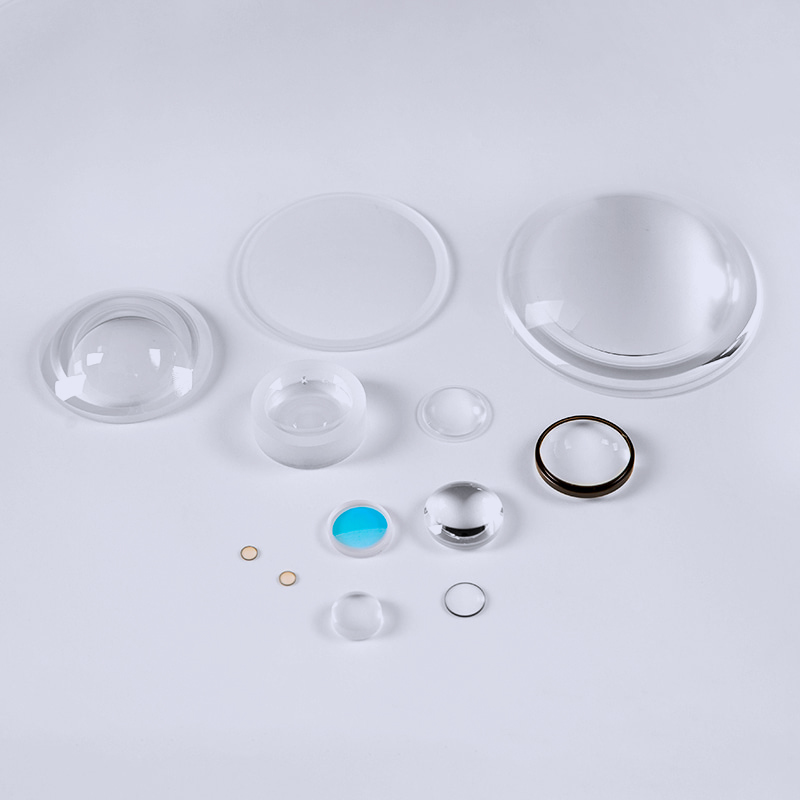
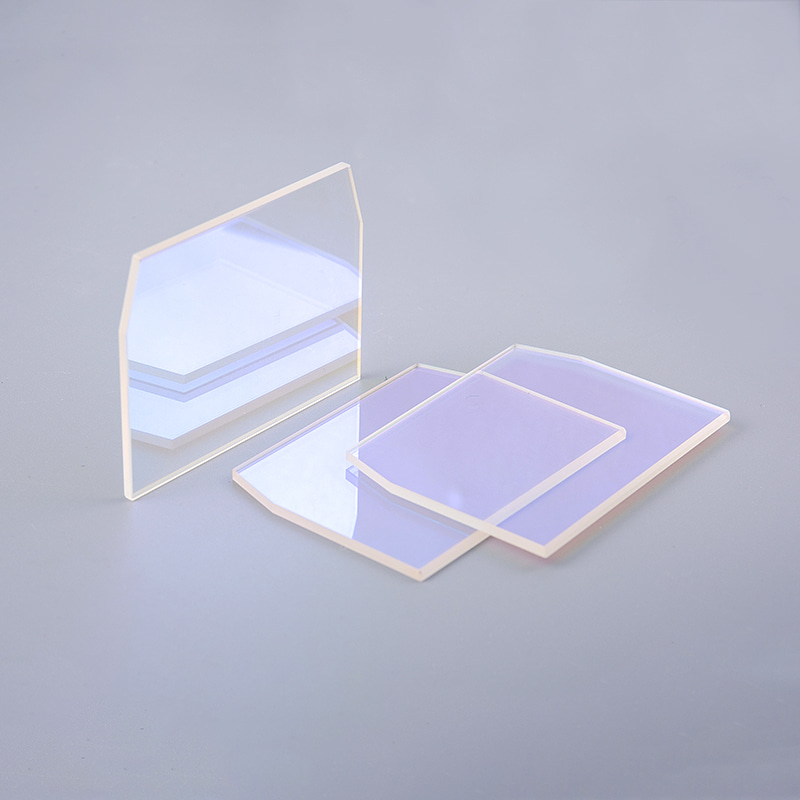 Front-Surface Optical Reflectors for Precision Beam PathsThese reflectors carry the coating on the incident face, avoiding the ghost reflections and added absorption of second-surface mirrors, a key distinction when specifying mirrors for laser and instrument use.View Product →
The Specifications That Decide Performance
Reflectivity and coating selection
Reflectivity is only meaningful when quoted for a specific wavelength, angle of incidence, and polarization. A coating that reaches 99.8% at 1064 nm may lose several percentage points at 532 nm, and a design optimized for 0° incidence can degrade noticeably at 45°. The working options are well established:
- Protected aluminum: roughly 90% across the visible band; economical and durable, the standard for lighting and general beam folding.
- Protected silver: 95–98% through the visible and near-infrared; a strong all-around performer that needs protection against humidity and tarnish.
- Protected gold: close to 99% in the infrared and the default for CO2 laser optics near 10.6 µm; soft, so it demands careful handling.
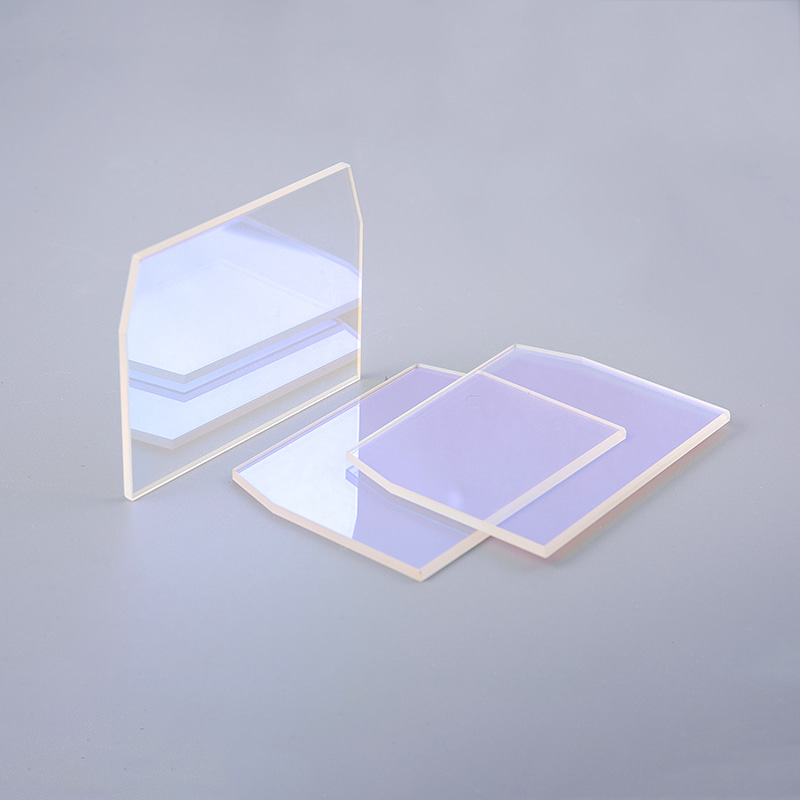
- Dielectric interference stacks: 99.5–99.9% or better at the design wavelength and angle; the lowest-loss option, but sensitive to angle and polarization.
| Coating | Typical reflectance | Best operating range | Practical notes |
|---|---|---|---|
| Protected aluminum | ~90% | Visible to near-IR | Economical; tough overcoat; lighting standard |
| Protected silver | 95–98% | Visible to near-IR | Highest metal reflectance in visible; tarnish sensitive |
| Protected gold | ~99% | ~700 nm into the IR | CO2 laser standard; soft surface, handle carefully |
| Dielectric stack | 99.5–99.9%+ | Design band and angle | Lowest loss; angle and polarization dependent |
Surface accuracy and surface quality
Flatness is specified in fractions of a wavelength, conventionally referenced to the 633 nm helium-neon line. A λ/2 surface is adequate for general beam steering; λ/4 suits most precision instruments; λ/10 and better belongs in laser cavities and metrology, where wavefront error multiplies through the system. Surface quality follows a parallel scale of scratch-dig grades: 60-40 is a reasonable commercial limit, 20-10 fits demanding imaging and laser work, and 10-5 is reserved for cavity optics. Every step down this scale adds cost, so matching the grade to the application, rather than defaulting to the tightest number, is a genuine money-saving exercise.
Substrate choice
The substrate sets the thermal and mechanical ceiling for everything else. Borosilicate and float glass keep cost down and work well in illumination roles. Fused silica expands at roughly 0.5 ppm/°C, which keeps beam alignment stable as parts heat up, and it transmits useful UV. Sapphire reaches hardness 9 on the Mohs scale and shrugs off scratches and thermal shock, which is why it dominates demanding infrared windows in high-power laser systems. Reflector and window programs often draw on the same substrate and polishing capability, so it is worth reviewing both in one conversation.
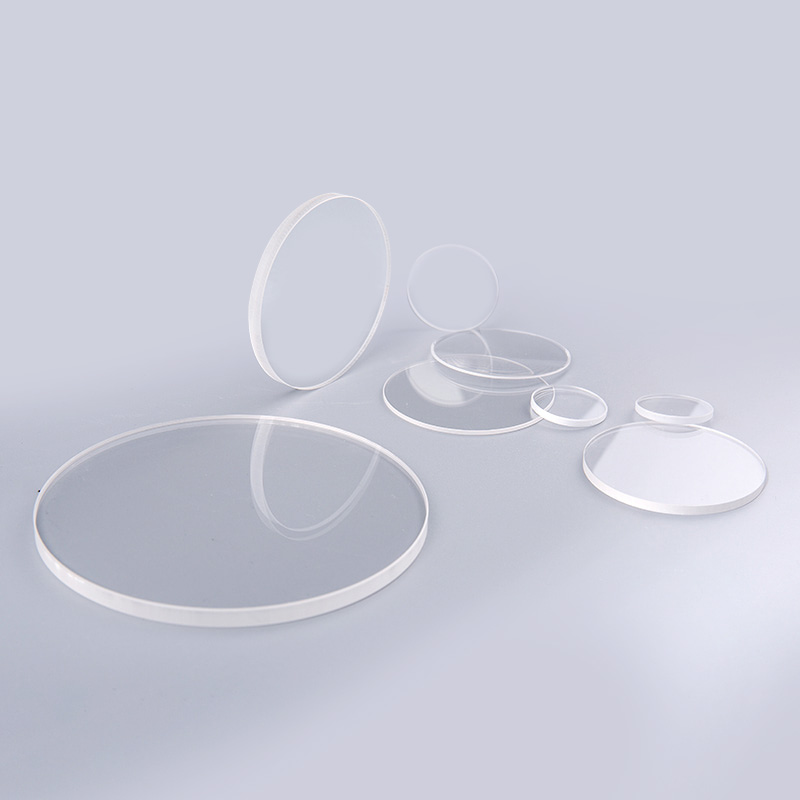
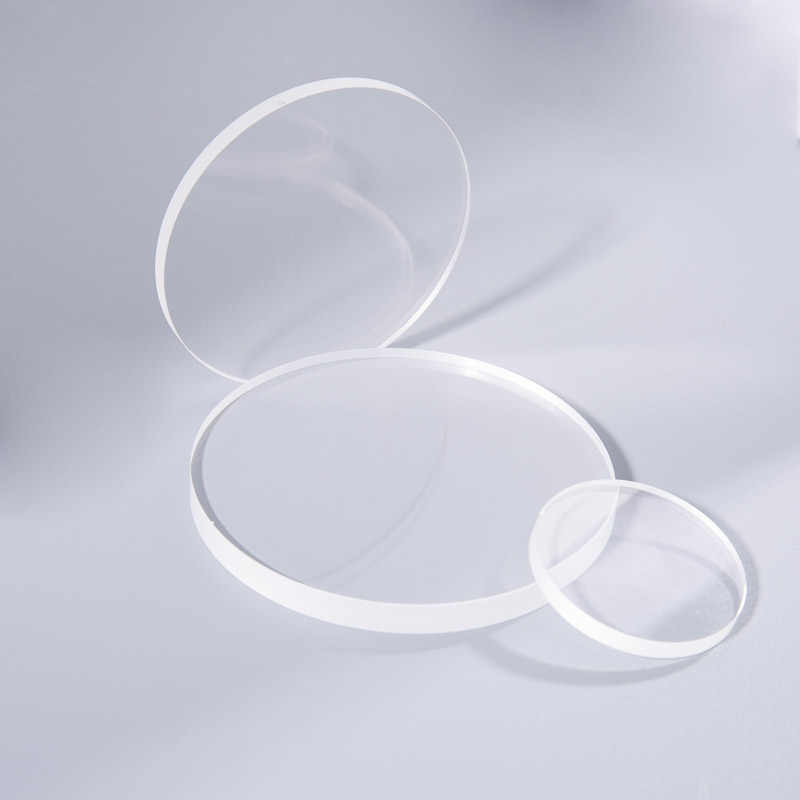 Sapphire Windows for High-Power Laser SystemsWith hardness 9 on the Mohs scale and strong resistance to scratches and thermal shock, sapphire windows pair well with high-reflectance coatings in folded laser paths where substrates must handle heat.View Product →
Where Reflectors Earn Their Place
Laser processing
In a laser cutter or welder, the beam may fold three or four times between the resonator and the cutting head. A reflector at 98% drops 2% per bounce; across four folds, roughly 8% of the beam never reaches the workpiece, and those losses concentrate as heat on the coatings themselves. Gold coatings carry the load at CO2 wavelengths, dielectric stacks do the same at 1064 nm, and thermal stability in the substrate keeps the folded path from drifting as the system warms.
Automotive sensing
LiDAR units steer and shape their scanning beams with reflective elements, so reflector flatness and coating stability translate directly into consistent detection range. Vibration, temperature swings, and condensation are the enemies here, which is why automotive-grade quality systems matter for this supply chain. The mechanics of this application are covered in more detail in our guide to how optical reflectors are used in LiDAR and autonomous vehicles.
LED lighting
An LED emits light into nearly a full hemisphere, and without a reflector a large share of it hits the housing and dies as heat. A well-designed specular reflector recovers that light and puts it into the useful beam. Diffuse reflectors take the opposite trade: they give up peak intensity to produce even, shadow-free illumination, which is exactly what some enclosures need.
Scientific instruments
Telescopes, spectrometers, and microscope illumination paths rely on curved reflectors because reflection treats every wavelength alike: there is no chromatic aberration to correct. A spherical or parabolic mirror can also sit where a lens would be impractical, such as folded paths inside compact instruments. How the curve is specified, meaning radius, aperture, and tolerance on both, determines whether the image lands where the design intends.
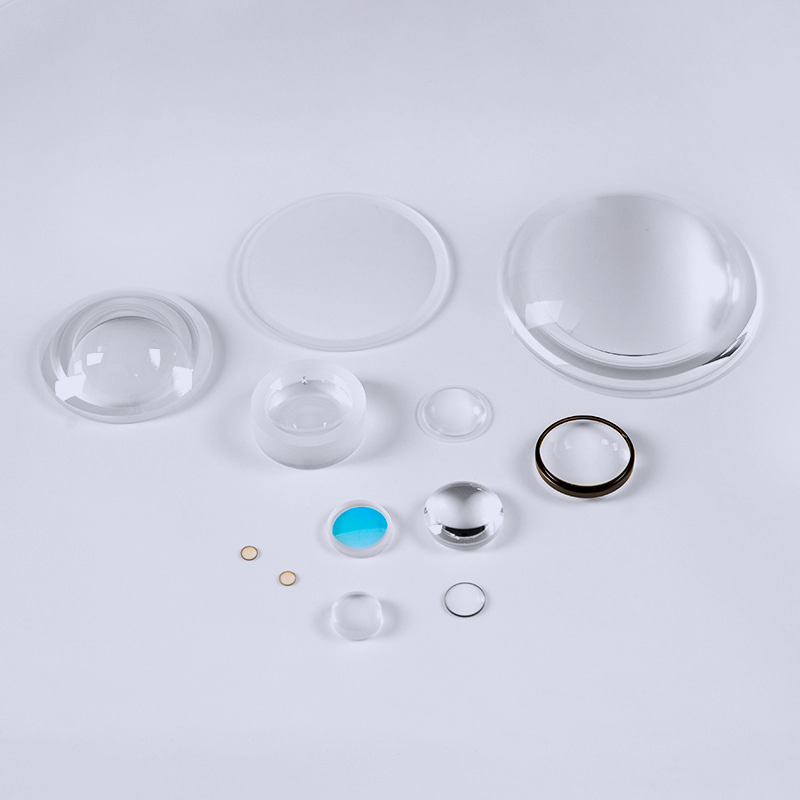 Spherical Mirrors for Telescopes and Imaging InstrumentsBecause reflection is wavelength-independent, concave and convex spherical mirrors avoid chromatic aberration, making them practical for curved reflector roles in telescopes, spectrometers, and compact folded systems.View Product →
What to Confirm Before Ordering
A short checklist keeps the quotation conversation productive and removes most of the ambiguity that causes rework later:
- Operating wavelength, angle of incidence, and polarization state.
- Reflectivity target at exactly those conditions, not at a catalog default.
- Front-surface or second-surface configuration.
- Surface accuracy in waves at 633 nm, plus the scratch-dig grade.
- Substrate material and the thermal environment: peak temperature, cycling, humidity.
- Outside dimensions, thickness, edge bevels, and any mounting features.
- Coating durability requirements, covering adhesion, abrasion, and humidity testing.
The riskiest orders are the vaguest. A request for "a 50 mm mirror" leaves wavelength, coating, and accuracy open, and each can be filled by the supplier's most convenient default. The failure modes surface months later: a coating that delaminates after thermal cycling, ghost images from a second-surface reflection nobody specified, or alignment drift from a substrate with high thermal expansion. None of these are visible at incoming inspection, which is why the specification conversation belongs before the purchase order, not after the field failure.
Working With a Reflector Manufacturer
Custom reflectors are normal business rather than an exception. Changzhou Haolilai Photo-Electricity (HLL) has manufactured precision optical components since 1998, producing flat reflectors, spherical mirrors, windows, filters, and related optics at its 35,000 m² facility in Changzhou, with more than 300 employees and exports to over 20 countries. The company operates under ISO9001:2015 and ISO14001:2015 certification and holds IATF16949, the automotive quality standard that LiDAR and vehicle-mounted optics programs increasingly expect from their suppliers. For buyers, that combination means a drawing can be quoted against realistic tolerances instead of a catalog compromise.
Starting the conversation takes little more than a wavelength, a beam diameter, and a thermal budget. The HLL engineering team can review those inputs and propose substrate and coating combinations matched to the application, whether the part is a single prototype or a production run.
A reflector is usually among the least expensive components in an optical system, yet it touches every photon that passes through. Get the four fundamentals right, namely reflectivity matched to the wavelength, adequate surface accuracy, a substrate suited to the thermal environment, and a coating that survives the installation, and everything downstream, from alignment time to service intervals, gets easier.

 苏公网安备32041102000130号