
 Search
 en
 English
 日本語
 русский
 Español
 Deutsch
 中文简体
Content
A 25 mm concave mirror with a 200 mm radius of curvature reads like a simple line item on a drawing, but that single number fixes the focal length, the f-number and the alignment budget for the rest of the optical path. Most spherical mirror problems are created before the first substrate is polished, when radius tolerance, surface irregularity and coating angle are still left open.
What an Optical Spherical Mirror Does to a Beam
An optical spherical mirror is a reflective element polished to a section of a sphere, and it bends light by reflection rather than refraction, so it adds optical power without adding chromatic dispersion.
Because the surface is curved, every parallel ray that hits it is redirected toward or away from a focal point. A concave mirror, with the coating on the inner face of the curve, converges light and carries a positive focal length. A convex mirror, coated on the outer face, diverges light and carries a negative focal length.
Concave, converging
- Coating on the inner face of the curve
- Positive focal length, real images beyond the focus
- Telescope primaries, laser focusing heads, spectrometer collectors
Convex, diverging
- Coating on the outer face of the curve
- Negative focal length, virtual images, wider field of view
- Cassegrain secondaries, beam expansion, wide area coverage
Spherical aberration is what limits the usable f-number. Rays that strike the edge of a sphere do not meet the paraxial focus, and the gap widens quickly as the mirror gets faster: at f/8 the blur stays small enough for most imaging work, while at f/2 a simple sphere collects visible wavefront error. That is why fast systems usually move to an asphere or an off-axis parabola, and why spherical mirrors are normally specified at f/4 or slower unless a corrector is part of the design.
Specifications to Fix Before Tooling Starts
The specification sheet, not the mechanical drawing, decides whether the finished mirror meets the optical budget, so the tolerance bands have to be agreed before the first substrate is blocked.
| Parameter | Commercial band | Precision band |
| Radius of curvature | +/-1% | +/-0.1% |
| Surface irregularity at 633 nm | Quarter wave | Tenth wave or better |
| Surface quality (scratch-dig) | 60-40 | 40-20 or 20-10 |
| Clear aperture | 85% of diameter | 90% of diameter or more |
| Diameter tolerance | +/-0.2 mm | +/-0.05 mm |
| Centration (wedge) | 3 arc minutes | 30 arc seconds |
| Coating | Protected aluminum | Protected silver or dielectric high reflector |
Two rows drive most of the cost. Moving from a quarter wave to a tenth wave of irregularity usually shifts a part from a standard polish to a computer controlled or hand corrected route, and moving surface quality from 60-40 to 20-10 adds inspection steps under controlled lighting. Radius tolerance matters less for image quality than for focus position, so a system with a long focal length can often accept +/-1% while a compact beam expander cannot.
 Optical Spherical Mirrors for Compact Focusing SystemsCompare concave and convex spherical mirrors for microscopes, telescopes, camera lenses, laser systems, and space-limited instruments; review options before setting coating and test requirements.View Product →
None of these numbers mean anything without a test method. Insist that the interferometer or autocollimation report is tied to the coating wavelength you will actually use, and check that the clear aperture in the drawing matches the coated area rather than the physical diameter. A pre-order verification checklist for spherical mirrors keeps those checks in a fixed order and prevents the drawing from drifting between prototype and production.
Coating Choice Sets the Throughput
Reflectance is set by the coating, and every percent lost at the mirror is paid twice in a double pass layout, once on the way out and once on the return.
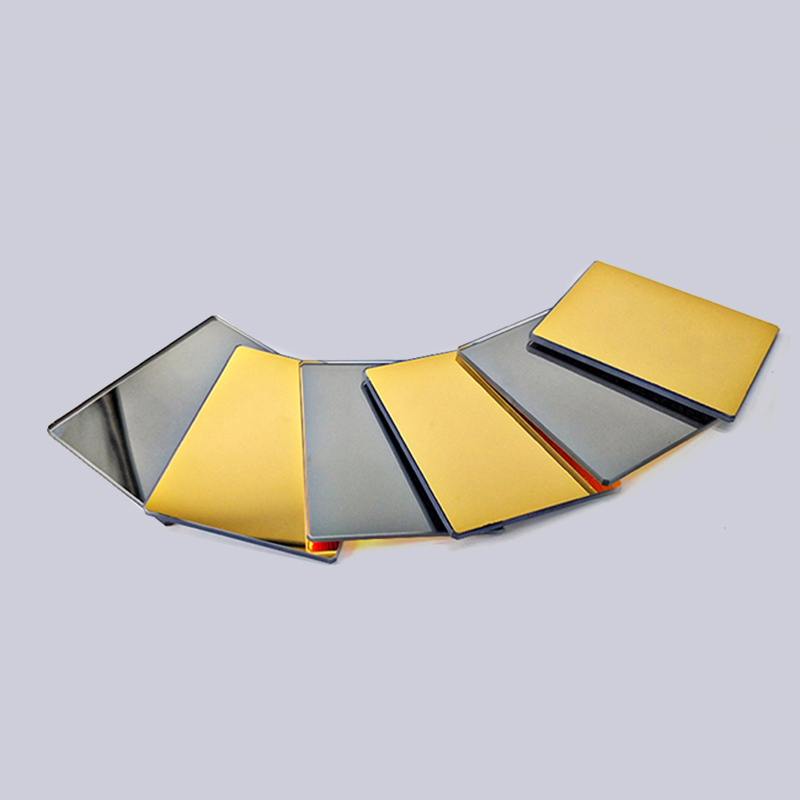
Protected aluminum holds 85 to 89 percent across the visible band after the overcoat, survives routine cleaning and costs the least. Protected silver reaches 95 to 98 percent in the visible and near infrared but is more sensitive to humidity and sulfur, so the protective layer and the storage conditions matter. Gold sits above 98 percent from roughly 700 nm into the far infrared and suits thermal and spectroscopic instruments, though it is soft and not a visible band option. Dielectric high reflectors pass 99 percent at one design wavelength, at the price of a narrower band, stronger angular sensitivity and a reflectance edge that shifts with temperature.
Where Spherical Mirrors Earn Their Place in a System
A curved reflector is chosen where a system needs optical power without dispersion, or needs a long working distance inside a short mechanical envelope.
- Spectroscopy and FTIR: concave collectors gather light from a sample and refocus it on a detector, and a reflective path keeps the focus position stable across a band that no glass singlet can cover.
- Laser delivery heads: a concave mirror focuses or expands a beam at high power, where transmitted optics would absorb energy and shift focus as they heat.
- Imaging and telescopy: Newtonian primaries and convex Cassegrain secondaries fold a long focal length into a short tube.
- Illumination and inspection: spherical domes spread light across a wide area and ring mirrors collect oblique reflections in machine vision stations.
- Automotive and LiDAR optics: compact curved reflectors redirect and shape return signals in scanning modules and driver assistance sensors.
Mirrors rarely work alone. In a spectrometer or a beam expander the curved reflector is paired with a window, a filter or a refractive element, and the through-focus behaviour of the pair is what the detector actually sees. Matching the mirror coating to the transmission band of the refractive parts next to it matters more than optimising either component in isolation.
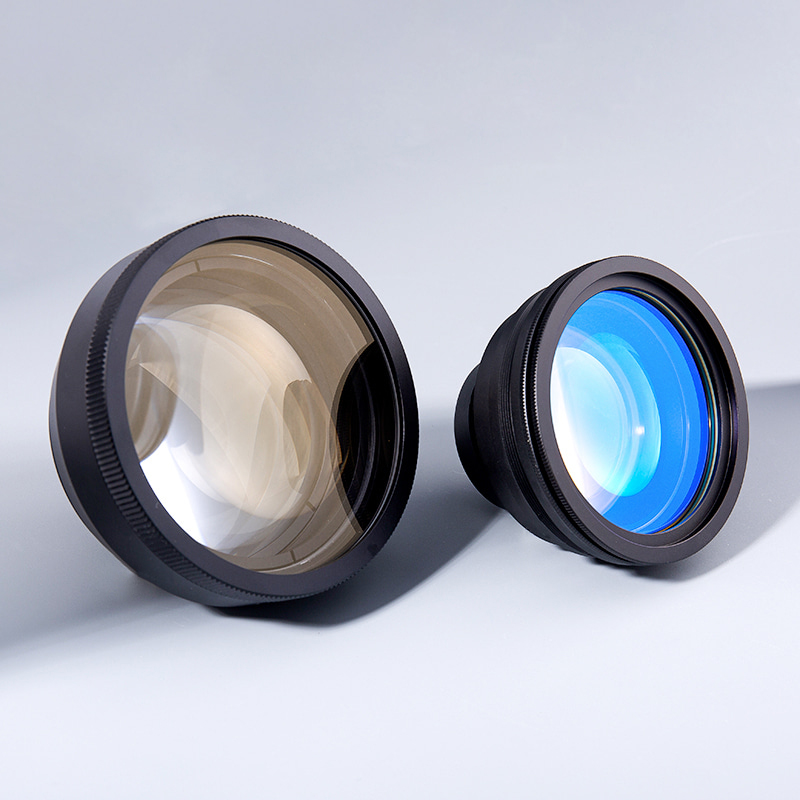 Optical Lenses for Focusing, Collimation, and Beam ControlReview plano-convex through non-spherical lens options for security, measurement, consumer electronics, and laser systems, and match coatings with adjacent refractive optics.View Product →
Spherical, Flat or Off-Axis Parabolic
Choose the surface that removes the error you cannot tolerate: a sphere buys power at the lowest cost per part, a flat folds the path without adding power, and an off-axis parabola removes spherical aberration when the wavefront budget has no room left for it.
Spherical mirror
Power with no dispersion and the lowest polishing cost, with clean behaviour at f/4 and slower. Spherical aberration grows quickly at fast f-numbers.
Flat mirror
Folds a beam or turns a line of sight. Straightforward to certify against a reference flat, but contributes no focusing power of its own.
Off-axis parabola
Diffraction-limited focus on axis, used in fast systems and infrared imagers. Higher unit cost and a much tighter alignment tolerance.
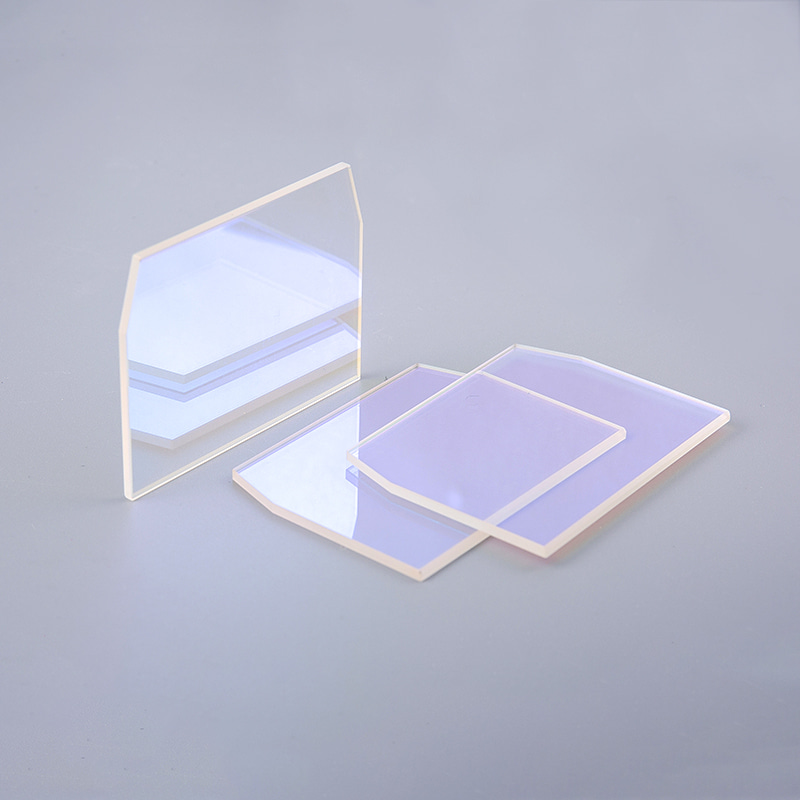 Custom Optical Reflectors for Precision Beam SteeringSpecify reflectance, surface roughness, shape, and size for research, laser processing, medical, or military systems where controlled reflection paths are required.View Product →
Alignment is where the choice shows up on the bench. A spherical mirror tolerates a small tilt by shifting the image, which is recoverable at set-up; an off-axis parabola converts the same tilt into coma, which is not. If the mount cannot hold 30 arc seconds of stability across the operating temperature range, the cheaper surface is usually the better engineering decision.
For custom radii, non-standard diameters or coatings quoted against a measured curve, send the layout through the contact page and include the f-number and the intended wavelength band, since both change which tolerance band is realistic.
Frequently Asked Questions
What is the difference between an optical spherical mirror and a plane mirror?
A plane mirror only changes the direction of a beam and images at unit magnification, while a spherical mirror has optical power, so it changes both the direction and the curvature of the wavefront arriving at the next element.
How do I choose between concave and convex?
Use concave when you need to collect or focus light into a real image, and convex when you need to diverge a beam, widen a field of view or act as a secondary in a folded telescope. The focal length sign in the layout tells you which one the design already assumes.
What radius tolerance should I request?
Start from the depth of focus, not from a habit. Long focal length systems often run comfortably at +/-1%, while a compact beam expander or an interferometer reference arm may need +/-0.1% and a measured radius report with the shipment.
Can a spherical mirror work at f/2?
It can, but the spherical aberration of a fast sphere is large and must be balanced by a corrector or accepted as blur. Most f/2 reflective designs move to an off-axis parabola, while spherical mirrors are usually specified at f/4 or slower.


 苏公网安备32041102000130号