
 Search
 en
en English
 日本語
日本語 русский
 Español
 Deutsch
 中文简体
中文简体Content
Three Materials, One Decision
Pick the wrong optical window and the consequences show up fast — degraded signal, failed coatings, or a component that cracks under thermal stress after a few hundred hours. The material question almost always comes down to three candidates: sapphire, glass (typically BK7 or borosilicate), and quartz (fused silica). Each one solves a different problem. Knowing which one solves yours is the real challenge.
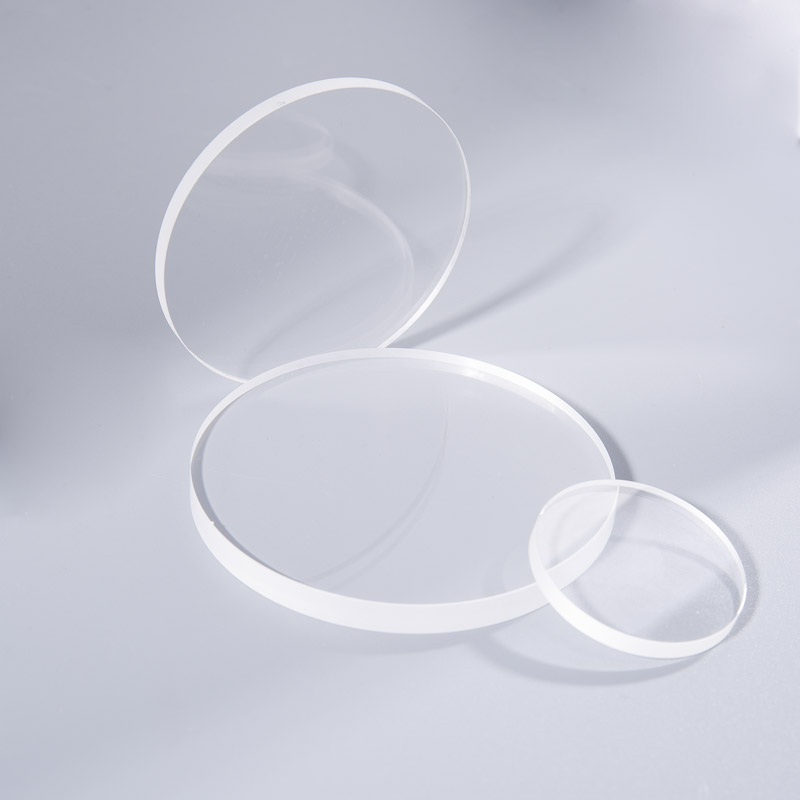
Sapphire Optical Window: Built for Extremes
Sapphire is single-crystal aluminum oxide (Al₂O₃). On the Mohs scale it scores 9 — second only to diamond — which means surface degradation from abrasion or particle impact is rarely a concern. Its compressive strength reaches 3.2 GPa, and transmission spans roughly 150 nm to 5.5 μm, covering UV through mid-infrared in a single substrate.
That broad spectral range matters in multi-wavelength laser systems and thermal imaging where you need one window to perform across several bands. Sapphire also conducts heat well (approximately 35 W/m·K at room temperature), so it doesn't develop hot spots under high-power illumination the way glass does. Add chemical inertness against most acids and alkalis, and you have a material that genuinely thrives in harsh environments: deep-sea instrumentation, aerospace viewports, high-power laser housings, and defense optics.
The trade-off is cost and machinability. Sapphire is harder to grind and polish than glass or quartz, which makes custom shapes more expensive. For applications where price is a primary constraint and environmental stress is low, it's often overspecified.
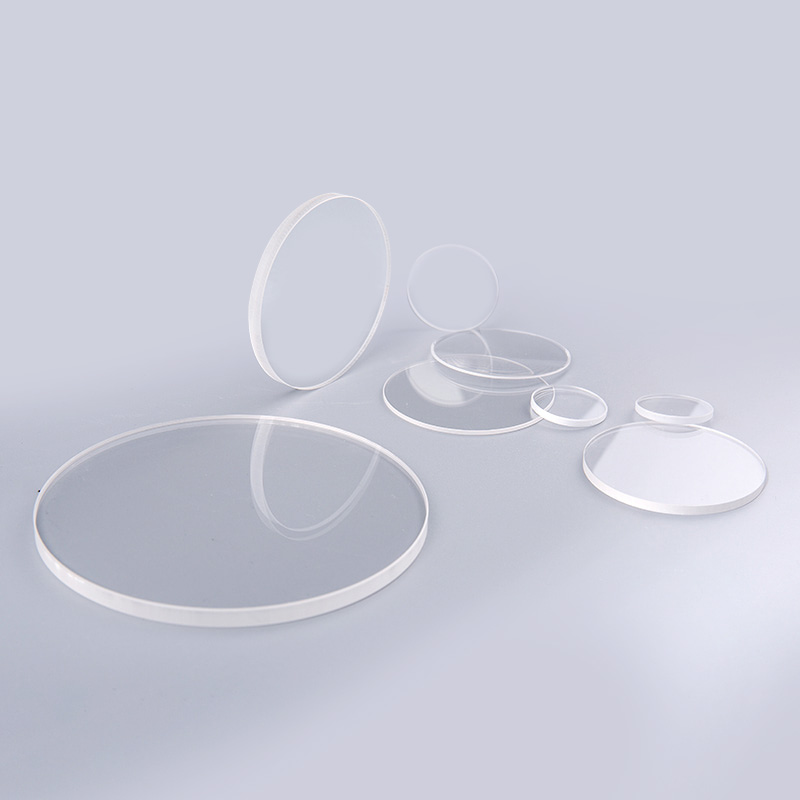
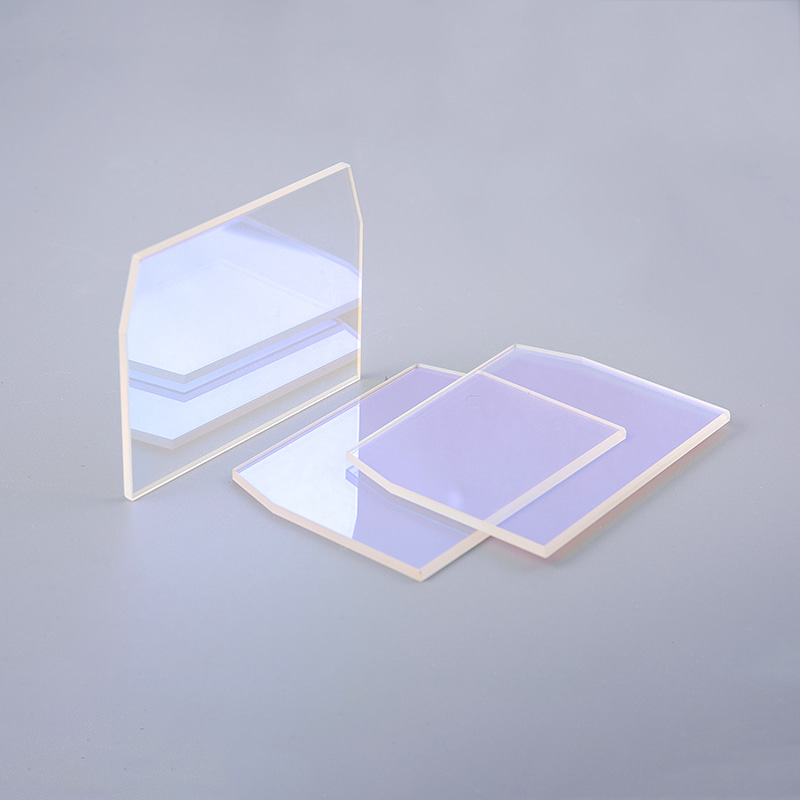
Changzhou Haolilai manufactures custom sapphire optical window substrates to tight parallelism and surface quality specifications, supporting laser optics, semiconductor, and consumer electronics applications.
Glass Optical Window: The Practical Standard
BK7 borosilicate glass is the default optical material for a reason. It's cost-effective, easy to manufacture to high tolerances, and performs reliably across the visible spectrum (roughly 380–2000 nm). Surface quality of 20-10 scratch-dig is routinely achievable at scale, and standard AR coatings bond well to it.
Where glass falls short is at the extremes. Mohs hardness sits around 6, so surfaces scratch more easily in abrasive environments. Thermal shock resistance is modest — rapid temperature swings can induce stress fractures. For applications that stay within the visible band and operate in controlled environments — laboratory setups, imaging systems, machine vision, and inspection equipment — glass optical windows deliver excellent value without the cost premium of sapphire or quartz.
Surface flatness, antireflection coatings, and accurate parallelism are the parameters worth specifying carefully when ordering glass windows. A poorly parallelized window introduces wavefront error that no downstream optic can fully correct.
Quartz Optical Window: The UV and Precision Specialist
Fused quartz (fused silica, SiO₂) occupies a specific niche that neither glass nor sapphire can fill: ultraviolet transparency down to around 150–180 nm, combined with an extremely low coefficient of thermal expansion (CTE ≈ 0.55 × 10⁻⁶/°C). That near-zero thermal expansion makes quartz windows dimensionally stable under fluctuating temperatures — a critical property in semiconductor lithography, spectroscopy, and precision metrology where even micron-scale deformation causes measurement errors.
Quartz also handles rapid thermal cycling better than glass or even sapphire in many configurations, because its low CTE limits the internal stresses generated when temperature changes quickly. For UV laser systems — excimer lasers at 248 nm or 193 nm being common examples — quartz is typically the only viable window material.
The limitation compared to sapphire is mechanical. Quartz is harder than BK7 (Mohs ≈ 7) but not in the same category as sapphire. In high-abrasion or high-pressure environments, it's not the first choice.
Side-by-Side: Key Parameters at a Glance
| Parameter | Sapphire | Glass (BK7) | Quartz (Fused Silica) |
|---|---|---|---|
| Mohs Hardness | 9 | ~6 | ~7 |
| Transmission Range | ~150 nm – 5.5 μm | ~380 – 2000 nm | ~150 – 3500 nm |
| Thermal Conductivity | ~35 W/m·K | ~1.1 W/m·K | ~1.4 W/m·K |
| CTE (×10⁻⁶/°C) | ~5.3 | ~7.1 | ~0.55 |
| Relative Cost | High | Low | Medium |
| Best For | Harsh environments, IR/multi-spectral | Visible optics, cost-sensitive | UV lasers, precision metrology |
How to Choose: A Decision Framework
Start with the operating wavelength. If your system runs in the UV below 380 nm, quartz is typically the answer. If it spans UV through mid-IR — common in multi-sensor defense or research platforms — sapphire's broad transmission is hard to beat. For visible-only systems in clean, stable environments, glass is almost always the most cost-efficient choice.
Next, evaluate the mechanical environment. Will the window face abrasion, high-pressure differentials, or particle impact? Sapphire. Temperature cycling in a vacuum chamber or semiconductor fab? Quartz. Benchtop lab instrument with controlled conditions? Glass.
Finally, factor in coating requirements. All three materials accept standard AR coatings, but adhesion and durability differ. On sapphire, coatings bond exceptionally well due to surface hardness. On BK7 glass, standard sol-gel and sputtered coatings perform reliably at lower cost. Quartz requires careful process control due to its very low surface energy, but high-performance UV coatings are well-established for it.
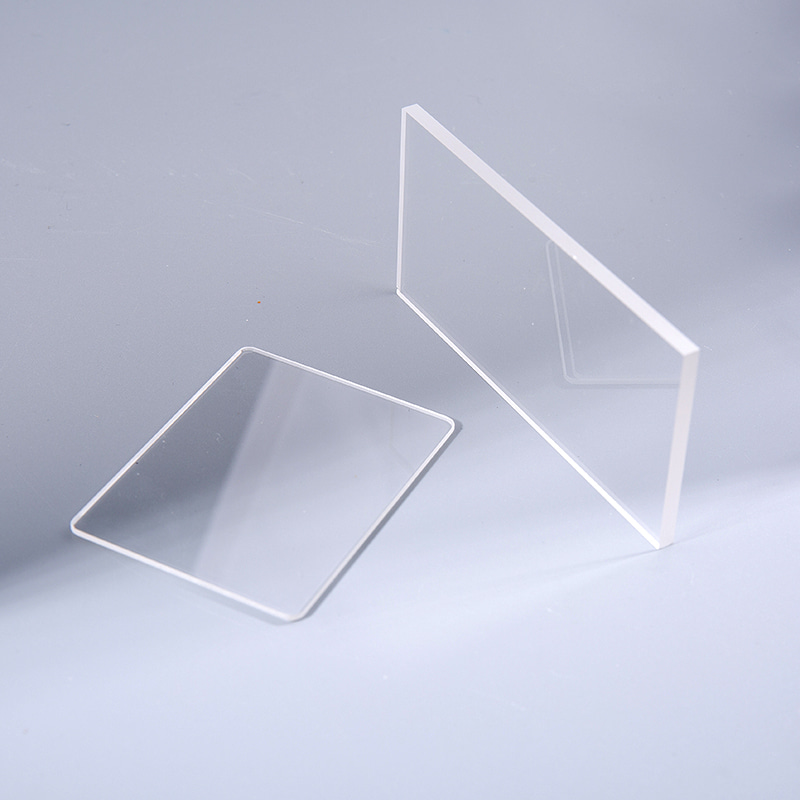
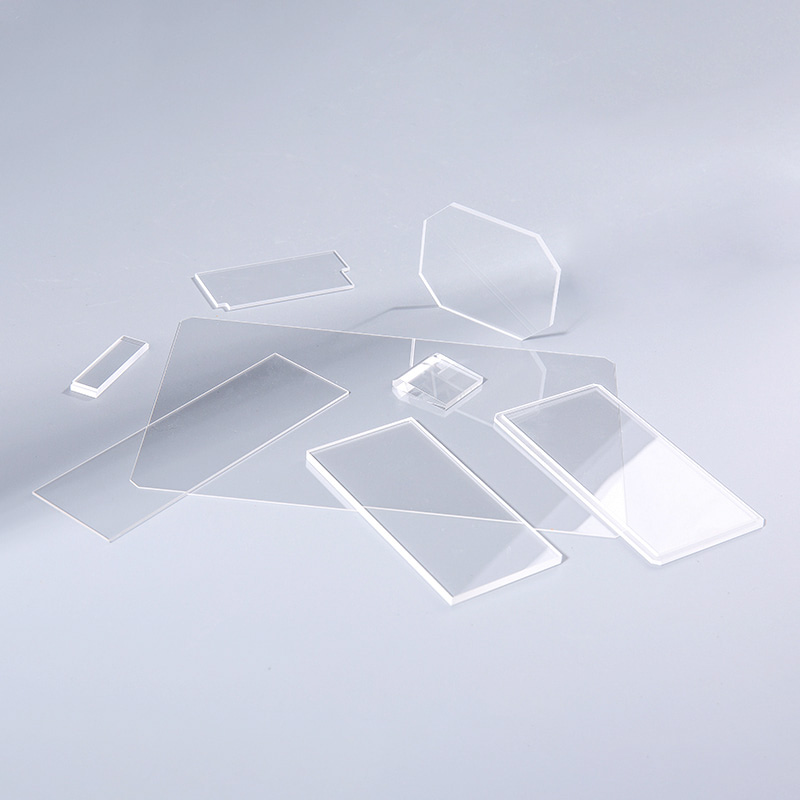
For custom geometries — non-standard diameters, beveled edges, specific parallelism tolerances — working with an experienced optical window manufacturer who handles all three materials saves significant iteration time. The right supplier can advise on material substitution when one option is over-budget or over-specified for the application.
The Bottom Line
Sapphire, glass, and quartz optical windows are each excellent — in the right context. Sapphire delivers unmatched durability and spectral breadth. Quartz owns the UV and precision thermal stability space. Glass remains the workhorse for visible-band applications where budget matters. Define your wavelength range, mechanical requirements, and operating environment first, and the material choice usually becomes straightforward.

 苏公网安备32041102000130号